Anna’s Links – Water and Solar Energy

I recently wrote a post as an overview of the energy-water nexus. Here are a couple articles that highlight the link between solar projects and water.
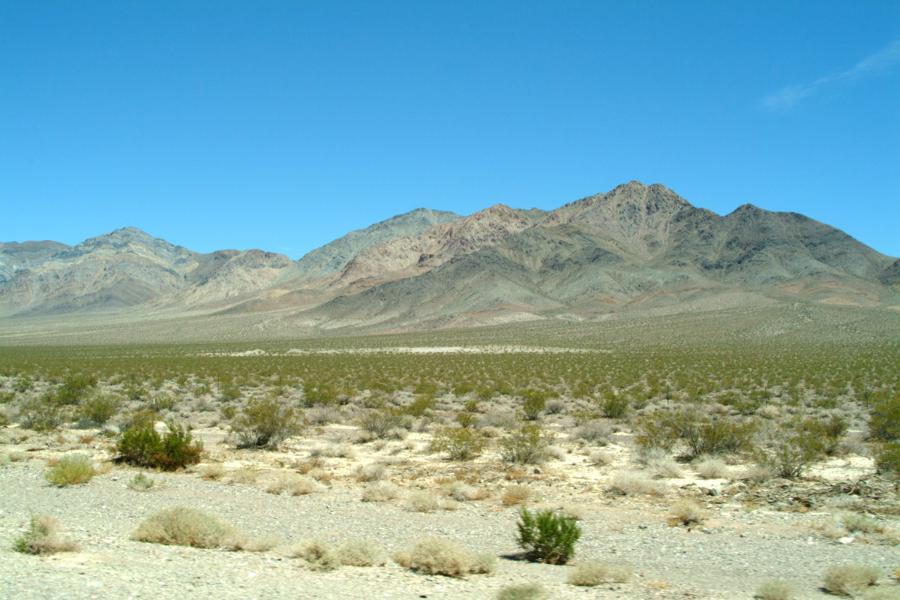
Armagosa Valley, Nevada (freefoto.com)

Last year, the New York Times ran an article about how a promising solar project in Armagosa Valley,  Nevada, by Solar Millenium ran hard up against western worries about water. The two proposed solar farms would require 1.3 billion gallons of water a year, or 20 percent of the local water available.

The Las Vegas Sun reports on the Skyline Solar facility in Nipton, California, that will use concentrating solar photovoltaic (CPV). CPV plants are expected to use much less water than solar thermal plants, which means they may be better candidates for places with lots of sun, but not as much water.

The energy-water nexus generally refers to needing water to produce energy and needing energy to move and filter water; however, it seemed fitting to include a story about using the sun and water to reduce energy use:

 NPR reports that the Camp Lejeune Marine Corps base in North Carolina is becoming one of the largest communities to widely install solar hot water panels. FLS Energy owns and installs the panels and then sells the hot water to the base, which means that there are basically only two main actors and decision-makers needed to install  systems on all 900 homes.  (The base is also planning a LEED Platinum fitness center – more info on the base website.)

World Energy Consumption Up 49% By 2035?

1

The U.S. Energy Information Administration issued its “International Energy Outlook 2010” report last month. The report predicts that fossil fuels will continue to provide more than 75% of global energy demand for the next 25 years. It also predicts that world energy consumption will increase 49% over the next 25 years. Developing nations are predicted to account for the huge majority of the increase in global energy demand.

International Energy Outlook 2008 Report Cover.  Need help, contact the National Energy Information Center at 202-586-8800.

The full report can be accessed here. Report highlights can be found here.

Anna’s Links – Smart Meters for Energy and Water

photo credit: freefoto.com

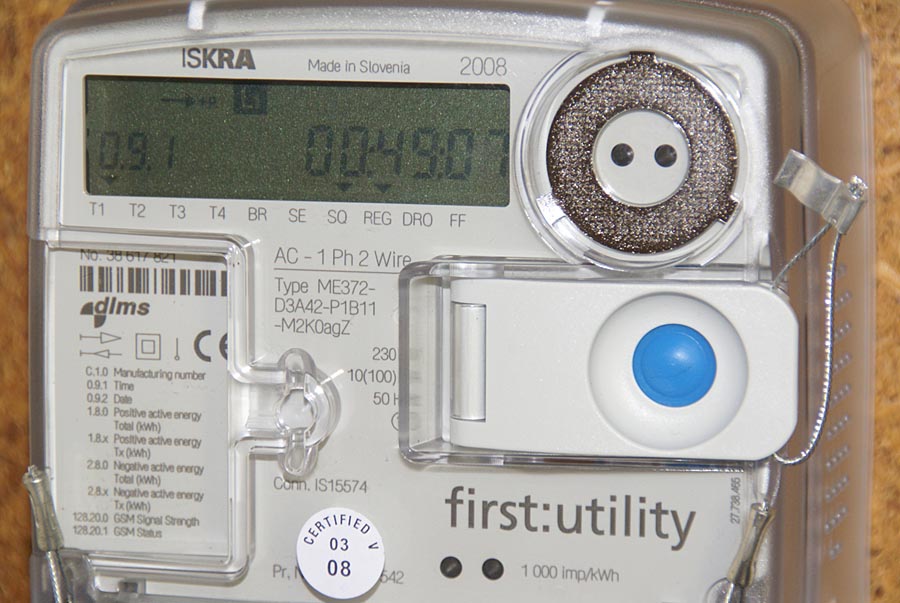
Many of you may have heard about the goings-on around the widespread installation of smart energy meters in California (after all, there have been lawsuits, legislative hearings, and mandated independent meter testing, just for the Pacific Gas and Electric meter installations).

So why go through all that to install smart energy meters? Because they hold huge promise for helping consumers reduce their energy use and for adding flexibility and reliability to how the grid is managed.

What you may not have heard as much about is that smart water meters are also being installed – more than half of California water utilities have some smart meters in their districts (via the New York Times). Ideally, smart water meters would provide real-time (or near real-time) feedback on water use to both the water utility and the consumer.

Also, Oracle has apparently developed an interest in smart water meters as a potential future market, as they already sell software systems to water (and power) utilities (via GreenTechmedia).

The Cycle of Insanity: The Real Story of Water

1

Today’s video is a short film from the Surfrider Foundation that outlines some of the radical changes to our water cycle that have happened due to increased population, urban development, and irrigation practices. The animated video is about 20 minutes long.

You can also see the video here.

As with many water issues, the end recommendation is integrated water management, with detailed examples.

The Energy-Water Nexus

1

This post is part of our definitions series on “eco-lingo” and technical terms.

– – –

We have been hearing with increasing frequency about “the energy-water nexus” in California as we face potential changes to our climate and our water supply. But what is it?

Basically, water and energy supplies are fundamentally linked together. Producing energy requires a huge volume of water (even for renewables). Treating and distributing water requires a consistent supply of energy. Therefore, serious challenges to the supply of one threatens the reliability of the other.

According to Sandia National Laboratory, producing electricity from just fossil fuels and nuclear energy requires 190 billion gallons of water each day, which accounts for 39% of all U.S. freshwater use. Each kWh generated from coal necessitates 25 gallons of water (source here). Also, since the energy needed to treat and distribute water can account for up to 80% of the water’s final cost, a reduction in the amount of available, inexpensive energy will have a direct impact on the cost and supply of water.

– – –

What exactly does “sustainability” mean? How about “green”, “eco” or “environmentally friendly”? The truth is that these terms are just vague enough to mean many different things to many different people. With the staggering array of “green” products, ‘lifestyles’ and concepts being promoted by marketers and environmentalists alike (as well as the necessary coining of new terms to match new ideas) our definition series aims to make sense of the rising tide of “eco-lingo” and technical terms.

The Murkowski Resolution and the EPA

1

Republican Senator Lisa Murkowski of Alaska introduced a resolution seeking to disrupt the Environmental Protection Agency’s authority to regulate greenhouse gases.

The EPA Administrator, Lisa Jackson, wrote a response to the proposed resolution that was posted today at The Huffington Post.

The Senate vote was today – the resolution failed 53 – 47  according to the Associated Press.

The White House had threatened a veto if it reaches the President’s desk. The official Statement of Administration Policy is posted here.

Anna’s Links – E-Waste Recycling and Green Roofs

New York state passed the “Electronic Equipment Recycling and Reuse Act,” requiring that manufacturers accept and recycle many types of e-waste starting in April 2011 (soon!)- NY State Dept. of Environmental Conservation and NRDC.

Green roofs are now required for many new buildings in Copenhagen – Treehugger.

A lawyer has started a blog focusing on legal issues specifically related to green building, with many recent posts focusing on the LEED rating system and the USGBC – Green Building Law Update.

Informal Garbage Collection – Egypt’s Zabaleen

1

This post is part of our series exploring the ways people and communities reuse, recycle and dispose of waste around the world.

– – –

For decades the Zabaleen*, the regional garbage collectors, have gathered and processed the recyclables, managing to earn a living in the process. The Zabaleen are generally Coptic Christians, a minority in Muslim Egypt. One way in which they have dealt with organic waste is to feed it to their pigs. Once the pigs were fattened, the Christian Zabaleen could eat the pigs or sell the meat.

In 2009 the Egyptian government killed all the pigs in a misguided effort to forestall a swine flu epidemic.

The population of Cairo is about 18 million people. The government has tried to institute formal garbage collection in various ways since the 1980s, with the most recent effort involving multinational companies, but with limited success. And since the government killed a major part of their livelihood, the Zabaleen  stopped handling the organic waste.

Garbage began piling up in Cairo (images here).

In November 2009, the Egyptian government unsuccessfully tried to end its contracts with the Italian, Spanish, and French companies charged with garbage collection, saying the companies failed to do their jobs.

The international companies have now hired some of the Zabaleen as Cairo struggles to find a lasting solutions.

– – –

There is a Sundance Channel documentary about Cairo’s garbage collection history called “Cairo: Garbage” that looks interesting.

– – –

*Also seen spelled Zabbaleen.

Virtual Water

1

This post is part of our definitions series on “eco-lingo” and technical terms.

– – –

Virtual water (also referred to as embodied water) is the volume of fresh water used to produce a product at the location of production. This concept of virtual water applies to everything we use or buy, such as clothes, electronics, food, and building materials. For example, the average virtual water associated with 1 egg would be 53 gallons.

(For those familiar with energy issues, this is similar to embodied energy.)

The creator of the virtual water concept, Professor John Anthony Allan, was initially researching agricultural water issues in the Middle East and concluded that the region could survive with scarce water because it was importing large amounts of “virtual water” embedded in its food imports.

You can hear a podcast of Professor Allan’s seminar on virtual water here.

– –

What exactly does “sustainability” mean? How about “green”, “eco” or “environmentally friendly”? The truth is that these terms are just vague enough to mean many different things to many different people. With the staggering array of “green” products, ‘lifestyles’ and concepts being promoted by marketers and environmentalists alike (as well as the necessary coining of new terms to match new ideas) our definition series aims to make sense of the rising tide of “eco-lingo” and technical terms.