Upcoming Webinar – CALGreen

GreenPoint Rated, CALGreen and You

Organized by Build It Green

January 27, 2011 (Thursday)

11:00 AM-12:30 PM

Earlier this year, the Building Standards Commission approved a landmark California Green Code, or CALGreen, for all new buildings in the state.  The code has a list of mandatory green building measures that must be applied to every new building by January 1, 2011, while water measures go into effect July 2011.  The California Green Code also provides two voluntary tiers that may be adopted by local governments as a reach code.

In this presentation, you will learn about:
  • The Green Code’s mandatory measures
  • Similarities and differences to GreenPoint Rated
  • Reasons to go beyond code
  • Ways local government can keep their GreenPoint Rated policy
  • How the Green Code will affect builders and local government officials

More information and links to register here.

– – –

Upcoming Webinar – Commercial Lighting

DOE Commercial Lighting Solutions: Overview

Carol Jones, Pacific Northwest National Laboratory

Tuesday, January 25, 2011
11:00–12:00 pm Pacific (2:00–3:00 pm Eastern)

Commercial Lighting Solutions arms lighting practitioners, contractors and owners with time-saving and credible strategies to reduce energy use and qualify for incentives. Learn about the tool’s development and capabilities, and discover how the tool applies to a wide range of audiences and lighting projects.

More information and a link to register here.

– – –

U.C.S.B. Students Take on Zero Net Energy Goals

2

University of California Santa Barbara students passed a unique “Student Services Renewable Energy Initiative”, voting in a $6 per term fee, even as tuitions in the U.C. system continue to sharply increase. The resulting measure will generate $3.4 million towards campus-wide zero net energy goals.

The future electorate is at work…

Read more about the UCSB initiative here.

– – –

Upcoming Bay Area Events, January 2011

Happy New Year Zero Resource Readers!

Below is a collection of interesting events for the month of January.

– – –

Electric Vehicles + Smart Grid

Dian Grueneich, Former Commissioner, California Public Utilities Commission, Mark Duvall, Director of Electric Transportation and Energy Storage, Electric Power Research Institute and Ted Howes, Partner, IDEO, discuss new technologies and their implications for the future of power generation, while Anthony Eggert, Commissioner, California Energy Commission, Transportation Lead, Diane Wittenberg, Executive Director, California EV Strategic Plan, Diarmuid O’Connell, Vice President of Business Development, Tesla Motors, and Marc Geller, Co-founder, Plug-In America, discuss the future of the electric car in California. At the San Francisco Commonwealth Club, with a networking break between topics.

Thursday, January 13,  9 – 11:30 a.m.

595 Market St., 2nd Floor, San Francisco, CA

$45 member, $65 standard, and $15 student tickets

event link


A Look Ahead at California’s Clean Energy Future

Panama Bartholomy from the CEC and Emma Wendt from PG&E discuss the strengths and weaknesses of the new report “California’s Clean Energy Future”, jointly issued by the California Air Resources Board, California Energy Commission and the California Environmental Protection Agency, among others.

SPUR Evening Forum, Tuesday January 25, 6p.m.

654 Mission Street, San Francisco, CA

free to SPUR and Association of Environmental Professionals members, $10 general admission

event link


Film, ‘ A Sea Change: Imagine A World Without Fish’

The San Francisco Public library will be hosting two free screenings of  ‘A Sea Change’.  “The documentary film A Sea Change, broadens the discussion about the dramatic changes we are seeing in the chemistry of the oceans, and conveys the urgent threat those changes pose to our survival, while surveying the steps we can take to reduce the severity of climate change.”

Wednesday, January 26, 6 p.m. and Saturday, January 29 at 2 p.m.

Koret Auditorium, Main Library, 100 Larkin St., San Francisco, CA.

free

event link


“Transforum” with Peter Calthorpe: ‘Urbanism in the Age of Climate Change’

Highly influential urban planner Peter Calthorpe discusses his new book, ‘Urbanism in the Age of Climate Change’.

Thursday, January 27, 6:30 p.m.

Hosted by Transform, and held at the SPUR Urban Center, 654 Mission Street, San Francisco, CA.

$15, rsvp recommended.

event link


“Save Our Caltrain!” Summit

Attend this summit to learn about and discuss the severe fiscal crisis facing Caltrain, an important Bay Area transit agency that lacks its own dedicated funding, and connect with others working to find solutions. Organized by the Friends of Caltrain.

Saturday, January 29, 8:30 a.m. – 2:30 p.m.

Samtrans Auditorium 1250 San Carlos Avenue, San Carlos, CA

free

event link

– – –
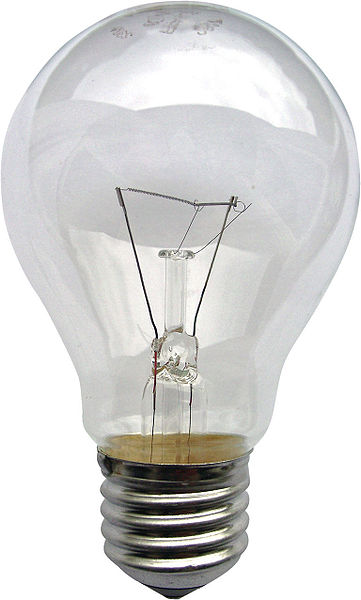
New Year, New Light Bulb Standards in CA

1

(Image credit: Wikimedia Commons)

– – –

A new federal law, the Energy Independence and Security Act of 2007 (EISA), creates new energy efficiency standards for light bulbs sold in California. According to a press release from the California Energy Commission:

While the country will adopt this standard on January 1, 2012, California was given authority to implement the national standards one year earlier to avoid the sale of 10.5 million inefficient 100-watt bulbs in 2011 which would cost consumers $35.6 million in higher electricity bills…

The standard in California states that a 100-watt bulb manufactured on or after January 1, 2011 must use 28 percent less energy (i.e. a 100-watt bulb may not use more than 72 watts). The new 72-watt replacement bulb will provide the same amount of light (i.e. lumens), use less power, and cost less to operate.

For more information, go to:

– – –

Cancun Climate Summit, part 2

2

Global Temperature Anomaly Map 2000-2009, NASA

(see my previous post for background info on the Cancun Climate Summit)

The Cancun Climate Summit, 16th Conference of the Parties (COP16) wrapped up on Saturday morning. With modest expectations widely held after the last years’ highly anticipated COP15 in Copenhagen failed to come to an accord, in the end the Cancun summit has succeeded in achieving a broad-based consensus and vision, if not a road map on how to get there.

Delegates from 194 countries remained deadlocked over the week of meetings in Cancun until a compromise was dramatically reached on the closing day. The conference did not produce another legally binding framework like 1997’s Kyoto Protocol- the terms of which expire next year- but it puts into place the building blocks for such an agreement to be forged.

Key goals include:

– Industrialized countries are charged with developing low carbon development plans and strategies and assessments to meet them.

– A Green Climate Fund will be established and administered by the United Nations in order to provide financial support to the climate change mitigation goals of developing nations. A total of $30 billion in “fast start” finance from developed nations will be secured up to 2012, with a goal of $100 billion in longterm funds to 2020.

– For the first time, a U.N. document sets the imperative that global temperatures must not rise more than 2 degrees C, based on pre-industrial levels.

– A new “Cancun Adaptation Framework” will become established to help undeveloped nations with the necessary planning and technical support to implement their climate mitigation goals.

The next U.N. Climate Change Summit will take place next winter in Durban, South Africa.


More on the outcome of the COP16 Summit:

U.N. Climate Talks End, The Wall Street Journal

Progress on Climate Fund, but Questions Remain, Mother Jones

The United Nations Framework on Climate Change website

– – –


GreenTRIP Certification

2

GreenTRIP is a certification program developed by TRANSFORM, an organization that “works to create world-class public transportation and walkable communities in the Bay Area.” According to the TRANSFORM website:

GreenTRIP is a powerful new certification program that rewards residential in-fill projects that apply comprehensive strategies to reduce traffic and greenhouse gas emissions. GreenTRIP certification standards supports projects providing appropriate amounts of parking and offer effective incentives for new residents to drive less and own fewer vehicles. Since these types of developments create less driving and use less land for parking, there’s more space for shops, services, and affordable homes – plus less traffic and pollution.

For more information on the certification and the pilot projects, visit the TRANSFORM website.

– – –

Cancun Climate Summit, part 1

3

A crowd gathers in front of Copenhagen’s Bela Center  in 2009 where the COP15 talks took place. Source: Wikimedia Commons

The United Nations Climate Change Conference is now underway in Cancun, Mexico, from November 29 to December 10. The conference, also known as COP16/CMP6, represents the 16th Conference of the Parties of the United Nations Framework Convention on Climate Change (COP) and the 6th Conference of the Parties serving as the meeting of the Parties to the Kyoto Protocol (CMP).

Background

The United Nations Framework Convention on Climate Change was adopted in 1992 and came into force in March of 1994. It is ratified by 194 parties. The purpose of the Framework is to acknowledge among nations the shared interest in climate change mitigation and preparedness for any inevitable rises in temperature.

One outcome of the COP is 1997’s Kyoto Protocol. The Protocol went a step further than the Framework by setting legally binding targets for greenhouse gas emissions reductions among 37 industrialized nation signatories and the European Union, representing an average pledge of five per cent reductions against 1990 levels during the five-year period 2008-2012. As of November 2010, 192 states have ratified. The United States has never ratified or put the Protocol into force, although it remains a part of the U.N. Framework Convention on Climate Change.

This Year’s Conference

Expectations for the COP16 appear to be cautious, if not low. The Conference is hosting about 15,000 participants- just a fraction of the 50,000 strong delegation that turned out to Copenhagen’s COP15 in 2009. Facing down the disappointing lack of accord in the Copenhagen talks, the continued strife in the global economy and not much hype from the media, the Cancun talks have their work cut out.

Below is a link round-up of early developments and perspectives on the talks:

Cancun and the new economics of climate change,  U.K. Guardian

Cancun climate change summit: America plays tough, U.K. Guardian

Climate Change Conference begins in Mexico, Voice of America

Cancun’s First Goal: Do Better than Copenhagen, Time Magazine

Watch live and on-demand webcasts of the conference at the UNFCCC website, here.

Visit the U.K. Guardian’s Interactive Timeline of Climate Talks, here.

An Upcoming Talk by Nancy Skinner

On Thursday, December 12, Nancy Skinner will speak on the UC Berkeley campus on state and local efforts to halt climate change. Nancy Skinner is Berkeley’s representative in the California state assembly, and she is a founder of ICLEI. Assemblymember Skinner will also discuss the launching of ICLEI’s Cities for Climate Protection Program, the national movement of mayors and cities working to reduce greenhouse gas emissions.

106 Wurster Hall, UC Berkeley campus

5:00 pm – 6:30 pm

More information here.

– – –

Home Energy Improvements

3

Thermal Imaging of a House in Cambodia (Image credit: Wikimedia Commons)

– – –

Grist recently ran a piece on lessons learned by by shadowing a home energy inspector. The author highlighted a number major lessons, including:

  • It’s a social job.
  • Comfort matters more than pocketbook savings – for some homeowners.
  • It helps to see it and learn firsthand (especially for the blower-door test).
  • Thermal imaging cameras are nifty.
  • Attics should get insulation first, then walls and basements.
  • Most progress depends on the homeowner.
  • Utilities are driving the retrofit industry right now.
  • Renters have split incentives.

You can read the entire article, including the explanations of the lessons learned, on the Grist website here.

– – –

Lawrence Berkeley National Laboratory (LBNL) has a fairly new website called Driving Demand for Home Energy Improvements.

The website lists a number of reports and case studies about how to improve demand for home energy improvements, and findings from utility and government retrofit programs.

– – –