Upcoming Events

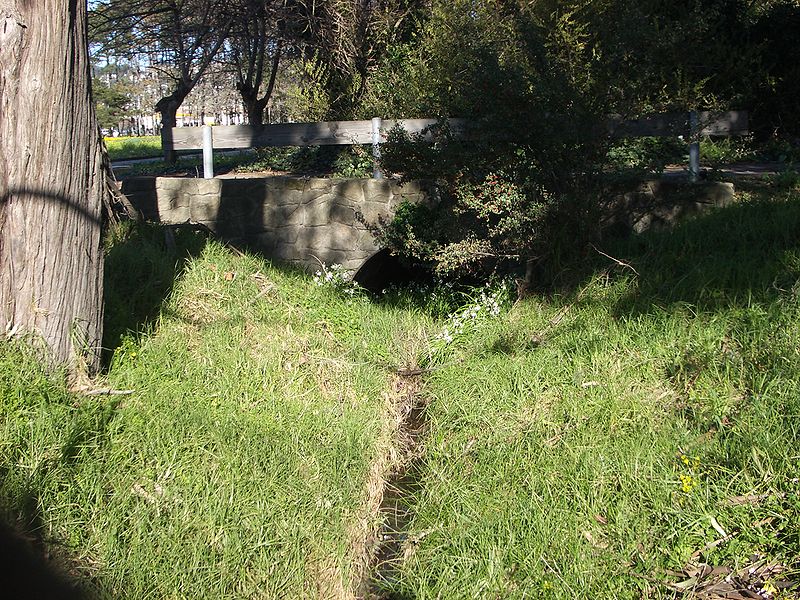
Daylighted  Marin Creek (Village Creek) as it flows through U.C. Village (Image credit: Wikimedia Commons)

– – –

Tonight:

Is Urban Stream Restoration Possible?

Ann L. Riley will present case studies from urban stream restoration projects. Riley serves as the advisor on watershed and river restoration for the San Francisco Bay Regional Water Quality Control Board and is the Executive Director of the Waterways Restoration Institute.

When: Wednesday, November 17, 7 p.m.

Where: Dimond Library, 3565 Fruitvale Ave. (cross street MacArthur), Oakland, CA

– – –

Net Impact San Francisco: Climate Change Policy Update – Looking forward to the next decade globally and locally

Net Impact SF’s professional chapter’s final meeting of 2010 will focus on the status and trajectories of national, international and local policy around climate change.

When: Tuesday, December 14, 7 – 9 p.m.

Where: TBD – More details here.

– – –

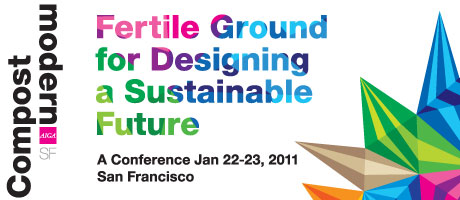
Compostmodern ’11 : Fertile Ground for Designing a Sustainable Future

Compostmodern is a two-day event at the interface of sustainable product design and industry to solve pressing sustainability and ecological  problems.   “Compostmodern engages designers, sustainability professionals, artists and entrepreneurs to collaborate in realizing a more environmentally, culturally and economically sustainable world.”

When: January 22 – 23, 2011

Where:  Day 1 – Herbst Theatre, 401 Van Ness Ave at McAllister St., San Francisco, CA

Day 2 – The Academy of Art, 79 New Montgomery between Market and Mission Streets, San Francisco, CA

Early bird rates until November 30. More info here.

– – –

New LEED Draft Open for Comment

1

Image Credit: USGBC

The first public comment draft of LEED is out for review. Comments are due by December 31, 2010.

This review period includes a revision of all of the LEED rating systems together, including New Design & Construction, Operations & Maintenance, Homes, and Neighborhood Development.

The drafts can be downloaded from the USGBC website here.

– – –

BuildingGreen.org has a summary of New Design & Construction changes and highlights major changes in each category:

USGBC released the draft to EBN just before the public comment period was to open. Our analysis of what’s (mostly) the same, what’s different, and what’s totally new follows. We focused our analysis on the LEED for New Construction (LEED-NC) rating system, but readers should see the rating system draft for all the rating systems, including details on LEED-NC that we didn’t have space to discuss.

You can see the changes for each category and read the entire article here.

– – –

Local Target Stores & Hazardous Waste

3

Image credit: Wikimedia Commons

According to the San Francisco Chronicle, all nine of the Target stores in Alameda County have been involved in illegal disposal of products containing hazardous waste by collecting and crushing batteries, phones and computers in the stores’ trash compactors to avoid disposal fees. An Alameda County judge has ordered the stores, among 240 in California accused of the practice, to stop.

According to the Washington Post, the lawsuit brought by the state of California and several cities and counties contends that Target stores routinely throw hazardous items such as bleach, pesticides, paint, aerosols and electronics directly into the trash. California has laws requiring special handling of hazardous waste.

Read the entire story here and here.

– – –

Noelle has previously addressed the need to properly disposed of e-waste as part of a post on Extended Producer Responsibility.

– – –

New Recycling Center for El Cerrito Residents

1

photo source: Wikimedia Commons

The City of El Cerrito is calling upon residents to attend several public meetings in anticipation of the opening of a new recycling center, including discussion of the planning, use and design of the facility. The second of these public meetings will be taking place Thursday, August 26 at the El Cerrito City Hall from 7 to 9 p.m. The third and final public meeting will take place on  Tuesday, September 14 from 5 to 7 p.m.

Read background information on the new recycling facility project here. For more information about the meetings and environmental programs in El Cerrito, visit the City of El Cerrito’s Environmental Services Division here.

The meetings will take place in the El Cerrito City Hall Council Chambers, 10890 San Pablo Ave, El Cerrito.

– – –


San Francisco Finds a New Landfill?

1

Image credit: Wikimedia Commons

By 2015, San Francisco officials are hoping to send waste to a landfill in Yuba County, near the town of Wheatland, CA.

According to the San Francisco Chronicle, the garbage will be taken by truck to Oakland, loaded onto trains, and shipped 130 miles to a 236-acre landfill.

The city is currently under contract to ship garbage to the Altamont Landfill in Livermore.

The proposed landfill in Yuba County is owned by Recology (formerly Norcal Waste Systems) and currently receives about 750 tons of trash each day. It is expected that San Francisco would send more than 1000 additional tons of trash to the landfill each day.

Details of the plan are still being negotiated, and the San Francisco Board of Supervisors will have to approve any final proposal.

– – –

On a side note, Recology has a blog with lots of info about waste and recycling in the Bay Area. I’ve just started reading through some of the archives.

– – –

California – 20th in Beach Water Quality

1

photo credit: Alan Cleaver 2000

According to the National Resource Defense Council’s annual water quality report for the nation’s beaches, this year had the sixth highest levels of contamination in the 20 year history of the study. The NRDC reports that a range of causes are contributing to dirtier coastlines, including stormwater runoff and aging sanitation and combined sewer systems that may overflow into coastal waters during storm events.

Although contaminated waters can pass pathogens along to swimmers, the water tests currently employed take up to 24 hours to reveal problems, and so warranted beach closures are often delayed.

How does California fare in all of this? Of the 30 states with coastal waters, the cleanliness of California beaches rank at a sad #20. The top 3 polluted beaches include North Avalon beach in Los Angeles County where 82% of sampled water exceeded national pollution standards; Mendocino County’s Pudding Creek beach where 65% of samples exceeded national standards; and Poche County beach in Orange County that had an excessive pollution rate of 62%.  The county that received the dubious honor of  having the highest percentage of  beach water samples that  exceeded national pollution standards was San Francisco County at 17%. However, on a more positive note, the level of pollution in California beach water has trended downward in the last five years.

Read the report on California’s coastal waters, hereand the full Testing the Waters NRDC report, here.

Bioplastics, part two

1

This post is part of our definitions series on “eco-lingo” and technical terms.

– – –

Part 1 of this post provides a definition for the term “bioplastic” and clarifies the distinctions between “degradable”, “biodegradable” and “compostable” plastics.

– – –

a compostable plastic cup from NatureWorks

While the idea of plant-based, biodegradable and compostable plastic made from renewable resources sounds like a potential panacea to the problem of plastic trash, the reality is -at this point- it is still too good to be true.

For starters, as I outlined in the first part of this post, not all bioplastics are created equal. To quickly re-cap, many are hybrids of conventional plastic polymers with added biomass; some are able to biodegrade and some are not; and the “compostable” type usually requires the high temperatures of a commercial composting facility in order to break down. What this means is that many new classes of plastics have been unleashed into the waste stream (with the catch-all rating of #7, or “other”) without the infrastructure in place to process them.  In large quantity, there is the real likelihood that they will complicate the recycling of traditional PET plastics.

Compostable plastics and serviceware such as coffee cups, to-go containers, etc., may be placed in municipal compost bins, but at this time no ‘bioplastics’ should  be placed in a regular mixed recycling bin (large scale efforts to recycle bioplastics in their own right could be termed “fledgling”, at best).

For example, the City of Portland Bureau of Planning and Sustainability authored a fact-sheet for area businesses considering using bioplastics that not only warns that the local recycling facility is not equipped to process many of the new plastics, but also calls into question the long-term wisdom of replacing one set of disposable products with another. In short, even if all things were equal with the logistical aspects of recycling bioplastics vs. conventional plastics, there is still the reality that bioplastics use fossil fuels in their creation, create greenhouse gases in their decomposition, cannot be processed by consumers at home, and can continue to perpetrate the problem of plastic trash in the ocean.

With all of that said, there may still be a place and a potential for bioplastics. The technology is rapidly evolving, and if the industries can coordinate with infrastructure, then proper use of the materials will be the result.

For more information visit:

The Sustainable Biomaterials Collaborative;

Bioplastics Magazine (a trade publication);

and Sustainable Plastics? a website and project of the Institute for Local Self Reliance.

– – –

What exactly does “sustainability” mean? How about “green”, “eco” or “environmentally friendly”? The truth is that these terms are just vague enough to mean many different things to many different people. With the staggering array of “green” products, ‘lifestyles’ and concepts being promoted by marketers and environmentalists alike (as well as the necessary coining of new terms to match new ideas) our definition series aims to make sense of the rising tide of “eco-lingo” and technical terms.

Finding California Incentives and Rebates

1

There are hundreds of energy, water, and waste incentives, rebates, and services available for homes  in California, but it can be daunting to find them. Here are a few places to start:

Flex Your Power allows you to search for energy-related incentives and technical help available from utility companies, water agencies, and other organizations by entering your zip code.  A search in my zip code (in Berkeley) found 71 incentives and 18 services.

The Database of State Incentives for Renewables & Efficiency (DSIRE) lists state and local incentives by category and also lists related programs and initiatives. It can be much harder to figure out which specific programs are applicable, though. The database also lists federal incentives.

The California Urban Water Conservation Council lists programs participating in its Smart Rebates by water utility district.

For folks living in the East Bay:

East Bay Municipal Utility District lists its residential conservation rebates and services.

StopWaste.Org lists waste prevention and recycling services available to residents of Alameda County.

Advanced Framing

1

This post is part of our definitions series on “eco-lingo” and technical terms.

– – –

Also called Optimum Value Engineering (OVE), advanced framing is a way of  framing a house to reduce the amount of wood used. Careful design can both reduce the lumber needed and the waste generated by using standard material dimensions, increasing the spacing of framing members to 24″, adjusting the location of windows and doors, and adjusting the way corners are framed.

Aside from the benefit of reducing wood use and waste, there is the additional benefit that removing wood from walls creates additional space for insulation, improving the thermal performance of the envelope, especially in the corners.

A few specific examples of the difference between standard and advanced framing techniques are here and here.

– – –

What exactly does “sustainability” mean? How about “green”, “eco” or “environmentally friendly”? The truth is that these terms are just vague enough to mean many different things to many different people. With the staggering array of “green” products, ‘lifestyles’ and concepts being promoted by marketers and environmentalists alike (as well as the necessary coining of new terms to match new ideas) our definition series aims to make sense of the rising tide of “eco-lingo” and technical terms.

Bioplastic, part 1

1

This post is part of our definitions series on “eco-lingo” and technical terms.

– – –
photo credit: Tecknor Apex

Bioplastic :

The term “bioplastic”  generally refers to plastic made in whole or in part from plant-derived renewable resources and/or compounds that are subject to degradation from microbial action.

The “and/or” is key and this is where the confusion comes in. “Bioplastic” is a catch-all term that refers to several different classes of plastics. For example, some petroleum based plastics (non-renewable resource) can be made in such a way that they biodegrade over time, leaving behind a toxic residue. And some “bioplastics” made from renewable resources will not biodegrade.

While not a very new technology,  bioplastics have only recently begun to take off in the U.S.  There have been many new products hitting the shelves with claims that they are a cleaner and greener option. But not all of these products are interchangable with each other, or with the conventional plastics that they would replace.

To help you sort your plastics, here is the difference between “degradable”, biodegradable”, and “compostable”:

Degradable plastics are essentially meant to address the “lingering” characteristic of traditional plastics that can take decades or longer to break down, persisting as litter or consuming valuable landfill space. Degradable plastics are those that are engineered to break down into fragments, particles or residue more rapidly than conventional plastics, but “degradable” does not itself define what the constituent materials are.

Biodegradable plastics are typically a hybrid of sythetic polymers and biomass or starch-based plastics. Like degradable plastics, they break down to a point, but are not 100% biodegradable unless they are marked “compostable”…

Compostable plastics are able to fully biodegrade without leaving toxic elements behind (made completely without the use of synthetic polymers); however, compostable plastics are not instantly ‘back to nature’.  Although composed of biomass, most compostable plastics break down very slowly and often need the assistance of a commercial composting facility. The unfortunate misconception here is that one can toss a soy-plastic fork in a meadow after a picninc or in the backyard pile, and it will dissolve quickly. “Compostable” plastics can thus lead to litter and perhaps irresponsible consumer behaviors.

In part 2 of this post, I will discuss the recycling and end-of-use considerations of bioplastics.

– – –

What exactly does “sustainability” mean? How about “green”, “eco” or “environmentally friendly”? The truth is that these terms are just vague enough to mean many different things to many different people. With the staggering array of “green” products, ‘lifestyles’ and concepts being promoted by marketers and environmentalists alike (as well as the necessary coining of new terms to match new ideas) our definition series aims to make sense of the rising tide of “eco-lingo” and technical terms.