Anna’s Links – Water and Solar Energy

I recently wrote a post as an overview of the energy-water nexus. Here are a couple articles that highlight the link between solar projects and water.

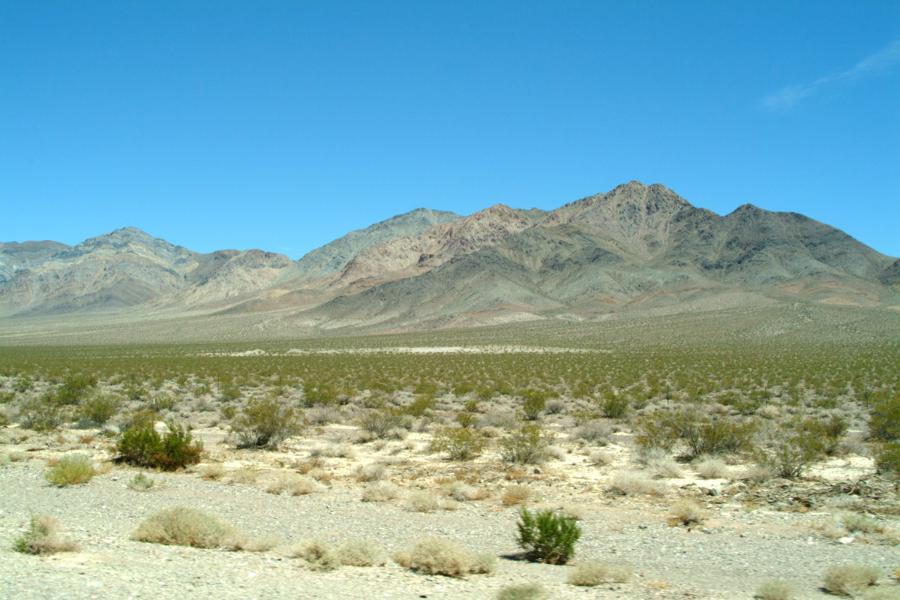
Armagosa Valley, Nevada (freefoto.com)

Last year, the New York Times ran an article about how a promising solar project in Armagosa Valley,  Nevada, by Solar Millenium ran hard up against western worries about water. The two proposed solar farms would require 1.3 billion gallons of water a year, or 20 percent of the local water available.

The Las Vegas Sun reports on the Skyline Solar facility in Nipton, California, that will use concentrating solar photovoltaic (CPV). CPV plants are expected to use much less water than solar thermal plants, which means they may be better candidates for places with lots of sun, but not as much water.

The energy-water nexus generally refers to needing water to produce energy and needing energy to move and filter water; however, it seemed fitting to include a story about using the sun and water to reduce energy use:

 NPR reports that the Camp Lejeune Marine Corps base in North Carolina is becoming one of the largest communities to widely install solar hot water panels. FLS Energy owns and installs the panels and then sells the hot water to the base, which means that there are basically only two main actors and decision-makers needed to install  systems on all 900 homes.  (The base is also planning a LEED Platinum fitness center – more info on the base website.)

San Francisco’s Smart Water Meters

1
                                                                                          water supply leak, Free Foto.com

San Francisco began to roll out its new ‘smart’ water meters to city residences this month. The new devices can accurately track water usage in real-time and the San Francisco Public Utilities Commission (SFPUC) plans to make personal water use data available to customers online. Other benefits include the streamlining of operations- meters communicate wirelessly, eliminating the need for house-to-house readings- and the early detection of system leaks and unusual usage surges.

The SFPUC will replace over 175,000 meters beginning with 5,000 this spring/summer,with an estimated install completion for the full number by 2012. The expectation is that the new meters will be able to assist individual and system-wide conservation efforts, increase response time for problems, and allow for a more accurate and refined fee structure.

California, as a drought-prone state, can stand to benefit greatly from increased water use data collection. As it stands today, water use is not uniformly tracked in all homes and businesses, nor is there any correlation between regional water scarcity and water service rates. While agriculture, industry and conveyance also play leading roles in the general water picture in the state, having accurate home and commercial usage data is a step forward, and can only be a benefit in creating sound management policies for this precious and scarce resource.

Anna’s Links – Smart Meters for Energy and Water

photo credit: freefoto.com

Many of you may have heard about the goings-on around the widespread installation of smart energy meters in California (after all, there have been lawsuits, legislative hearings, and mandated independent meter testing, just for the Pacific Gas and Electric meter installations).

So why go through all that to install smart energy meters? Because they hold huge promise for helping consumers reduce their energy use and for adding flexibility and reliability to how the grid is managed.

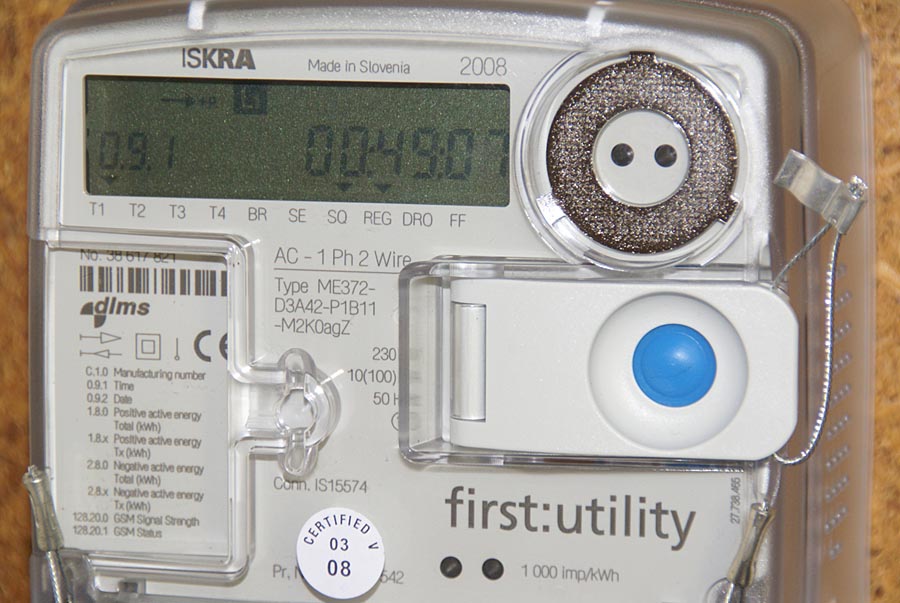
What you may not have heard as much about is that smart water meters are also being installed – more than half of California water utilities have some smart meters in their districts (via the New York Times). Ideally, smart water meters would provide real-time (or near real-time) feedback on water use to both the water utility and the consumer.

Also, Oracle has apparently developed an interest in smart water meters as a potential future market, as they already sell software systems to water (and power) utilities (via GreenTechmedia).

The Energy-Water Nexus

1

This post is part of our definitions series on “eco-lingo” and technical terms.

– – –

We have been hearing with increasing frequency about “the energy-water nexus” in California as we face potential changes to our climate and our water supply. But what is it?

Basically, water and energy supplies are fundamentally linked together. Producing energy requires a huge volume of water (even for renewables). Treating and distributing water requires a consistent supply of energy. Therefore, serious challenges to the supply of one threatens the reliability of the other.

According to Sandia National Laboratory, producing electricity from just fossil fuels and nuclear energy requires 190 billion gallons of water each day, which accounts for 39% of all U.S. freshwater use. Each kWh generated from coal necessitates 25 gallons of water (source here). Also, since the energy needed to treat and distribute water can account for up to 80% of the water’s final cost, a reduction in the amount of available, inexpensive energy will have a direct impact on the cost and supply of water.

– – –

What exactly does “sustainability” mean? How about “green”, “eco” or “environmentally friendly”? The truth is that these terms are just vague enough to mean many different things to many different people. With the staggering array of “green” products, ‘lifestyles’ and concepts being promoted by marketers and environmentalists alike (as well as the necessary coining of new terms to match new ideas) our definition series aims to make sense of the rising tide of “eco-lingo” and technical terms.

Virtual Water

1

This post is part of our definitions series on “eco-lingo” and technical terms.

– – –

Virtual water (also referred to as embodied water) is the volume of fresh water used to produce a product at the location of production. This concept of virtual water applies to everything we use or buy, such as clothes, electronics, food, and building materials. For example, the average virtual water associated with 1 egg would be 53 gallons.

(For those familiar with energy issues, this is similar to embodied energy.)

The creator of the virtual water concept, Professor John Anthony Allan, was initially researching agricultural water issues in the Middle East and concluded that the region could survive with scarce water because it was importing large amounts of “virtual water” embedded in its food imports.

You can hear a podcast of Professor Allan’s seminar on virtual water here.

– –

What exactly does “sustainability” mean? How about “green”, “eco” or “environmentally friendly”? The truth is that these terms are just vague enough to mean many different things to many different people. With the staggering array of “green” products, ‘lifestyles’ and concepts being promoted by marketers and environmentalists alike (as well as the necessary coining of new terms to match new ideas) our definition series aims to make sense of the rising tide of “eco-lingo” and technical terms.

Photo – A Geyser in Downtown Berkeley

1

A huge geyser was caused when a car hit a fire hydrant in the center of Shattuck Ave on April 16th.

(And apparently, it’s not the first time this has happened in Berkeley, CA.)

Finding Data – Watershed Mapping

1

Pictured above is the U.S. EPA 'Surf your Watershed' site’s display of the six watersheds of Alameda County.

‘Surf your Watershed’ is an excellent tool from the U.S. Environmental Protection Agency that helps you find basic data on all the watersheds in your county. The site includes U.S. Geologic Survey data, water quality information, and links to local citizen’s groups working on water stewarship, clean up and other  issues (39 in Alameda County!)

Check it out

Finding Data – The Water Intensity of Food

3

Many of us have heard that we should eat locally grown food to reduce the energy needed to transport and preserve the food between the source and our table. Many of us have also heard that we should reduce our meat consumption to reduce the amount of land and other resources needed to support our diets and lifestyles. Another metric to consider is how much water is needed to produce different foods.

Based on values from the Water Footprint Network, I compiled a chart of how much water is needed to produce certain foods. This is obviously not an inclusive list of all foods, but gives an idea of the range of values for different kinds of foods. These values will also differ in different countries and regions. As noted by the director of the Water Footprint Network, Arjen Y. Hoekstra, “Water problems are often closely tied to the structure of the global economy. Many countries have significantly externalised their water footprint, importing water-intensive goods from elsewhere. This puts pressure on the water resources in the exporting regions, where too often mechanisms for wise water governance and conservation are lacking.”

In the table on the left, values are generally for liters per kilogram unless otherwise noted. In the table on the right, values are generally for gallons per pound unless otherwise noted.

You can calculate your own water footprint with this calculator for an estimate of which parts of your diet and lifestyle are most water intensive.

Special Report on Water in the Economist

This week’s edition of the Economist magazine has a special report on water. This report can currently be downloaded for free here.

RECO

1

This post is part of our definitions series on “eco-lingo” and technical terms.

– – –

I am not (and have never been) a Bay Area homeowner, which is perhaps why I was not very familiar with the term “RECO” until recently.

There are many well-publicized programs aimed at making new buildings as “green” and energy efficient as possible. These efforts are viewed as integral to efforts to reduce future energy use and combat climate change. But in many places, we’re mostly stuck with the buildings that we’ve got. And we’ll likely be stuck with them for many years to come. So how do we influence and improve the energy and water performance of these buildings? One answer is a RECO.

Residential Energy Conservation Ordinance (RECO)

The purpose of a RECO is to improve the energy (and now water) efficiency of housing stock at the point of sale and major renovation.

In Berkeley, CA, the majority of the housing stock was built before the introduction of state building energy codes.  The buildings are often drafty, with no insulation and single-pane windows. Further, more than half of the city’s housing units are occupied by renters. In rental units landlords must approve and often conduct and pay for any major energy retrofits. However, the retrofits primarily benefit the renters, who pay the utility bills. Because of these split incentives, an obvious point of intervention to improve the energy efficiency of the existing building stock over time is at transfer of ownership or major renovation. The Berkeley RECO, which has been in place since the 1980s, applies to all residential homes and units, whether single-family homes, condos, multi-family properties, or live-work spaces, and requires that the home or unit comply with specific energy and water performance measures at the time of sale or major renovation.

The Berkeley RECO has ten prescriptive measures covering toilets, showerheads, faucets, water heaters, hot and cold water piping, exterior door weather-stripping, furnace ducts, fireplace chimneys, ceiling insulation, and lighting in common areas (for multi-family buildings).

It is tempting to say the measures are not enough, that much more drastic intervention (and more quickly) will be needed to achieve dramatic energy savings. This is probably true. But many approaches will be needed, and the gradual but consistent improvement of existing housing stock is a good place to start.

Since 1994, Berkeley has also had a Commercial Energy Conservation Ordinance (CECO).

Participants in Berkeley FIRST (Berkeley’s solar financing program) have to comply with RECO/CECO.

– – –

What exactly does “sustainability” mean? How about “green”, “eco” or “environmentally friendly”? The truth is that these terms are just vague enough to mean many different things to many different people. With the staggering array of “green” products, ‘lifestyles’ and concepts being promoted by marketers and environmentalists alike (as well as the necessary coining of new terms to match new ideas) our definition series aims to make sense of the rising tide of “eco-lingo” and technical terms.