Stimulus Money for Energy Efficiency

1

The Sacramento Municipal Utility District (SMUD) will receive $20 million from the federal stimulus funds designated for California. The money will launch a Home Performance Program, which will offer HERS audits and energy upgrades to about 15,000 homes in SMUD territory. Because the program is expected to increase demand for trained contractors and auditors, SMUD will be working with the Sacramento Employment and Training agency and Los Rios Community College to develop training programs – via SMUD.

The California Energy Commission also approved $8 million for the County of Los Angeles, $3 million for the County of San Diego, and $1.9 million for the City of Fresno from Recovery Act Energy Efficiency Conservation Block Grants for residential energy retrofit programs – via Imperial Valley News.

– – –

There’s a cool map of hotspots where water and energy are coming into conflict around the world –  IEEE Spectrum.

– – –

There’s a new study from Arizona State University that analyzes the life cycle impact of swimming pools in nine cities in terms of their consumption of chemicals, water, and energy – via Environmental Science & Technology.
Problems for PACE Programs?

1

An article in the New York Times today highlights problems that may arise for Property Assessed Clean Energy programs (initiated here in Berkeley in 2008).  Fannie Mae and Freddie Mac have warned lenders that “an energy efficiency lien may not be senior to any mortgage delivered” to the loan giants.

For at least one home in California, the lenders refused to approve a loan for the purchase of a home with heating and cooling systems financed through a program in Sonoma County.  The property tax assessment that was to cover the cost of the systems had to paid off before the lenders would issue a loan for the property.

The full New York Times article, with more information about PACE programs and implications for them and other property tax assessment programs, is here.

More information about PACE programs can be found here.

Anna’s Links – Water and Solar Energy

I recently wrote a post as an overview of the energy-water nexus. Here are a couple articles that highlight the link between solar projects and water.

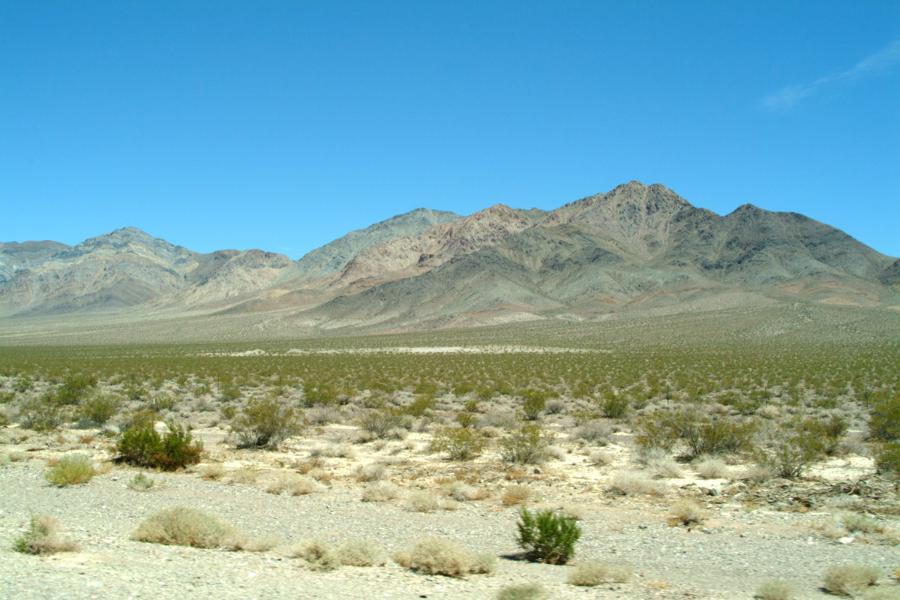
Armagosa Valley, Nevada (freefoto.com)

Last year, the New York Times ran an article about how a promising solar project in Armagosa Valley,  Nevada, by Solar Millenium ran hard up against western worries about water. The two proposed solar farms would require 1.3 billion gallons of water a year, or 20 percent of the local water available.

The Las Vegas Sun reports on the Skyline Solar facility in Nipton, California, that will use concentrating solar photovoltaic (CPV). CPV plants are expected to use much less water than solar thermal plants, which means they may be better candidates for places with lots of sun, but not as much water.

The energy-water nexus generally refers to needing water to produce energy and needing energy to move and filter water; however, it seemed fitting to include a story about using the sun and water to reduce energy use:

 NPR reports that the Camp Lejeune Marine Corps base in North Carolina is becoming one of the largest communities to widely install solar hot water panels. FLS Energy owns and installs the panels and then sells the hot water to the base, which means that there are basically only two main actors and decision-makers needed to install  systems on all 900 homes.  (The base is also planning a LEED Platinum fitness center – more info on the base website.)

San Francisco’s Smart Water Meters

1
                                                                                          water supply leak, Free Foto.com

San Francisco began to roll out its new ‘smart’ water meters to city residences this month. The new devices can accurately track water usage in real-time and the San Francisco Public Utilities Commission (SFPUC) plans to make personal water use data available to customers online. Other benefits include the streamlining of operations- meters communicate wirelessly, eliminating the need for house-to-house readings- and the early detection of system leaks and unusual usage surges.

The SFPUC will replace over 175,000 meters beginning with 5,000 this spring/summer,with an estimated install completion for the full number by 2012. The expectation is that the new meters will be able to assist individual and system-wide conservation efforts, increase response time for problems, and allow for a more accurate and refined fee structure.

California, as a drought-prone state, can stand to benefit greatly from increased water use data collection. As it stands today, water use is not uniformly tracked in all homes and businesses, nor is there any correlation between regional water scarcity and water service rates. While agriculture, industry and conveyance also play leading roles in the general water picture in the state, having accurate home and commercial usage data is a step forward, and can only be a benefit in creating sound management policies for this precious and scarce resource.

Anna’s Links – Smart Meters for Energy and Water

photo credit: freefoto.com

Many of you may have heard about the goings-on around the widespread installation of smart energy meters in California (after all, there have been lawsuits, legislative hearings, and mandated independent meter testing, just for the Pacific Gas and Electric meter installations).

So why go through all that to install smart energy meters? Because they hold huge promise for helping consumers reduce their energy use and for adding flexibility and reliability to how the grid is managed.

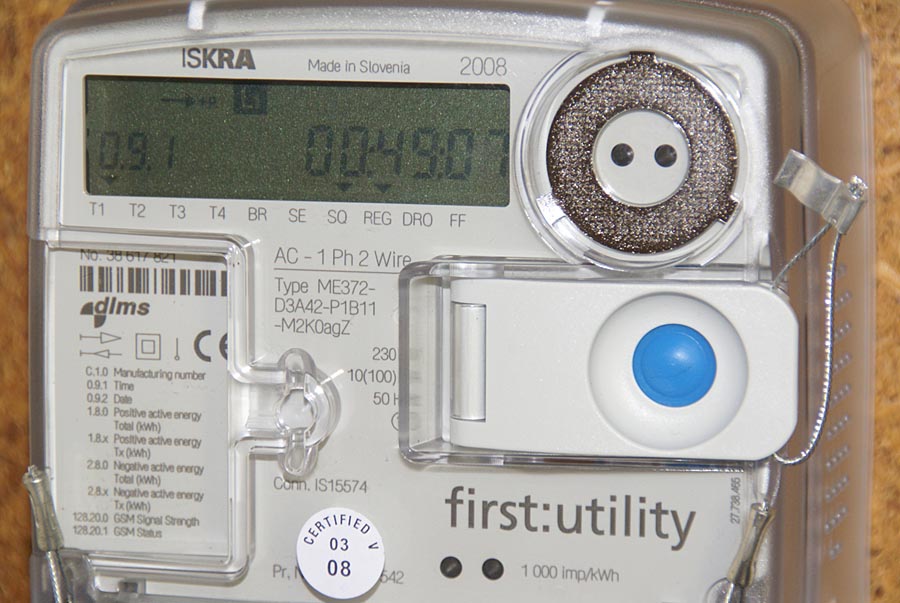
What you may not have heard as much about is that smart water meters are also being installed – more than half of California water utilities have some smart meters in their districts (via the New York Times). Ideally, smart water meters would provide real-time (or near real-time) feedback on water use to both the water utility and the consumer.

Also, Oracle has apparently developed an interest in smart water meters as a potential future market, as they already sell software systems to water (and power) utilities (via GreenTechmedia).

Anna’s Links – 5/26/10

A round-up of interesting (and depressing) analysis of the recent oil rig explosion and oil spill…

A “live” feed of the BP oil spill is now posted online (though traffic has been so high that it’s not always possible to view) – U.S. Energy and Commerce Committee.

Experts examining a previous video of the oil leak released by BP estimate that the size of the oil spill is much larger than official estimates – NPR.

Scientists fault the government for “failing to conduct an adequate scientific analysis of the damage and of allowing BP to obscure the spill’s true scope” – New York Times.

Some experts are starting to say that the oil leaks could last for years because “we don’t have any idea how to stop this” – National Geographic.

Aerial photos of the Gulf oil spill show its vast size – NASA Earth Observatory.

A scientist at Lawrence Berkeley National Lab notes that some of the detergents used to clean up spill sites can be more toxic that the oil itself – Lawrence Berkeley National Lab.

– – –

Other interesting tidbits from the web…

Two campuses of the University of California system, Berkeley and Davis, have been given  MacArthur grants to launch a new master’s degree program in sustainable development practice – UC Berkeley and MacArthur Foundation.

Developers in Las Vegas are cranking up their sales pitches for brand new homes again, even though the city has 9,500 empty houses and another 5,600 that were repossessed in the first quarter of 2010 – New York Times.

Las Vegas as a whole has been very dependent on growth and construction – the recent drop in new construction had a major impact on municipal funding – Aguanomics and Bloomberg.

Federal officials want public input on a proposal to revise policies for managing urban water shortages in the Central Valley – meetings will be held in Sacramento on May 26, June 23, July 20, and August 19 – The Sacramento Bee.