Anna’s Links – Water and Solar Energy

I recently wrote a post as an overview of the energy-water nexus. Here are a couple articles that highlight the link between solar projects and water.
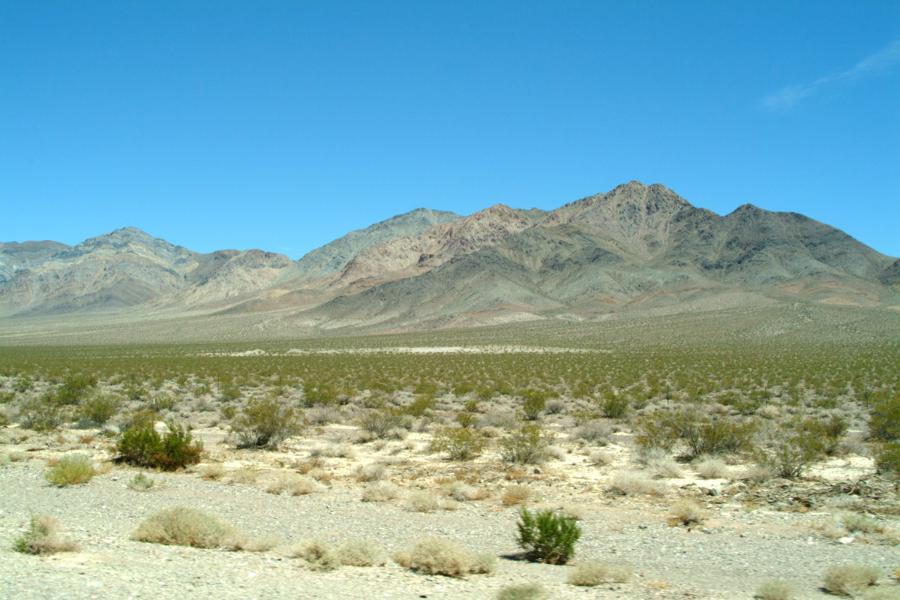
Armagosa Valley, Nevada (freefoto.com)

Last year, the New York Times ran an article about how a promising solar project in Armagosa Valley,  Nevada, by Solar Millenium ran hard up against western worries about water. The two proposed solar farms would require 1.3 billion gallons of water a year, or 20 percent of the local water available.

The Las Vegas Sun reports on the Skyline Solar facility in Nipton, California, that will use concentrating solar photovoltaic (CPV). CPV plants are expected to use much less water than solar thermal plants, which means they may be better candidates for places with lots of sun, but not as much water.

The energy-water nexus generally refers to needing water to produce energy and needing energy to move and filter water; however, it seemed fitting to include a story about using the sun and water to reduce energy use:

 NPR reports that the Camp Lejeune Marine Corps base in North Carolina is becoming one of the largest communities to widely install solar hot water panels. FLS Energy owns and installs the panels and then sells the hot water to the base, which means that there are basically only two main actors and decision-makers needed to install  systems on all 900 homes.  (The base is also planning a LEED Platinum fitness center – more info on the base website.)

Nina Maritz

2

This post is part of our series exploring the ways people and communities reuse, recycle and dispose of waste around the world.

– – –

I saw a presentation by Nina Maritz in San Francisco in 2006, and I have continued to think about her approach periodically over the years.

Nina Maritz is a Namibian architect whose work reflects local building strategies and is built with local labor.

One project that showcases her work is the Habitat Research and Development Center in Windhoek, Namibia. Among many goals and activities listed for the center are “promote sustainable and environmentally appropriate housing” and “develop local skills in sustainable housing construction methods.” The completed project is site appropriate, made from local materials, and uses a number of passive cooling methods to keep the occupants comfortable. Each design decision addresses a number of design challenges (for example, by using poles from invasive species, she could abstain from using rare local hardwood).

What I found particularly striking about Nina Maritz’s work, and what I keep returning to, is the careful reuse of materials throughout the project.

(Photos on Flickr and in ArchitectureWeek)

Wherever possible, it seems, the architect worked with local workers and artisans to reuse materials such as corrugated metal, storage drums, cans, and tires, in both functional and decorative ways. While this approach is difficult in many places because of stringent building code and the expense of labor, it evokes an entirely different way of looking at the world, where every object holds potential not just for its intended use but also for future uses.