
Recycling Center In Golden Gate Park To Close

2

The HANC recycling center is located just to the southwest of Kezar Stadium in Golden Gate Park. (Image credit: Wikimedia Commons)

– – –

According to the San Francisco Chronicle:

The Recreation and Park Commission unanimously approved plans for a community garden at the site long home to a recycling center run by the Haight Ashbury Neighborhood Council…

HANC, as the group is known, has run the recycling center at the location for 36 years, and also operates a native plant nursery there.

Recreation and Park Department officials said that the advent of curbside recycling and the need to dedicate more space for increasingly popular community gardens bolstered their resolve to act.

”HANC’s time has run out and it’s time for us to have a community garden,” said Commissioner Tom Harrison, a retired park gardener.

City officials, during several mayoral administrations, have threatened to shut down the program. They say it is incompatible with the park, creates noise and serves as a magnet for the homeless and crime.

Mayor Gavin Newsom, in the waning days of his administration, is now prepared to issue a 90-day eviction notice aimed at closing down the recycling operation, although the nursery may be allowed to stay.

You can read the entire story here.

– – –
An Upcoming Talk by Nancy Skinner

On Thursday, December 12, Nancy Skinner will speak on the UC Berkeley campus on state and local efforts to halt climate change. Nancy Skinner is Berkeley’s representative in the California state assembly, and she is a founder of ICLEI. Assemblymember Skinner will also discuss the launching of ICLEI’s Cities for Climate Protection Program, the national movement of mayors and cities working to reduce greenhouse gas emissions.

106 Wurster Hall, UC Berkeley campus

5:00 pm – 6:30 pm

More information here.

– – –

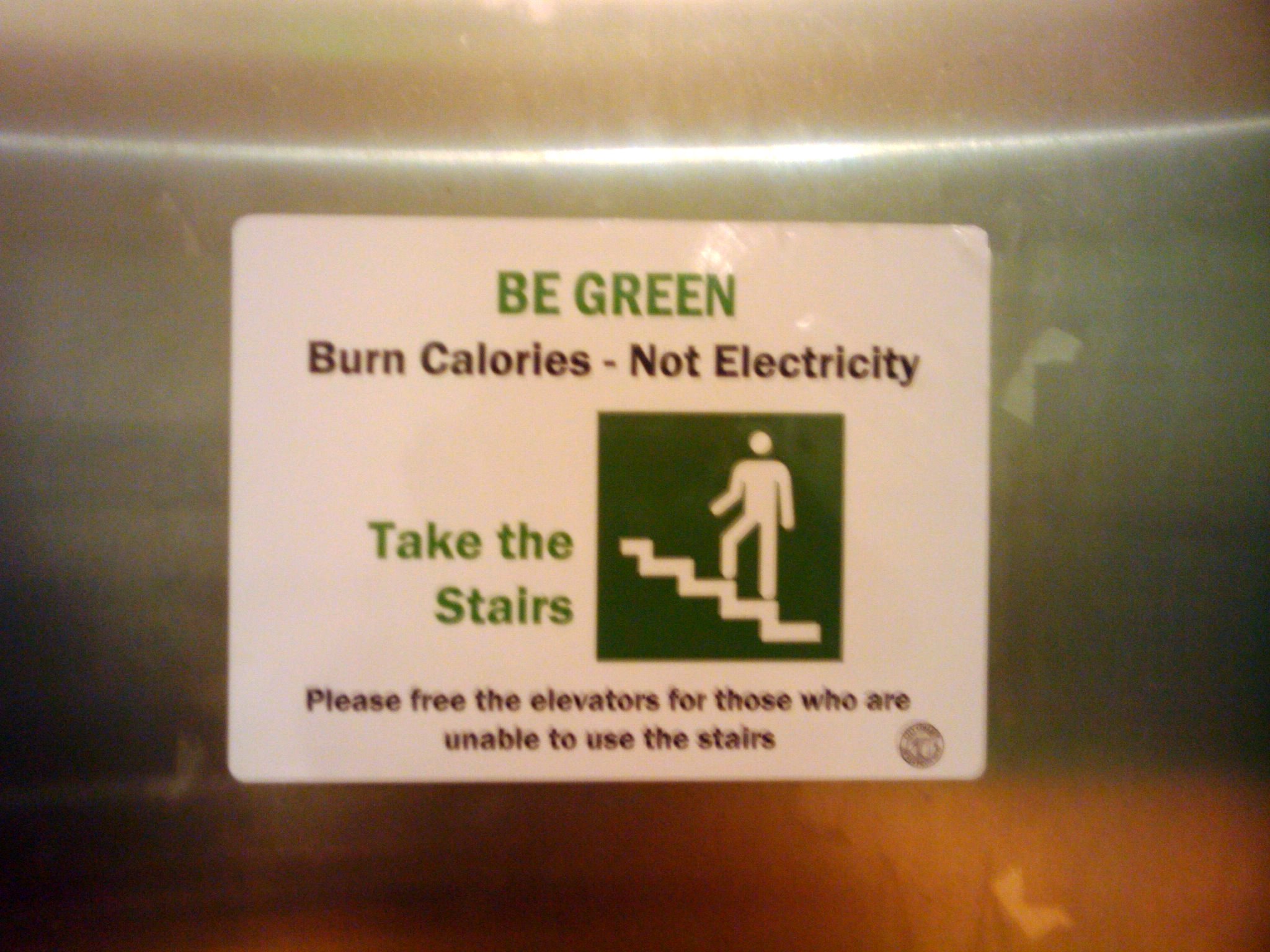
Photo – The Elevator

2

I recently saw this photo on the outside of the elevator at the City College of San Francisco campus in the Mission neighborhood of San Francisco. (Apologies for the blurry cell phone photo.)

– – –

More Tiny Houses!

5

We’ve highlighted tiny houses in the past – here are a few more that we’ve come across lately.

Image credit: Wikimedia Commons

– – –

Fuyuhito Moriya purchased a parking space in Tokyo, and then had an ultra-small three-story home built on the 30 square meter lot (about 323 square feet). CNN has a video here.

– – –

CNET recently ran an article on Tumbleweed Tiny Houses, which can be as small as 65 square feet. You can read the article here.

– – –

Dwell featured a small house in Toronto, located on a street full of other small houses, due to small lot sizes. You can read the article here. The architect, Andrew Reeves of Linebox, has a blog dedicated to the project.

– – –

Home Energy Improvements

3

Thermal Imaging of a House in Cambodia (Image credit: Wikimedia Commons)

– – –

Grist recently ran a piece on lessons learned by by shadowing a home energy inspector. The author highlighted a number major lessons, including:

  • It’s a social job.
  • Comfort matters more than pocketbook savings – for some homeowners.
  • It helps to see it and learn firsthand (especially for the blower-door test).
  • Thermal imaging cameras are nifty.
  • Attics should get insulation first, then walls and basements.
  • Most progress depends on the homeowner.
  • Utilities are driving the retrofit industry right now.
  • Renters have split incentives.

You can read the entire article, including the explanations of the lessons learned, on the Grist website here.

– – –

Lawrence Berkeley National Laboratory (LBNL) has a fairly new website called Driving Demand for Home Energy Improvements.

The website lists a number of reports and case studies about how to improve demand for home energy improvements, and findings from utility and government retrofit programs.

– – –

Assorted Links

A climate skeptic, Representative John Shimkus of Illinois, seeks the House Energy and Commerce Committee chairmanship.

San Francisco transportation officials are facing a shortfall of at least $137 million as they try to move forward with plans for a new subway tunnel for the city’s light-rail service.

Several glazing industry associations successfully appealed changes to ASHRAE Standard 90.1 that would have reduced the amount of glass allowed in commercial building envelopes.

– – –

New LEED Draft Open for Comment

1

Image Credit: USGBC

The first public comment draft of LEED is out for review. Comments are due by December 31, 2010.

This review period includes a revision of all of the LEED rating systems together, including New Design & Construction, Operations & Maintenance, Homes, and Neighborhood Development.

The drafts can be downloaded from the USGBC website here.

– – –

BuildingGreen.org has a summary of New Design & Construction changes and highlights major changes in each category:

USGBC released the draft to EBN just before the public comment period was to open. Our analysis of what’s (mostly) the same, what’s different, and what’s totally new follows. We focused our analysis on the LEED for New Construction (LEED-NC) rating system, but readers should see the rating system draft for all the rating systems, including details on LEED-NC that we didn’t have space to discuss.

You can see the changes for each category and read the entire article here.

– – –

For The Truly Nerdy – An ASHRAE Download

2

So, yes, I have to out myself as one of the truly nerdy…

– – –

Image credit: ASHRAE

From the ASHRAE website:

To promote energy efficiency, ASHRAE and the US Department of Energy are making Standard 90.1-2007 (I-P Edition) available for free download.

Standard 90.1 has been a benchmark for commercial building energy codes for over 35 years. It is an indispensable reference for engineers and other professionals involved in the design of buildings and building systems. The 2007 edition serves as the basis of many building codes.

You can download the free pdf document here.

– – –

For those that like to know what acronyms mean, ASHRAE stands for the American Society of Heating, Refrigerating, and Air-Conditioning Engineers. Their motto is now “Advancing HVAC&R to serve humanity and promote a sustainable world.” A cool bunch of very nerdy engineers – you can find out more about the organization here.

I would also like to add that ASHRAE is very generous with their support of students interested in buildings and energy.

– – –

Assorted Links

Drivers crossing greater downtown San Francisco and the southern border with San Mateo County could be hit with a new toll costing them as much as $1,560 a year.

Republican governors-elect intend to kill plan for new high-speed rail projects.

Levi’s is introducing a new line of jeans called Water<less, reducing water use in the manufacturing process.

– – –

Historic Vote by US Building Officials

2

Reuters reports that US building officials nationwide have voted to support the first building codes that require 30 percent more efficient buildings for every state under the 2012 International Energy Conservation Code.

Delegates also voted to eliminate the weaker Energy Chapter of the International Residential Code, supplanting it with a single nationwide uniform energy code for residential and commercial buildings.

Although some states, like California, have long had energy efficiency requirements in building codes, with a resulting flat-lining in home energy use in the state since the 1970s (to about half the average US use) most states have little or no requirements for reducing energy use. The International code has been the lowest common denominator; compelling safety, but little else in building codes. The minimum standards allowed energy to be wasted in heating and cooling homes in non compliant states by not requiring weather tight walls, roofs, windows or doors.

… … …

“It is notable that the votes that will have the most profound impact on national energy and environmental policy this year weren’t held in Washington or a state capital, but by governmental officials assembled by the International Code Council (ICC) in Charlotte, NC,” said William Fay, Executive Director of the Energy Efficient Codes Coalition.

You can read the entire article here.

– – –