Lots of Bay Area News

U.S. Representative and  House Appropriator Mike Honda secured funding to the tune of $2 million towards extension of the BART system to Silicon Valley as part of the FY 2011 Transportation, Housing and Urban Development spending bill. What is the “BART to Silicon Valley” project? It’s an extension of the existing BART system to Milpitas, San Jose, and Santa Clara starting from the future Warm Springs station in Fremont (along the eastern side of the South Bay).

– – –

Google Energy has signed its first contract, a 20-year wind power contract in Iowa. Google will sell the electricity on the spot market and retire the associated renewable energy credits (RECs) – via TechCrunch.

– – –

More people are freaking out about smart meters, but this time not in the Central Valley…

The Fairfax Town Council gave the nod to the creation of an ordinance that, if passed, would try to prevent PG&E from installing smart meters in Fairfax –  via the Marin Independent Journal.

The Marin Association of Realtors has issued a statement calling for a moratorium on its SmartMeter program due to concerns in three areas: concerns about overcharging, concerns about health effects from the radio waves, and concerns about PG&E imposing meters on folks that don’t want them – via the Marin Independent Journal.

The Marin Independent Journal also reports that the Marin supervisors have sent a letter to Michael Peevey, president of the California Public Utilities Commission (CPUC), asking the CPUC to suspend PG&E’s SmartMeter rollout until a commission has reviewed the funtion of the meters and until the health implications of the electronic emissions from the wireless devices has been addressed…

– – –

The Department of Energy announced yesterday that $122 million has been awarded to a team of scientists from California (including Lawrence Berkley National Lab) to establish an Energy Innovation Hub that will be focused on converting sunlight into liquid fuel.

– – –

They Don’t Have Water Meters?!

1

photo credit: freefoto.com

Many residents of California don’t have water meters. According to a recent column in the San Francisco Chronicle by Peter Gleick, the recent legislation mandating water meters is needed, as the many residents of California that don’t have meters are very reluctant to install them.

But everyone should have meters. According to Ellen Hanak, a water researcher with the Public Policy Institute on California, metered cities use about 15 percent less water than unmetered cities, and cities with a tiered rate system use an additional 10 percent less (via KQED).

A few statistics from Gleick’s column:

— Sacramento only has meters in 25 percent of residences, and has no plans to meter everyone else anytime soon.

— In the San Joaquin Valley, more than half of all residents don’t have water meters.

— The city of Fresno charges all single-family households a flat rate, no matter how much water is used.

Fresno’s water rates are some of the lowest in California, and it has some of the highest water use (3 times as high as Los Angeles residents, and 5 times as high as San Francisco residents, via The California Report). There is an interesting study comparing water rates – when the study was conducted (2006), the average monthly charge was $18.52 in Fresno County, $37.55 in Alameda County, and $57.25 in Santa Cruz County.

The meters are coming. There are several laws that will require the installation of meters for all Californians (via KQED).

— All homes built after 1992 must have meters.

— Cities that receive federal water have to install meters by 2013.

— All California cities have to install meters by 2025.

Seriously, though, 2025 is a long time for a state that has major water management issues.

– – –

Last year, there was a story from The California Report that covers the struggle to meter reluctant Fresno residents (listen to the story here).

Greenwashing

2

This post is part of our definitions series on “eco-lingo” and technical terms.

– – –

The term greenwashing is generally heard when one person or organizations accuses another of greenwashing a product or practice.

Greenwashing is when a company disingenuously promotes a product as “green” or as an more environmentally-friendly option.

The Wikipedia entry on greenwashing gives the following origin story for the term:

“Greenwashing was coined by New York environmentalist Jay Westerveld in a 1986 essay reagrdign the hotel industry’s practice of placing green placards in each room, promoting the reuse of guest towels, ostensibly to ‘save the environment’. Westerveld noted that, in most cases, little or no effort toward waste recycling was being implemented by these institutions…Westerveld opined that the actual objective of this ‘green campaign’ on the part of many hoteliers was, in fact, increased profit.”

Generally, a product, practice, or promotion is labeled as “greenwashing” when it seems that there has been significant effort or resources devoted to labeling something green, and much less effort devoted to looking at the underlying metrics in terms of environmental impact and actually improving environmental performance.

As an example, yesterday I passed a sign outside the local Walgreens advocating that I “save a tree by signing up for online promotions”. Another example is that many aerosol product labels still say “CFC-free” even though CFCs have been banned since before I was born.

Several years ago, TerraChoice Environmental Marketing put out a list of “Six Sins of Greenwashing”, which has now been expanded to seven.

The seven sins of greenwashing are:

1 – Sin of the hidden trade-off

2 – Sin of no proof

3 – Sin of vagueness

4 – Sin of worshipping false labels

5 – Sin of irrelevance

6 – Sin of lesser of two evils

7 – Sin of fibbing

TerraChoice has a comprehensive (and fun!) site covering the sins. The site also includes links to recent TerraChoice reports on greenwashing.

– – –

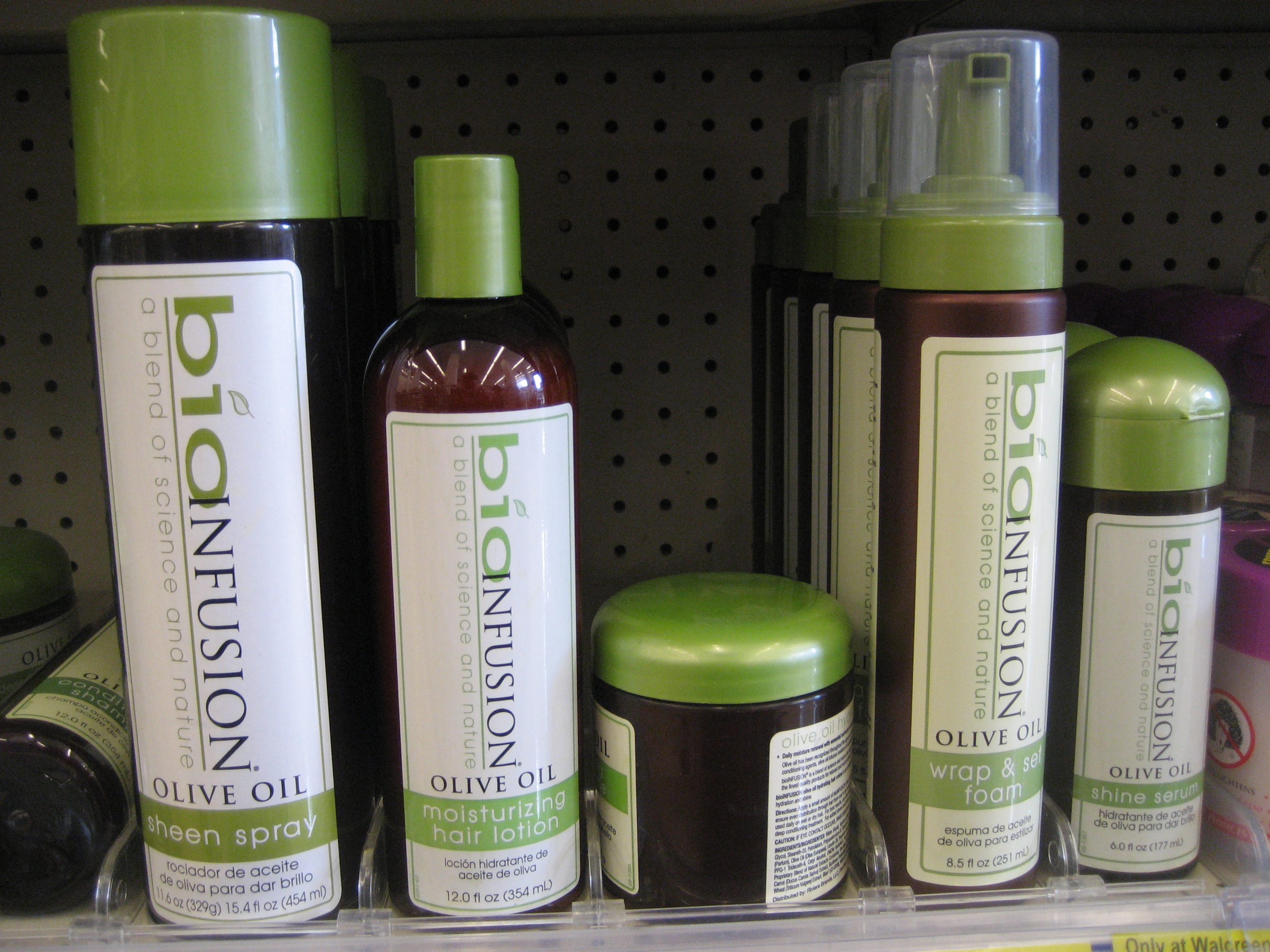
From my latest visit to the store (one of the MANY examples of greenwashing on the shelf):

– – –

What exactly does “sustainability” mean? How about “green”, “eco” or “environmentally friendly”? The truth is that these terms are just vague enough to mean many different things to many different people. With the staggering array of “green” products, ‘lifestyles’ and concepts being promoted by marketers and environmentalists alike (as well as the necessary coining of new terms to match new ideas) our definition series aims to make sense of the rising tide of “eco-lingo” and technical terms.

San Jose Might Sell Its Water System

1

To close budget gaps (the current shortfall is $116.2 million for the fiscal year 2010-2011), San Jose is considering privatizing its municipal water system, which provides water to about 124,000 people (via Silicon Valley Mercury News). The sale could net the city $50 million.

The current potential buyer is reported to be San Jose Water Company, which provides water to about 1 million people in the Bay Area, including about 80 percent of San Jose residents. The potential sale would likely result in higher water rates for the formerly municipal customers. The company has also expressed interest in leasing and operating the water system.

While I think it is shortsighted to sell city assets to fix budget gaps (what will be sold next year?), San Jose Water Company boasts on its website that it delivered less water in 2007 than it did in 1987, despite serving an additional 80,000 people. And the company credits its water conservation programs (more info here).

Finding Local Stimulus Projects

1

Recently while driving around Northern California, I’ve seen a number of signs saying “This project is supported by ARRA funds.” And I started wondering where all the local projects were. It turns out that if you go to Recovery.Gov, there is a map (here) where you can search by state or zip code to find nearby ARRA projects, as that information has been reported by the recipient of the funds.

photo credit: recovery.gov

You can click on each dot to get information about the organization and amount awarded.

You can see summaries by state (see California here) for different categories – by zip code, by top recipients, by top infrastructure projects, top congressional districts, by the funding federal agency, and by the jobs reported created.

Finding California Incentives and Rebates

1

There are hundreds of energy, water, and waste incentives, rebates, and services available for homes  in California, but it can be daunting to find them. Here are a few places to start:

Flex Your Power allows you to search for energy-related incentives and technical help available from utility companies, water agencies, and other organizations by entering your zip code.  A search in my zip code (in Berkeley) found 71 incentives and 18 services.

The Database of State Incentives for Renewables & Efficiency (DSIRE) lists state and local incentives by category and also lists related programs and initiatives. It can be much harder to figure out which specific programs are applicable, though. The database also lists federal incentives.

The California Urban Water Conservation Council lists programs participating in its Smart Rebates by water utility district.

For folks living in the East Bay:

East Bay Municipal Utility District lists its residential conservation rebates and services.

StopWaste.Org lists waste prevention and recycling services available to residents of Alameda County.

Advanced Framing

1

This post is part of our definitions series on “eco-lingo” and technical terms.

– – –

Also called Optimum Value Engineering (OVE), advanced framing is a way of  framing a house to reduce the amount of wood used. Careful design can both reduce the lumber needed and the waste generated by using standard material dimensions, increasing the spacing of framing members to 24″, adjusting the location of windows and doors, and adjusting the way corners are framed.

Aside from the benefit of reducing wood use and waste, there is the additional benefit that removing wood from walls creates additional space for insulation, improving the thermal performance of the envelope, especially in the corners.

A few specific examples of the difference between standard and advanced framing techniques are here and here.

– – –

What exactly does “sustainability” mean? How about “green”, “eco” or “environmentally friendly”? The truth is that these terms are just vague enough to mean many different things to many different people. With the staggering array of “green” products, ‘lifestyles’ and concepts being promoted by marketers and environmentalists alike (as well as the necessary coining of new terms to match new ideas) our definition series aims to make sense of the rising tide of “eco-lingo” and technical terms.

Stimulus Money for Energy Efficiency

1

The Sacramento Municipal Utility District (SMUD) will receive $20 million from the federal stimulus funds designated for California. The money will launch a Home Performance Program, which will offer HERS audits and energy upgrades to about 15,000 homes in SMUD territory. Because the program is expected to increase demand for trained contractors and auditors, SMUD will be working with the Sacramento Employment and Training agency and Los Rios Community College to develop training programs – via SMUD.

The California Energy Commission also approved $8 million for the County of Los Angeles, $3 million for the County of San Diego, and $1.9 million for the City of Fresno from Recovery Act Energy Efficiency Conservation Block Grants for residential energy retrofit programs – via Imperial Valley News.

– – –

There’s a cool map of hotspots where water and energy are coming into conflict around the world –  IEEE Spectrum.

– – –

There’s a new study from Arizona State University that analyzes the life cycle impact of swimming pools in nine cities in terms of their consumption of chemicals, water, and energy – via Environmental Science & Technology.

Problems for PACE Programs?

1

An article in the New York Times today highlights problems that may arise for Property Assessed Clean Energy programs (initiated here in Berkeley in 2008).  Fannie Mae and Freddie Mac have warned lenders that “an energy efficiency lien may not be senior to any mortgage delivered” to the loan giants.

For at least one home in California, the lenders refused to approve a loan for the purchase of a home with heating and cooling systems financed through a program in Sonoma County.  The property tax assessment that was to cover the cost of the systems had to paid off before the lenders would issue a loan for the property.

The full New York Times article, with more information about PACE programs and implications for them and other property tax assessment programs, is here.

More information about PACE programs can be found here.

Fast-Track Geothermal Project in Nevada


photo credit: freefoto.com

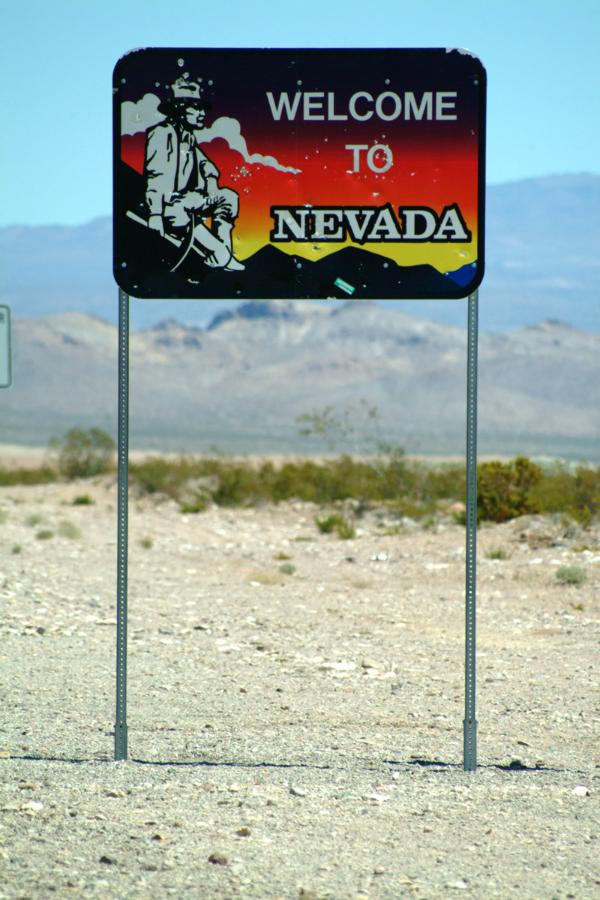
The Las Vegas Sun reports that the federal Bureau of Land Management just approved a fast-track geothermal project in Pershing County, Nevada. The company that proposed the project, Ormat Technologies, plans to build a 30 megawatt plant that covers about 13 square miles.

From the BLM announcement – “The BLM Fast-Track projects are those where the companies involved have demonstrated to the BLM that they have made sufficient progress to formally start the environmental review and public participation process. These projects could potentially be cleared by December 2010, thus making them eligible for economic stimulus funding under the American Recovery and Reinvestment Act of 2009. There are 34 national fast-track projects – 14 solar, 7 wind, 6 geothermal, and 7 transmission lines.”

A list of fast-track renewable energy projects can be found here on the BLM website.

Nevada currently has 11 geothermal plants, 3 of which are on Bureau of Land Management-managed public land.