Bay Watch

photo credit: Wing

The following are a few stories of interest tracking the latest developments in water quality for the San Francisco Bay region.

The S.F. Chronicle reports that a loophole in the laws protecting California’s coastal waters is finally being closed: sewage discharge from ships is now prohibited less than 3 miles from shore. The Chron reports that while many sea-going vessels have been voluntarily following this protocol for years, some even waiting until further off-shore, the new legislation will formalize the practice and help to address water quality issues along state beaches. Read the full story here.

Oakland’s splendid Lake Merritt is in for an overhaul. The 140 acre “lake” is actually a brackish tidal slough that is connected to the San Francisco Bay via a narrow channel. However for many years its waters have stagnated with inadequate connectivity to the Bay due to the deterioration of the channel. All that is about to change as the $115 million that was allocated to improve Lake Merritt  in 2002 as part of  Bond Measure DD to improve the lake finally hits the ground. The improvements to the lake will be chiefly through improving the connections between the bay and the lake, and the removal of a portion of 12th Street at the southern end of the lake. Read a thorough account of the project at Quest, here.

BCDC (the Bay Conservation and Development Commission) released it’s draft Subtidal Habitat Goals Project report this summer. The project represents a ” comprehensive and long-term management vision for research, restoration and management of the subtidal habitats of the San Francisco Bay”. Read the draft report here.

Cap and Trade

1

This post is part of our definitions series on “eco-lingo” and technical terms.

– – –

photo credit: David Iliff, Wikimedia Commons

Cap and Trade (C&T) is also known as “pollution credits” or “emissions trading”. The basic premise of C&T is to provide a means for reaching mandatory pollution reduction targets in an incremental (and thus cost-saving) fashion. In a cap and trade system model, a regulatory entity (typically a governmental body) will assign a limit to the amount of pollution that certain high-impact industries can emit. High polluters can then essentially raise the ceiling on their allowable limits by engaging in a specialized market activity, i.e., buying shares or credits from those others who operate below their allowable limits. The regulatory limits are the “cap” and the market activity is the “trade”.

C&T activity is thus designed to reward those industries and companies that are aggressively exceeding their environmental performance goals, while charging a premium to those who do not stay within their assignations (because they have to purchase credits to make up for their overage). The idea is that purchasing pollution credits will literally buy time for polluters to clean up their act, and indeed a C&T program may include “caps” that step down over time to meet tighter standards.

While C&T is not limited to “greenhouse gas emissions” or carbon dioxide, the specialized trading done around these types of pollutants is one common example, and is referred to as a carbon market. Global carbon markets have taken off hugely among European and other nations that have signed the Kyoto Protocol (adopted in 1997, in force as of 2005) pledging targeted reductions in greenhouse gas emissions.

– – –

What exactly does “sustainability” mean? How about “green”, “eco” or “environmentally friendly”? The truth is that these terms are just vague enough to mean many different things to many different people. With the staggering array of “green” products, ‘lifestyles’ and concepts being promoted by marketers and environmentalists alike (as well as the necessary coining of new terms to match new ideas) our definition series aims to make sense of the rising tide of “eco-lingo” and technical terms.

– – –

New Recycling Center for El Cerrito Residents

1

photo source: Wikimedia Commons

The City of El Cerrito is calling upon residents to attend several public meetings in anticipation of the opening of a new recycling center, including discussion of the planning, use and design of the facility. The second of these public meetings will be taking place Thursday, August 26 at the El Cerrito City Hall from 7 to 9 p.m. The third and final public meeting will take place on  Tuesday, September 14 from 5 to 7 p.m.

Read background information on the new recycling facility project here. For more information about the meetings and environmental programs in El Cerrito, visit the City of El Cerrito’s Environmental Services Division here.

The meetings will take place in the El Cerrito City Hall Council Chambers, 10890 San Pablo Ave, El Cerrito.

– – –


California’s “Air Basins”

1

The state of California is divided geographically into 15 different “air basins” in order to regulate air emissions on a regional, rather than a local basis. The divisions were decided upon based on both geographically like features (in some cases “air basins” are literally geographic basins surrounded by mountains) and by political boundaries, such as counties. While air quality can vary from basin to basin, emissions and pollution are obviously not confined to air basin boundaries.

The nine county Bay Area makes up its own designated air basin, the “San Francisco Bay” air basin. This basin is home to the second largest metro population in the state and is characterized by high vehicle miles traveled, several regional airports and industrial activity. Being a coastal region, wind and weather patterns can have a dramatic effect in transporting the pollution from the region into inland areas.

To find out more about the San Franciso Bay air basin and the 14 other air basins in California, visit the Air Resource Board’s interactive map here, get the latest air quality reports for your region from the annual California Almanac of Air Quality and Emissionsand check out a list of 50 things you can do to improve California’s air quality, here.

– – –

Patch-working the Grid

1

This Friday’s links highlight a few examples of global progress toward integrating cleaner energy into conventional energy grids.

Image credit: Wikimedia Commons

The New York Times reports on the impressive bump from 17% to nearly 45% renewable-source energy in Portugal’s grid over the past five years. However, the gain in cleaner energy has come at a hefty premium for consumers- take a look at how the Portuguese are balancing it all.

Visit Australia’s Clean Energy Council website and have a look at the interactive map of all clean energy plants over 100kW in operation.

Denmark’s official website cites 12 large scale solar operations in the country that add up to 20% of annual energy demand and offer flexibility within the national grid.

Lastly, read a discussion of progress toward integration of wind energy into European energy grids on the European Wind Energy Association’s website.

– – –

Bus Rapid Transit (BRT)

1

This post is part of our definitions series on “eco-lingo” and technical terms.

– – –

If you have read articles about urban transit in recent years, chances are you have run across the phrase “BRT” or “bus rapid transit”. BRT refers to a mode of bus travel that is characterized by streamlined operations on heavily traveled routes to reduce travel and wait times and/or increase average daily trips. Elements of BRT may be any combination of dedicated bus lanes, limited stop “express” buses, increased coordination for “signal priority” at stop lights, quick-boarding platform placement and configuration , curb cuts and turn-abouts for faster maneuvering of buses and pre-board fare collection.

The argument for BRT is generally that there is an increasing need for fast and efficient public transit in cities spurred by factors such as population growth and greenhouse gas reduction goals. However, rail systems are extremely costly to build and maintain, and many of America’s cities lack even basic public rail infrastructure. BRT can bridge this gap and provide the efficiency and effectiveness of a rail system while utilizing the already existing roadways.
Visit AC Transit’s BRT page here, and visit the National Bus Rapid Transit Institute here.

– – –

What exactly does “sustainability” mean? How about “green”, “eco” or “environmentally friendly”? The truth is that these terms are just vague enough to mean many different things to many different people. With the staggering array of “green” products, ‘lifestyles’ and concepts being promoted by marketers and environmentalists alike (as well as the necessary coining of new terms to match new ideas) our definition series aims to make sense of the rising tide of “eco-lingo” and technical terms.

– – –

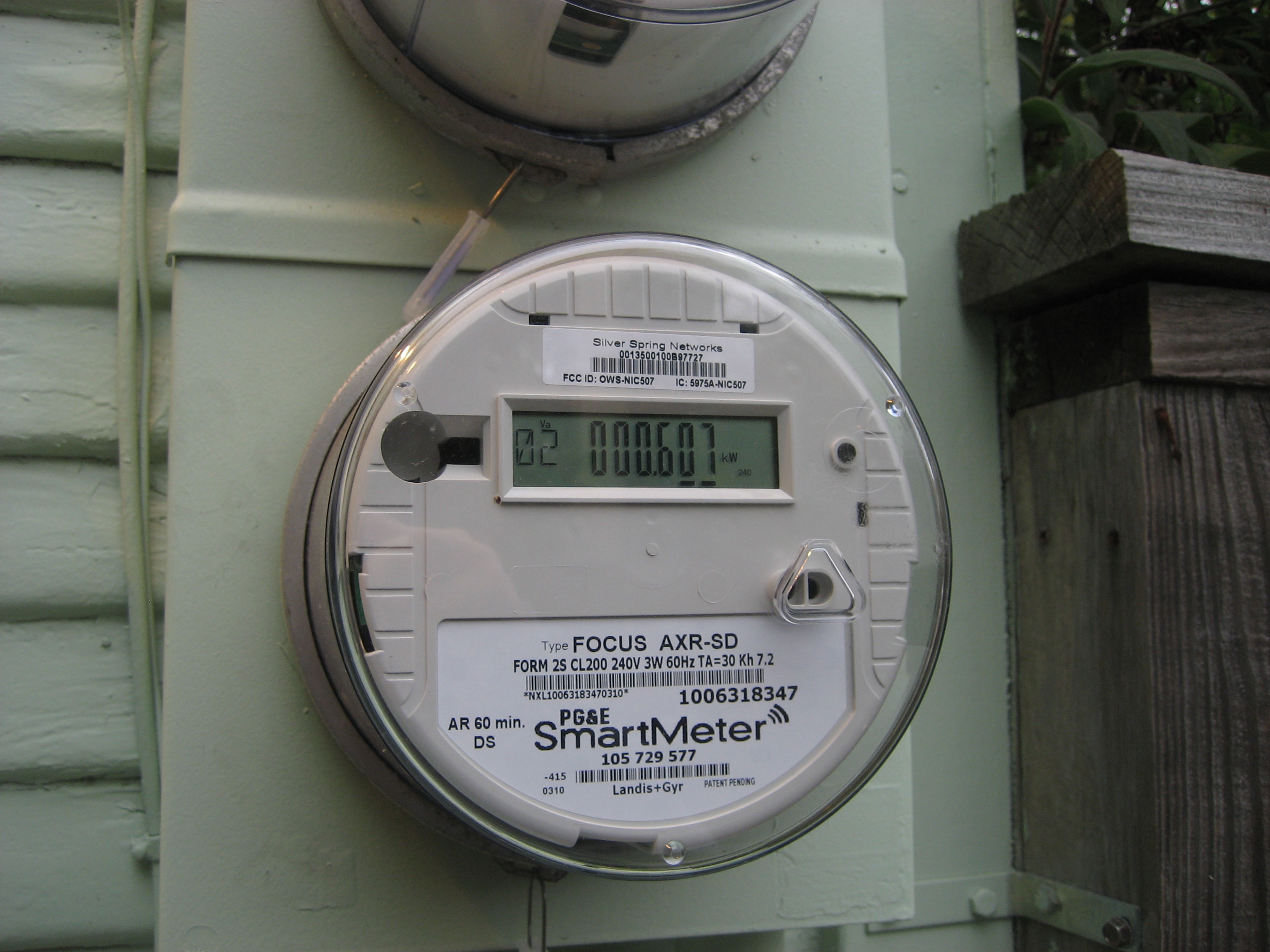
Calls For A Third Party Smart Meter Study

Pacific Gas and Electric Company has been facing a number of challenges in its attempts to roll out Smart Meter technology throughout California.  Advocates of the technology promote the meters as an essential component in realizing energy efficiency goals. Opponents have raised concerns about the accuracy and privacy of the meters and are increasingly raising concerns about public health and safety issues. The meters use wireless electromagnetic signals that provide real-time readings. Some customers complain that the new meters are causing them to be over-charged, yet it seems inevitable that there should be some discrepancy when moving from an older less precise system to a newer more responsive one.

However, the privacy and health and safety arguments represent much more complex and nuanced issues. The technology used by the meters is not much different than that used for cell phones or a myriad other everyday devices. However, under the current deployment of the meters, there is no ‘opt-out’ proviso, meaning that those who raise concerns over the meters are not left with a choice. Thus, it is not just a cut-and-dried matter of accuracy, but also a stickier problem of public perception, personal choice and the questioning of the adequacy of the Federal Communication Commissions’ safety standards by local communities. For example, it was widely reported this week the Town of Fairfax issued an emergency ordinance that will put a six month moratorium on the installation of the meters citing accuracy, privacy and safety concerns.

According to an article in the San Rafael Patch, San Rafael Assemblyman Jared Huffman who represents Marin and Southern Sonoma County (including the Town of Fairfax) has called for an independent review by the California Council on Science and Technology to determine the adequacy of FCC standards and provide more substantial science to the debate.  Huffman commented “If the FCC standards are deemed adequate, then the SmartMeter program can move forward with greater public confidence in the safety of the devices,” Huffman said.  “If the standards are inadequate, we need to know that so that we can get to work on better standards.”

Read more about Fairfax’s decision here, and listen to KQED’s coverage here.

Berkeley’s New Bike Station

1

Bike Station is an outfit that seeks to help municipalities and transit agencies reach their goals for transit oriented development by providing spacious, secure bike parking and bicycle rentals and repair services at key points along public transit routes. After months of anticipation, Berkeley’s new Bike Station opened to the public this month. The Berkeley Bike Station is the second largest in the country and expands the capacity for Downtown Berkeley BART friendly bicycle parking four-fold.

Funded in partnership by the City of Berkeley and BART, the Bike Station is located at 2208 Shattuck Avenue, just a half block from the BART entrance, and provides free bike parking to commuters from 9 a.m. to 5 p.m. For the cost of a few pennies an hour, commuter memberships are also available for those who want off-hour cardkey access.

California – 20th in Beach Water Quality

1

photo credit: Alan Cleaver 2000

According to the National Resource Defense Council’s annual water quality report for the nation’s beaches, this year had the sixth highest levels of contamination in the 20 year history of the study. The NRDC reports that a range of causes are contributing to dirtier coastlines, including stormwater runoff and aging sanitation and combined sewer systems that may overflow into coastal waters during storm events.

Although contaminated waters can pass pathogens along to swimmers, the water tests currently employed take up to 24 hours to reveal problems, and so warranted beach closures are often delayed.

How does California fare in all of this? Of the 30 states with coastal waters, the cleanliness of California beaches rank at a sad #20. The top 3 polluted beaches include North Avalon beach in Los Angeles County where 82% of sampled water exceeded national pollution standards; Mendocino County’s Pudding Creek beach where 65% of samples exceeded national standards; and Poche County beach in Orange County that had an excessive pollution rate of 62%.  The county that received the dubious honor of  having the highest percentage of  beach water samples that  exceeded national pollution standards was San Francisco County at 17%. However, on a more positive note, the level of pollution in California beach water has trended downward in the last five years.

Read the report on California’s coastal waters, hereand the full Testing the Waters NRDC report, here.

Reactions to the Stalled U.S. Climate Bill

1

This edition of Friday links is dedicated to headlines about the stalling of Senate passage of a comprehensive U.S. climate bill.

The Economist provides a thorough overview of the situation and its implications for legislation, industry and legal tussles for years to come, here.

An article in Reuters puts the issue into its global context, here.

From the U.K. Guardian, Eric Pooley asks Where next for the wrecked U.S. climate bill?

And finally, the Huffington Post has a page dedicated to the climate bill, related photos and breaking coverage.

– – –