Assorted Links

Here’s a quick round-up of some of some of the latest stories on the controversy surrounding the installation of SmartMeters in California, especially by PG&E.

– – –

According to an independent report by the California Council on Science and Technology, the intensity of the SmartMeters’ radiation falls well within federal limits for wireless devices.

– – –

Pacific Gas & Electric Co. does not plan to comply with Marin County’s moratorium on the installation of its controversial wireless utility meters (aka SmartMeters).

– – –

Marin County sherriffs announce that they will not enforce the SmartMeter ban.

– – –

Two women were arrested in Rohnert Park, California today for blocking a truck carrying smart meters. The arrests follow two earlier, similar ones in the area.

– – –

Upcoming Bay Area Events, January 2011

Happy New Year Zero Resource Readers!

Below is a collection of interesting events for the month of January.

– – –

Electric Vehicles + Smart Grid

Dian Grueneich, Former Commissioner, California Public Utilities Commission, Mark Duvall, Director of Electric Transportation and Energy Storage, Electric Power Research Institute and Ted Howes, Partner, IDEO, discuss new technologies and their implications for the future of power generation, while Anthony Eggert, Commissioner, California Energy Commission, Transportation Lead, Diane Wittenberg, Executive Director, California EV Strategic Plan, Diarmuid O’Connell, Vice President of Business Development, Tesla Motors, and Marc Geller, Co-founder, Plug-In America, discuss the future of the electric car in California. At the San Francisco Commonwealth Club, with a networking break between topics.

Thursday, January 13,  9 – 11:30 a.m.

595 Market St., 2nd Floor, San Francisco, CA

$45 member, $65 standard, and $15 student tickets

event link


A Look Ahead at California’s Clean Energy Future

Panama Bartholomy from the CEC and Emma Wendt from PG&E discuss the strengths and weaknesses of the new report “California’s Clean Energy Future”, jointly issued by the California Air Resources Board, California Energy Commission and the California Environmental Protection Agency, among others.

SPUR Evening Forum, Tuesday January 25, 6p.m.

654 Mission Street, San Francisco, CA

free to SPUR and Association of Environmental Professionals members, $10 general admission

event link


Film, ‘ A Sea Change: Imagine A World Without Fish’

The San Francisco Public library will be hosting two free screenings of  ‘A Sea Change’.  “The documentary film A Sea Change, broadens the discussion about the dramatic changes we are seeing in the chemistry of the oceans, and conveys the urgent threat those changes pose to our survival, while surveying the steps we can take to reduce the severity of climate change.”

Wednesday, January 26, 6 p.m. and Saturday, January 29 at 2 p.m.

Koret Auditorium, Main Library, 100 Larkin St., San Francisco, CA.

free

event link


“Transforum” with Peter Calthorpe: ‘Urbanism in the Age of Climate Change’

Highly influential urban planner Peter Calthorpe discusses his new book, ‘Urbanism in the Age of Climate Change’.

Thursday, January 27, 6:30 p.m.

Hosted by Transform, and held at the SPUR Urban Center, 654 Mission Street, San Francisco, CA.

$15, rsvp recommended.

event link


“Save Our Caltrain!” Summit

Attend this summit to learn about and discuss the severe fiscal crisis facing Caltrain, an important Bay Area transit agency that lacks its own dedicated funding, and connect with others working to find solutions. Organized by the Friends of Caltrain.

Saturday, January 29, 8:30 a.m. – 2:30 p.m.

Samtrans Auditorium 1250 San Carlos Avenue, San Carlos, CA

free

event link

– – –

New Year, New Light Bulb Standards in CA

1

(Image credit: Wikimedia Commons)

– – –

A new federal law, the Energy Independence and Security Act of 2007 (EISA), creates new energy efficiency standards for light bulbs sold in California. According to a press release from the California Energy Commission:

While the country will adopt this standard on January 1, 2012, California was given authority to implement the national standards one year earlier to avoid the sale of 10.5 million inefficient 100-watt bulbs in 2011 which would cost consumers $35.6 million in higher electricity bills…

The standard in California states that a 100-watt bulb manufactured on or after January 1, 2011 must use 28 percent less energy (i.e. a 100-watt bulb may not use more than 72 watts). The new 72-watt replacement bulb will provide the same amount of light (i.e. lumens), use less power, and cost less to operate.

For more information, go to:

– – –

Cancun Climate Summit, part 2

2

Global Temperature Anomaly Map 2000-2009, NASA

(see my previous post for background info on the Cancun Climate Summit)

The Cancun Climate Summit, 16th Conference of the Parties (COP16) wrapped up on Saturday morning. With modest expectations widely held after the last years’ highly anticipated COP15 in Copenhagen failed to come to an accord, in the end the Cancun summit has succeeded in achieving a broad-based consensus and vision, if not a road map on how to get there.

Delegates from 194 countries remained deadlocked over the week of meetings in Cancun until a compromise was dramatically reached on the closing day. The conference did not produce another legally binding framework like 1997’s Kyoto Protocol- the terms of which expire next year- but it puts into place the building blocks for such an agreement to be forged.

Key goals include:

– Industrialized countries are charged with developing low carbon development plans and strategies and assessments to meet them.

– A Green Climate Fund will be established and administered by the United Nations in order to provide financial support to the climate change mitigation goals of developing nations. A total of $30 billion in “fast start” finance from developed nations will be secured up to 2012, with a goal of $100 billion in longterm funds to 2020.

– For the first time, a U.N. document sets the imperative that global temperatures must not rise more than 2 degrees C, based on pre-industrial levels.

– A new “Cancun Adaptation Framework” will become established to help undeveloped nations with the necessary planning and technical support to implement their climate mitigation goals.

The next U.N. Climate Change Summit will take place next winter in Durban, South Africa.


More on the outcome of the COP16 Summit:

U.N. Climate Talks End, The Wall Street Journal

Progress on Climate Fund, but Questions Remain, Mother Jones

The United Nations Framework on Climate Change website

– – –


Recycling Center In Golden Gate Park To Close

2

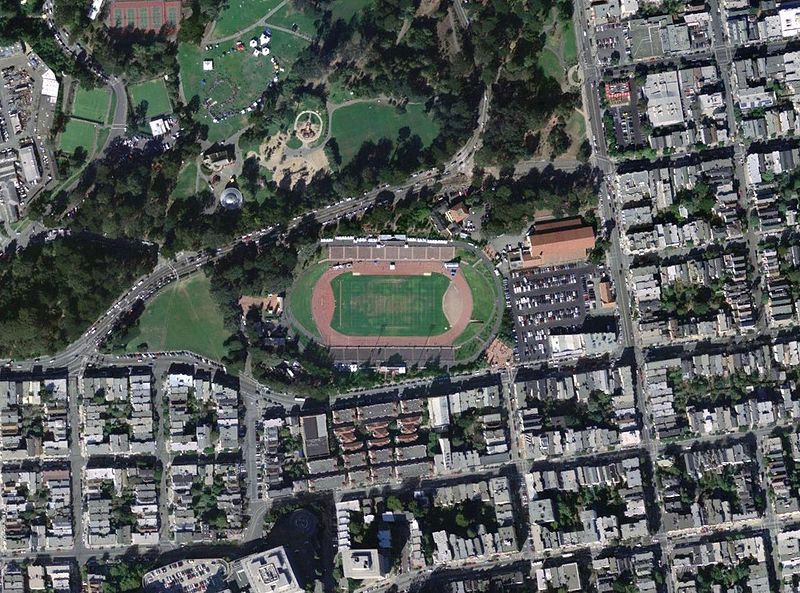
The HANC recycling center is located just to the southwest of Kezar Stadium in Golden Gate Park. (Image credit: Wikimedia Commons)

– – –

According to the San Francisco Chronicle:

The Recreation and Park Commission unanimously approved plans for a community garden at the site long home to a recycling center run by the Haight Ashbury Neighborhood Council…

HANC, as the group is known, has run the recycling center at the location for 36 years, and also operates a native plant nursery there.

Recreation and Park Department officials said that the advent of curbside recycling and the need to dedicate more space for increasingly popular community gardens bolstered their resolve to act.

”HANC’s time has run out and it’s time for us to have a community garden,” said Commissioner Tom Harrison, a retired park gardener.

City officials, during several mayoral administrations, have threatened to shut down the program. They say it is incompatible with the park, creates noise and serves as a magnet for the homeless and crime.

Mayor Gavin Newsom, in the waning days of his administration, is now prepared to issue a 90-day eviction notice aimed at closing down the recycling operation, although the nursery may be allowed to stay.

You can read the entire story here.

– – –

Cancun Climate Summit, part 1

3

A crowd gathers in front of Copenhagen’s Bela Center  in 2009 where the COP15 talks took place. Source: Wikimedia Commons

The United Nations Climate Change Conference is now underway in Cancun, Mexico, from November 29 to December 10. The conference, also known as COP16/CMP6, represents the 16th Conference of the Parties of the United Nations Framework Convention on Climate Change (COP) and the 6th Conference of the Parties serving as the meeting of the Parties to the Kyoto Protocol (CMP).

Background

The United Nations Framework Convention on Climate Change was adopted in 1992 and came into force in March of 1994. It is ratified by 194 parties. The purpose of the Framework is to acknowledge among nations the shared interest in climate change mitigation and preparedness for any inevitable rises in temperature.

One outcome of the COP is 1997’s Kyoto Protocol. The Protocol went a step further than the Framework by setting legally binding targets for greenhouse gas emissions reductions among 37 industrialized nation signatories and the European Union, representing an average pledge of five per cent reductions against 1990 levels during the five-year period 2008-2012. As of November 2010, 192 states have ratified. The United States has never ratified or put the Protocol into force, although it remains a part of the U.N. Framework Convention on Climate Change.

This Year’s Conference

Expectations for the COP16 appear to be cautious, if not low. The Conference is hosting about 15,000 participants- just a fraction of the 50,000 strong delegation that turned out to Copenhagen’s COP15 in 2009. Facing down the disappointing lack of accord in the Copenhagen talks, the continued strife in the global economy and not much hype from the media, the Cancun talks have their work cut out.

Below is a link round-up of early developments and perspectives on the talks:

Cancun and the new economics of climate change,  U.K. Guardian

Cancun climate change summit: America plays tough, U.K. Guardian

Climate Change Conference begins in Mexico, Voice of America

Cancun’s First Goal: Do Better than Copenhagen, Time Magazine

Watch live and on-demand webcasts of the conference at the UNFCCC website, here.

Visit the U.K. Guardian’s Interactive Timeline of Climate Talks, here.

Upcoming Events

Daylighted  Marin Creek (Village Creek) as it flows through U.C. Village (Image credit: Wikimedia Commons)

– – –

Tonight:

Is Urban Stream Restoration Possible?

Ann L. Riley will present case studies from urban stream restoration projects. Riley serves as the advisor on watershed and river restoration for the San Francisco Bay Regional Water Quality Control Board and is the Executive Director of the Waterways Restoration Institute.

When: Wednesday, November 17, 7 p.m.

Where: Dimond Library, 3565 Fruitvale Ave. (cross street MacArthur), Oakland, CA

– – –

Net Impact San Francisco: Climate Change Policy Update – Looking forward to the next decade globally and locally

Net Impact SF’s professional chapter’s final meeting of 2010 will focus on the status and trajectories of national, international and local policy around climate change.

When: Tuesday, December 14, 7 – 9 p.m.

Where: TBD – More details here.

– – –

Compostmodern ’11 : Fertile Ground for Designing a Sustainable Future

Compostmodern is a two-day event at the interface of sustainable product design and industry to solve pressing sustainability and ecological  problems.   “Compostmodern engages designers, sustainability professionals, artists and entrepreneurs to collaborate in realizing a more environmentally, culturally and economically sustainable world.”

When: January 22 – 23, 2011

Where:  Day 1 – Herbst Theatre, 401 Van Ness Ave at McAllister St., San Francisco, CA

Day 2 – The Academy of Art, 79 New Montgomery between Market and Mission Streets, San Francisco, CA

Early bird rates until November 30. More info here.

– – –

New LEED Draft Open for Comment

1

Image Credit: USGBC

The first public comment draft of LEED is out for review. Comments are due by December 31, 2010.

This review period includes a revision of all of the LEED rating systems together, including New Design & Construction, Operations & Maintenance, Homes, and Neighborhood Development.

The drafts can be downloaded from the USGBC website here.

– – –

BuildingGreen.org has a summary of New Design & Construction changes and highlights major changes in each category:

USGBC released the draft to EBN just before the public comment period was to open. Our analysis of what’s (mostly) the same, what’s different, and what’s totally new follows. We focused our analysis on the LEED for New Construction (LEED-NC) rating system, but readers should see the rating system draft for all the rating systems, including details on LEED-NC that we didn’t have space to discuss.

You can see the changes for each category and read the entire article here.

– – –

3rd Round of AC Transit Cuts Averted – For Now

2

AC Transit and the union representing its bus drivers and mechanics reached a new three year contract deal on Tuesday after months of painful arbitration. Both parties were ordered to binding interest arbitration after the union took the agency to court over an imposed contract in July. The agreement will save the agency a projected $38 million over the life of the contract.

The new contract will require that union members make co-pays for medical visits and take a stepped-down pay decrease over the next three years (6 % in the first year, 5% in year two, and 3% in year three).

The agreement avoids the December implementation of deep weekend service cuts that could have been a debilitating blow to an already tested ridership that has borne both two rounds of cuts (amounting to over 14% of service) and a fare increase during the past year. AC Transit has also instituted management cuts and spending reductions during its fiscal crisis.

Interim General Manager Mary King issued a statement saying, “There are no winners or losers in this arbitration. Both AC Transit and the union focused on what is best for the riders and taxpayers of this district and what is in the long-term interest of maintaining public transit for the people we serve.”

Although the December cuts have been avoided for now, the agency will still be struggling with a budgetary deficit.

Read more at AC Transit’s website and in the SF Examiner.

– – –

Historic Vote by US Building Officials

2

Reuters reports that US building officials nationwide have voted to support the first building codes that require 30 percent more efficient buildings for every state under the 2012 International Energy Conservation Code.

Delegates also voted to eliminate the weaker Energy Chapter of the International Residential Code, supplanting it with a single nationwide uniform energy code for residential and commercial buildings.

Although some states, like California, have long had energy efficiency requirements in building codes, with a resulting flat-lining in home energy use in the state since the 1970s (to about half the average US use) most states have little or no requirements for reducing energy use. The International code has been the lowest common denominator; compelling safety, but little else in building codes. The minimum standards allowed energy to be wasted in heating and cooling homes in non compliant states by not requiring weather tight walls, roofs, windows or doors.

… … …

“It is notable that the votes that will have the most profound impact on national energy and environmental policy this year weren’t held in Washington or a state capital, but by governmental officials assembled by the International Code Council (ICC) in Charlotte, NC,” said William Fay, Executive Director of the Energy Efficient Codes Coalition.

You can read the entire article here.

– – –