Noelle’s Links – Fireworks

The July 4 holiday is almost upon us, and with that comes the celebratory fireworks. While fireworks displays can be fun and dazzling, they do have an effect the environment. Not everyone shares an equal enthusiasm for this tradition, and some fireworks options are more ‘friendly’ than others. Read on.

Freefoto.com

*********

Traditional fireworks are propelled by gunpowder and colored with heavy metal colorants. Toxic chemicals from the fleeting displays can eventually make their way into soil and groundwater.  A 2006 study by Richard T. Wilkin et al, conducted at a municipal lake site in Oklahoma, found that elevated perchlorate levels in surface water spiked significantly after a display, not returning to background levels for 20 to 80 days following the event.

*********

The environmental group Coastal Environmental Rights Foundation of La Jolla, California filed suit last week against the City of San Diego and the annual Fourth of July celebration event planners to stop the fireworks display planned for the La Jolla Cove. The group contends that California Environmental Quality Act (CEQA) protocols and reqirements were not met in approving the event over a piece of sensitive coastline.

*********

Who’s the best known early adopter of eco-friendlier fireworks? It was actually Disney in 2004. Driven to action by neighbor complaints, Disney launched a program to use cleaner burning fireworks that use compressed air rather than gunpowder as an accelerants for lift-off  in it’s hundreds of yearly fireworks displays. However, widespread use of greener fireworks for environmental reasons are still taking a back-seat; these newer displays are not yet cost competitive.

*********
Anna’s Links – Water and Solar Energy

I recently wrote a post as an overview of the energy-water nexus. Here are a couple articles that highlight the link between solar projects and water.

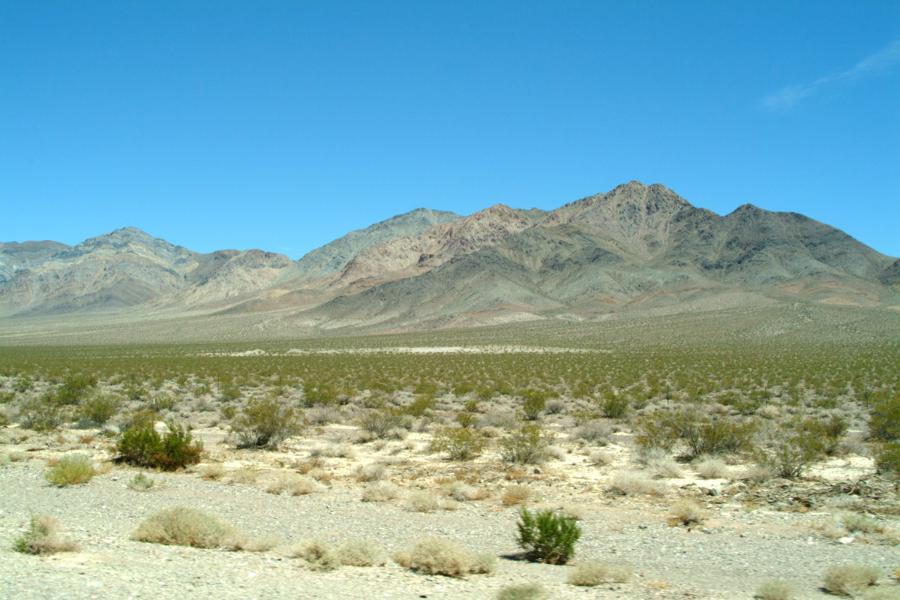
Armagosa Valley, Nevada (freefoto.com)

Last year, the New York Times ran an article about how a promising solar project in Armagosa Valley,  Nevada, by Solar Millenium ran hard up against western worries about water. The two proposed solar farms would require 1.3 billion gallons of water a year, or 20 percent of the local water available.

The Las Vegas Sun reports on the Skyline Solar facility in Nipton, California, that will use concentrating solar photovoltaic (CPV). CPV plants are expected to use much less water than solar thermal plants, which means they may be better candidates for places with lots of sun, but not as much water.

The energy-water nexus generally refers to needing water to produce energy and needing energy to move and filter water; however, it seemed fitting to include a story about using the sun and water to reduce energy use:

 NPR reports that the Camp Lejeune Marine Corps base in North Carolina is becoming one of the largest communities to widely install solar hot water panels. FLS Energy owns and installs the panels and then sells the hot water to the base, which means that there are basically only two main actors and decision-makers needed to install  systems on all 900 homes.  (The base is also planning a LEED Platinum fitness center – more info on the base website.)

Anna’s Links – Smart Meters for Energy and Water

photo credit: freefoto.com

Many of you may have heard about the goings-on around the widespread installation of smart energy meters in California (after all, there have been lawsuits, legislative hearings, and mandated independent meter testing, just for the Pacific Gas and Electric meter installations).

So why go through all that to install smart energy meters? Because they hold huge promise for helping consumers reduce their energy use and for adding flexibility and reliability to how the grid is managed.

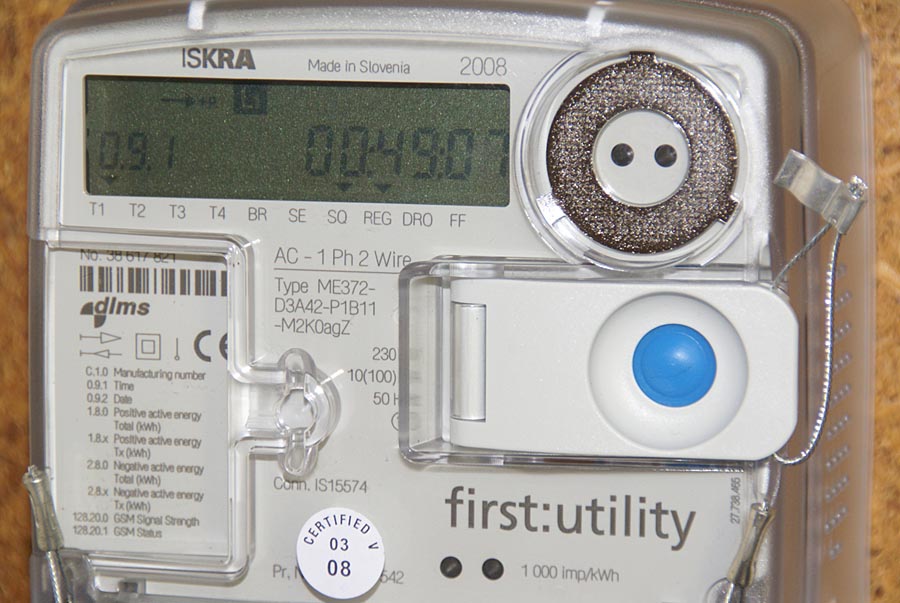
What you may not have heard as much about is that smart water meters are also being installed – more than half of California water utilities have some smart meters in their districts (via the New York Times). Ideally, smart water meters would provide real-time (or near real-time) feedback on water use to both the water utility and the consumer.

Also, Oracle has apparently developed an interest in smart water meters as a potential future market, as they already sell software systems to water (and power) utilities (via GreenTechmedia).

Noelle’s Links – Bay Area Edition

1

Interesting tidbits from my web travels…

The SF Chronicle’s Chip Johnson weighs in on a promising Oakland streetcar proposal from Stanford student Daniel Jacobsen. The proposed line would link Piedmont to the Jack London waterfront, creating a focused amenity for downtown Oakland. Jacobsen’s careful and well-researched proposal which he gave to the city as a gift, is based on a similar street car system in Portland. Jacobsen includes feasibility analyses, job creation projections and a funding strategy.

East Bay Local Alert: The Beehive Market, a brand new sustainable-focus community market kicked off on Saturday, June 12 in West Berkeley. The Beehive features local food and produce vendors, eco-fashion, home, and personal care, and even features local bands, and speaker/educational events. What better way to start the weekend?

Berkeley’s recent intimations that it will begin collecting a fee for curbside recycling has been receiving a fair amount of press lately. While it may seem like an ecological dis-incentive, it is important to celebrate the success that Berkeley’s recycling program has had and its influence on the creation of recycling programs around the country. It is actually good news that recycling in Berkeley can no longer be funded solely on fees for landfill garbage collection. As municipalities start to make progress toward their waste diversion targets, it is time to start making headway on new models for funding mechanisms; be prepared- it may take a few tries to get it right.

The Red Vic Movie House in SF will be screening the new documentary “Oceans” on Sunday June 20, and Monday June 21st. With all of the harrowing events still unfolding in the BP Gulf oil spill, now seems to be an especially important time to raise our awareness of the ocean and its inhabitants. The documentary provides extensive underwater imagery captured with state-of-the-art techniques, and also discusses the human impacts on the ocean’s vital ecosystems.

Anna’s Links – E-Waste Recycling and Green Roofs

New York state passed the “Electronic Equipment Recycling and Reuse Act,” requiring that manufacturers accept and recycle many types of e-waste starting in April 2011 (soon!)- NY State Dept. of Environmental Conservation and NRDC.

Green roofs are now required for many new buildings in Copenhagen – Treehugger.

A lawyer has started a blog focusing on legal issues specifically related to green building, with many recent posts focusing on the LEED rating system and the USGBC – Green Building Law Update.

Curitiba Brazil’s Green Exchange

Curitiba Brazil has a number of innovative waste management programs. Follow this link to view a short video that features Curitiba’s Green Exchange Program. The program operates by exchanging fresh food for recyclable items that residents collect and bring to a transfer station.

Also see information here on the documentary A Convenient Truth, a film that chronicles how this typical South American city is transforming itself  through innovative, sustainable community initiatives.  Curitiba’s ideas and expertise are being exported to other cities around the world. I haven’t seen the doc yet, but it appears to be worth a look.

Noelle’s Links – 6/3/10

Interesting tidbits from my web travels…

The Green Products Innovation Institute is a non-profit that kicked off in May that provides guidance on the manufacture of safer products. The group offers the new “Cradle to Cradle” certification. Read Triplepundit‘s coverage of the launch.

Visit the Green Product Innovation Institute’s site here.

Read about Jerry Glover, Agroecologist, working towards the establishment of perennial crops that could be the next agricultural revolution, at National Geographic.

In case you haven’t seen one of the many tech blogs buzzing about this one yet, check out the Prepeat Printer as covered byGeek.com. The Prepeat is a rewritable printer from Japan’s Sanwa Newtec that uses special plastic sheets that can be written and erased up to a thousand times each. The machine is prohibitively expensive at $US 5,500 and a set of sheets will set you back thousands more. A laudable achievement, but plastic sheets? Discuss…

Anna’s Links – 5/26/10

A round-up of interesting (and depressing) analysis of the recent oil rig explosion and oil spill…

A “live” feed of the BP oil spill is now posted online (though traffic has been so high that it’s not always possible to view) – U.S. Energy and Commerce Committee.

Experts examining a previous video of the oil leak released by BP estimate that the size of the oil spill is much larger than official estimates – NPR.

Scientists fault the government for “failing to conduct an adequate scientific analysis of the damage and of allowing BP to obscure the spill’s true scope” – New York Times.

Some experts are starting to say that the oil leaks could last for years because “we don’t have any idea how to stop this” – National Geographic.

Aerial photos of the Gulf oil spill show its vast size – NASA Earth Observatory.

A scientist at Lawrence Berkeley National Lab notes that some of the detergents used to clean up spill sites can be more toxic that the oil itself – Lawrence Berkeley National Lab.

– – –

Other interesting tidbits from the web…

Two campuses of the University of California system, Berkeley and Davis, have been given  MacArthur grants to launch a new master’s degree program in sustainable development practice – UC Berkeley and MacArthur Foundation.

Developers in Las Vegas are cranking up their sales pitches for brand new homes again, even though the city has 9,500 empty houses and another 5,600 that were repossessed in the first quarter of 2010 – New York Times.

Las Vegas as a whole has been very dependent on growth and construction – the recent drop in new construction had a major impact on municipal funding – Aguanomics and Bloomberg.

Federal officials want public input on a proposal to revise policies for managing urban water shortages in the Central Valley – meetings will be held in Sacramento on May 26, June 23, July 20, and August 19 – The Sacramento Bee.