The Difference Between the CEC and CPUC

3

I know what you’re thinking – a really exciting topic. But this question has actually come up in conversation a remarkable number of times in the last couple of weeks. This is not intended to be a definitive guide, but just to start the delineation between the organizations.

– – –

Photo Credit: Wikimedia Commons

The Basics

The CEC is California’s primary energy policy and planning agency.

The CPUC regulates privately owned electric, natural gas, telecommunications, water, railroad, rail transit, and passenger transportation companies.

This post will focus only on the energy aspects of the CPUC’s role.

– – –

The California Energy Commission (CEC)

The five CEC commissioners are appointed by the California governor and must be approved by the Senate. Terms are five years. Commissioners must represent the following specific areas of expertise: law, environment, economics, science/engineering, and the public at large.

The CEC’s responsibilities include:

  • Forecasting future energy needs and keeping historical energy data.
  • Licensing thermal power plants 50 megawatts or larger.
  • Promoting energy efficiency by setting the state’s appliance and building efficiency standards and working with local government to enforce those standards.
  • Supporting public interest energy research that advances energy science and technology through research, development, and demonstration programs.
  • Supporting renewable energy by providing market support to existing, new, and emerging renewable technologies; providing incentives for small wind and fuel cell electricity systems; and providing incentives for solar electricity systems in new home construction.
  • Developing and implementing the state Alternative and Renewable Fuel and Vehicle Technology Program to reduce the state’s petroleum dependency and help attain the state climate change policies.
  • Administering more than $300 million in American Reinvestment and Recovery Act funding through the state energy program, the energy efficiency conservation and block grant program; the energy efficiency appliance rebate program and the energy assurance and emergency program.
  • Planning for and directing state response to energy emergencies.

The CEC is located in Sacramento, CA.

– – –

The California Public Utilities Commission (CPUC)

The five CPUC commissioners are also appointed by the California governor and must be approved by the Senate. Terms are six years.

The CPUC regulates investor owned utilities (IOUs) that distribute electricity and natural gas, including Pacific Gas & Electric Company (PG&E), Southern California Edison (SCE), San Diego Gas & Electric Company (SDG&E) and Southern California Gas Company.

The CPUC does not regulate municipal utilities, such as the Sacramento Municipal Utility District (SMUD).

The CPUC’s mission is the following:

  • The California Public Utilities Commission serves the public interest by protecting consumers and ensuring the provision of safe, reliable utility service and infrastructure at reasonable rates, with a commitment to environmental enhancement and a healthy California economy.  We regulate utility services, stimulate innovation, and promote competitive markets, where possible, in the communications, energy, transportation, and water industries.

The CPUC has a number of different divisions; the Energy Division assists Commission activities in the electricity, natural gas, steam, and petroleum pipeline industries. Energy Division handles the regulation and Commission approval of official rates and terms of service for energy IOUs.

Because the regulated California utilities are so large, and their programs reach so many customers, CPUC energy policy decisions and goals have wide influence in California. The CPUC touches programs in energy efficiency, demand response, low-income assistance, distributed generation, and self-generation, among others. It has a role in California climate policy. It is overseeing the CA utilities’ switch to Smart Grid technologies. The CPUC regulated electric generation and procurement, electric rates and markets, gas policy and rates, and electric transmission and distribution.

CPUC headquarters are in San Francisco, CA.

– – –
Calls For A Third Party Smart Meter Study

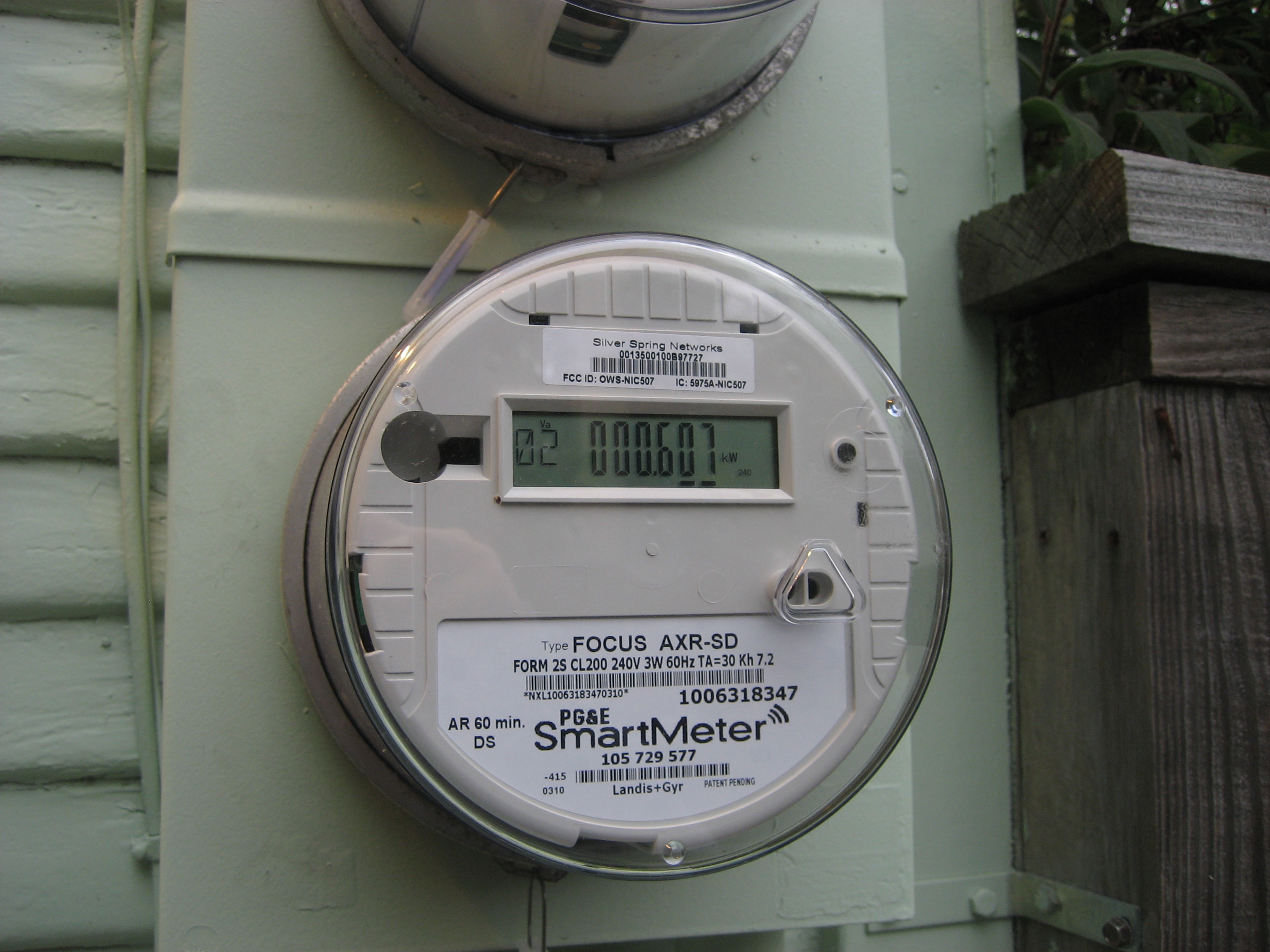
Pacific Gas and Electric Company has been facing a number of challenges in its attempts to roll out Smart Meter technology throughout California.  Advocates of the technology promote the meters as an essential component in realizing energy efficiency goals. Opponents have raised concerns about the accuracy and privacy of the meters and are increasingly raising concerns about public health and safety issues. The meters use wireless electromagnetic signals that provide real-time readings. Some customers complain that the new meters are causing them to be over-charged, yet it seems inevitable that there should be some discrepancy when moving from an older less precise system to a newer more responsive one.

However, the privacy and health and safety arguments represent much more complex and nuanced issues. The technology used by the meters is not much different than that used for cell phones or a myriad other everyday devices. However, under the current deployment of the meters, there is no ‘opt-out’ proviso, meaning that those who raise concerns over the meters are not left with a choice. Thus, it is not just a cut-and-dried matter of accuracy, but also a stickier problem of public perception, personal choice and the questioning of the adequacy of the Federal Communication Commissions’ safety standards by local communities. For example, it was widely reported this week the Town of Fairfax issued an emergency ordinance that will put a six month moratorium on the installation of the meters citing accuracy, privacy and safety concerns.

According to an article in the San Rafael Patch, San Rafael Assemblyman Jared Huffman who represents Marin and Southern Sonoma County (including the Town of Fairfax) has called for an independent review by the California Council on Science and Technology to determine the adequacy of FCC standards and provide more substantial science to the debate.  Huffman commented “If the FCC standards are deemed adequate, then the SmartMeter program can move forward with greater public confidence in the safety of the devices,” Huffman said.  “If the standards are inadequate, we need to know that so that we can get to work on better standards.”

Read more about Fairfax’s decision here, and listen to KQED’s coverage here.

Lots of Bay Area News

U.S. Representative and  House Appropriator Mike Honda secured funding to the tune of $2 million towards extension of the BART system to Silicon Valley as part of the FY 2011 Transportation, Housing and Urban Development spending bill. What is the “BART to Silicon Valley” project? It’s an extension of the existing BART system to Milpitas, San Jose, and Santa Clara starting from the future Warm Springs station in Fremont (along the eastern side of the South Bay).

– – –

Google Energy has signed its first contract, a 20-year wind power contract in Iowa. Google will sell the electricity on the spot market and retire the associated renewable energy credits (RECs) – via TechCrunch.

– – –

More people are freaking out about smart meters, but this time not in the Central Valley…

The Fairfax Town Council gave the nod to the creation of an ordinance that, if passed, would try to prevent PG&E from installing smart meters in Fairfax –  via the Marin Independent Journal.

The Marin Association of Realtors has issued a statement calling for a moratorium on its SmartMeter program due to concerns in three areas: concerns about overcharging, concerns about health effects from the radio waves, and concerns about PG&E imposing meters on folks that don’t want them – via the Marin Independent Journal.

The Marin Independent Journal also reports that the Marin supervisors have sent a letter to Michael Peevey, president of the California Public Utilities Commission (CPUC), asking the CPUC to suspend PG&E’s SmartMeter rollout until a commission has reviewed the funtion of the meters and until the health implications of the electronic emissions from the wireless devices has been addressed…

– – –

The Department of Energy announced yesterday that $122 million has been awarded to a team of scientists from California (including Lawrence Berkley National Lab) to establish an Energy Innovation Hub that will be focused on converting sunlight into liquid fuel.

– – –

Anna’s Links – Smart Meters for Energy and Water

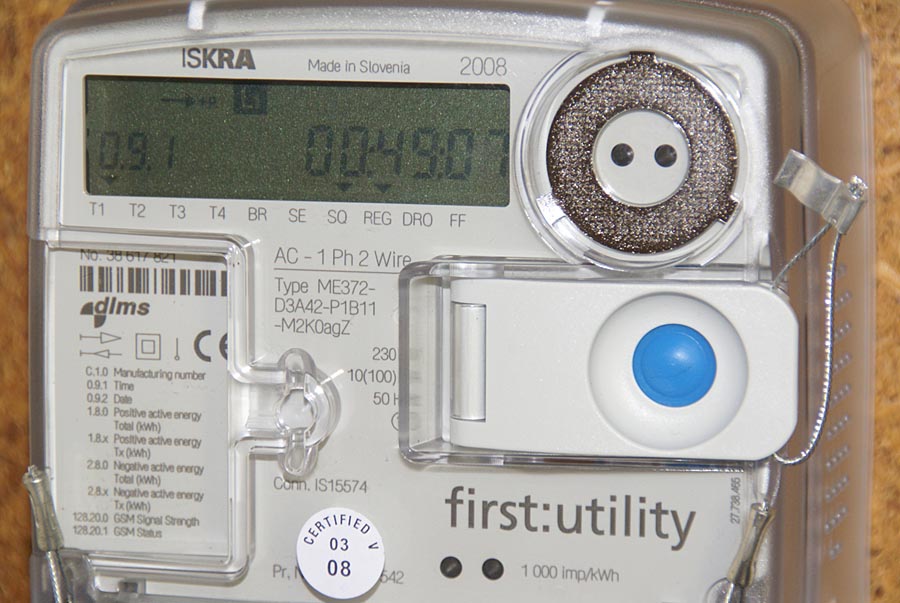
photo credit: freefoto.com

Many of you may have heard about the goings-on around the widespread installation of smart energy meters in California (after all, there have been lawsuits, legislative hearings, and mandated independent meter testing, just for the Pacific Gas and Electric meter installations).

So why go through all that to install smart energy meters? Because they hold huge promise for helping consumers reduce their energy use and for adding flexibility and reliability to how the grid is managed.

What you may not have heard as much about is that smart water meters are also being installed – more than half of California water utilities have some smart meters in their districts (via the New York Times). Ideally, smart water meters would provide real-time (or near real-time) feedback on water use to both the water utility and the consumer.

Also, Oracle has apparently developed an interest in smart water meters as a potential future market, as they already sell software systems to water (and power) utilities (via GreenTechmedia).