Peter Calthorpe – Urbanism in the Age of Climate Change

2

Last week I saw Peter Calthorpe speak about his new book, Urbanism in the Age of Climate Change.

A highly influential planner, designer and urban thinker, Calthorpe has spent decades advancing holistic approaches to the built environment, most famously as a champion of  New Urbanism.

His latest book lays out the case that urbanism, i.e., creating more dense and livable cities, is the only real defense against climate change. If climate change is hastened by runaway carbon emissions, and carbon emissions are linked to the energy intensity of daily life, then it follows that altering the built environment and transportation patterns are key to its mitigation.

This may not be news to anyone, but Calthorpe’s book is about skillfully unpacking this data for a non-technical audience and showing how sprawl is not just a little more carbon intensive than denser urban development, but more intensive by orders of magnitude. Read it for a study of “the big picture”.

– – –

California’s Clean Energy Future, Part 2

4

On Tuesday, January 25, I was in the audience at the SPUR Urban Center in San Francisco as Panama Bartholomy, CEC, and Emma Wendt, PG&E, gave presentation about California’s clean energy future.

The post below consists of Part 2 of my record of the presentation – the second part of Panama Bartholomy’s presentation. All portions are included in chronological order.

An ellipsis (…) indicates that I was not able to capture the words or thoughts skipped. The presentation is transcribed as accurately as possible – punctuation choices are mine. I also added any photos or images.

– – –

Panama Bartholomy

… …

That’s the context. Let’s get into solutions. On is zero net energy new buildings…. All new homes will produce as much energy as they use by 2020. But our challenge isn’t really new buildings. Our challenge is existing buildings… … We have 3/4 of the units in California built before there were energy codes. So that’s a real challenge….

So we adopted a very ambitious plan in California… the Long Term Energy Efficiency Strategic Plan… [highlighting retrofit goals] If you look just at the building sector and where the GHG emissions are coming from… Lighting represents 12% of all the emissions from the building sector. All the pieces get more and more efficient… Except for the “misc” category… which is basically plug loads… Flat screen TVs are 10% of residential energy consumption… and 1% of California’s total electricity consumption…. So we created standards… We had a choice of either building power plants to power all those TVs, or making efficient TVs… we chose efficient TVs.

… …

The CEC now has the authority to enforce energy reduction in existing buildings… We’re going to start by eventually requiring labeling of buildings… Eventually requiring upgrades at different parts in the lifecycle of buildings to improve energy efficiency… Please join us at the rulemaking.

But there are major market barriers… awareness… lack of coordination among the various programs… lack of a trained home performance workforce… lack of home energy rating system. And lastly, a significant lack of access to capital… One of the ways we’re addressing this is with a new program… Energy Upgrade California.

Now I want to talk about renewables… It’s a law that by the end of 2010, all IOUs need to provide at least 20% of their electricity to consumers through renewables… The IOUs have enough renewables under contract to get to 33% by 2020… … There has been intense growth in the Renewable Portfolio Standard capacity over the last few years…. …

Geothermal right now is the number 1 producer, then wind, then a significant amount of small hydro … You can get the most updated numbers on the CEC website….

There are a huge number of renewable projects going through permitting at the state and local level right now… Almost 51 MW total. Obviously, not all will get through permitting, and not all will get built, but that’s a significant number.

… …

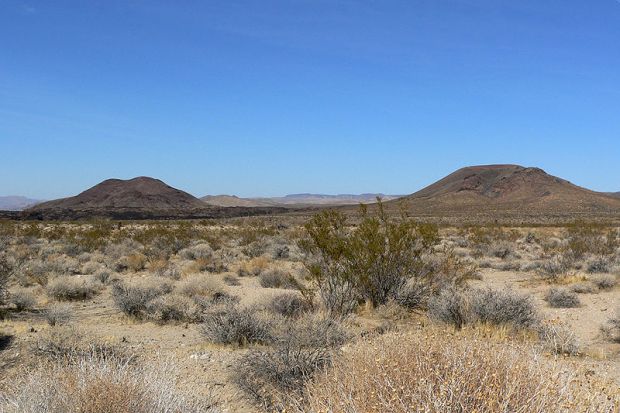
One of the reasons the CEC was created is because we were having trouble getting new power plants built in California in the 1970s… thermal plants. We don’t do solar and we don’t do wind… The average solar project site is over 125 times larger than the average natural gas plant. So there are some major issues there… And the Mojave Desert is not a wasteland – it is a fragile ecosystem.
(Image credit: Wikimedia Commons)

Is solar a renewable resource if it destroys a fragile ecosystem that can never be replaced? … We’re seeing a need to reassess what we mean by renewable energy in California. So we’re developing the Desert Renewable Energy Conservation Plan… Starting to created a program for the future of responsible renewable energy in the Mojave Desert. … Achieving all cost-effective energy efficiency reduces the renewable energy needed to meet electricity demand… this means we can have much more strategic placement of the projects…

It comes down to a choice. California’s residents, who live mostly in cities, can put down new power plants on tortoises, or they can change some light bulbs …

… … [looking at a map of where the good wind, solar sites are] So either we need major power lines from spots in the desert to where the people are, or we need to put some PVs on a roof… or on a parking lot… …

With electricity you have a lot of options… With natural gas, you don’t have a lot of options. One is solar thermal… And we better do it quick… … Right now in China, you can buy a system for about $200. The alternative is to heat water with electricity for about $150 per year. In the US a system costs about $7500…

In California, about 42% of union trade members are on the bench right now… [looking at a chart] For every MW of construction, we can look at how many jobs are created for different generation technologies… You can invest in renewable, which are a little more expensive up front, but create jobs…and it’s pretty much free after that except for some maintenance…

Now, to summarize Brown’s plan:

  • Build 12,000 MW of localized electricity generation…
  • Build 8,000 MW of large-scale renewable energy…
  • Federal and state agencies should carry out one integrated environmental review…
  • Reduce peak energy demands and develop energy storage…
  • Increase efficiency of buildings and appliances…
  • Develop more combined heat and power…
  • Appoint a clean energy jobs czar…
  • Develop CEQA Guidelines that accelerate permitting of renewable energy projects…
  • Deliver targeted workforce training programs…

We’re not going to achieve these goals in Sacramento… Politicians don’t retrofit homes… … The only way we achieve any of these goals is through leaders in community, leaders in industry, and the leaders in this room. Thank you very much for your time.

– – –

Part 1 is posted here. Part 3 will be posted soon.

– – –

Upcoming Event – The Cost of Building Green

The Cost of Building Green

Co-sponsored by AIA SF Committee on the Environment (COTE) and Structural Engineers Association of Northern California (SEAONC)

February 8, 2011 (Tuesday)

6:30 PM – 8:00 PM

AIA San Francisco, 130 Sutter Street, Suite 600

Peter Morris will be addressing ‘the cost of getting to zero’, looking at both Davis Langdon’s cost experience with very high performing and living buildings, and at strategies for budgeting these goals to ensure that they can be incorporated early in the project.

Peter Moriss is a Principal with Davis Langdon, an international Construction Consulting firm. Peter heads the company’s research group, with a particular focus on construction economics and sustainability. He has served as a member of the USGBC Research Advisory Committee since its establishment in 2006, and as its chair from 2008.

The event is free. More info and links to RSVP here.

– – –

California’s Clean Energy Future, Part 1

3

On Tuesday, January 25, I was in the audience at the SPUR Urban Center in San Francisco as Panama Bartholomy, California Energy Commission (CEC), and Emma Wendt, PG&E, gave presentation about California’s clean energy future.

The post below consists of Part 1 of my record of the presentation – the first part of Panama Bartholomy’s presentation. All portions are included in chronological order.

An ellipsis (…) indicates that I was not able to capture the words or thoughts skipped. The presentation is transcribed as accurately as possible – punctuation choices are mine. I also added any photos or images.

– – –

The speakers were introduced by Raphael Sperry and Geoff Danker.

– – –

Panama Bartholomy

I’m honored to be here… Obviously, I’m a bureaucrat. All my life I’ve wanted to be a bureaucrat. It’s true… … So I have achieved my dreams – I work for the state of California… I am here to talk about what I hope are some of our shared goals… building a  future that’s healthy for our economy, our environment, and our communities… …

I was supposed to talk about, and will talk about, California’s Clean Energy Future…  big ambitious goals. A massive document describes the process of how we’re all going to reach these goals… and how the agencies are going to work on it. In brief, it outlines very ambitious energy goals. It calls for zero net energy buildings… ways to shave peak demand… want to build carbon capture and storage in California by 2020… also want 1 million electric vehicles in California by 2020. So these are the goals. So I’m going to talk about the programs and activities behind the goals to make them a reality…

… … …

I have to give some background, then talk about efficiency…  then major market barriers around energy efficiency and what’s stopping a strong retrofit market, then renewables. Finally, I’ll talk about what’s coming from the Brown administration… …

So some energy context… I’m only going to talk about electricity and natural gas… One of the jobs of the CEC is to measure energy demand and project demand into the future… [looking at a chart] Here, you can see impacts of downturns in the economy… We’re expecting that the economy will pick up later this year or early next, then we will see about 1.2% growth in demand a year. Much of that is from the building sector… We expect to see continued increases in demand, especially from the commercial and residential sectors.

So we have several options. Do nothing. Then we get demand exceeding supply. Or we can build power plants. Or we can find ways to reduce demand… Efficiency is by far our most cost-effective choice in terms of how to meet demand.

Going back to natural gas… California only produces 13% percent of our own natural gas – the rest comes from other areas. We are at the end of the line when it comes to natural gas delivery. We are starting to compete more and more with Nevada, Arizona and New Mexico… …

Overarching a lot of activity on energy efficiency, I have to talk about California’s new climate policy… … AB 32 calls for us to reduce our economy-wide emissions levels to 1990 levels by 2020. This is about a 25-30% reduction in GHG emissions… The big player is transportation. Also, we have to look at electricity generation. The 1/4 of our electricity that we import is equal in GHG emissions to the 3/4 that we produce in-state. The built environment is the second largest wedge when we add the bits together. The built environment dictates how we need to get around, so it has a big impact… We have some work to do…

(Image credit: CA Climate Change Portal)

– – –

Part 2 and Part 3 will be posted soon.

– – –

Upcoming Webinar – PACE Programs

PACE – What Comes Next?

Organized by Build It Green

February 23, 2011 (Wednesday)

10:30 AM-12:00 PM

Property Assessed Clean Energy (PACE) allows property owners to pay for energy efficiency and renewable energy improvements to their homes via an annual assessment on their property.  This approach became a central part of the Obama Administration’s “Recovery Through Retrofit” initiative and had been authorized in 24 states.  However, recent actions by federal regulators have frozen most residential PACE programs.

This webinar will discuss the status of PACE as well as efforts underway to resolve the federal regulatory issues.  Perhaps most importantly, the webinar will include lessons learned from PACE programs and outline the financing options being made available in the absence of PACE.

More information and links to register here.

– – –

Upcoming Event – Electrical Baseload

Reducing Residential Electrical Baseload

February 16, 2011 (Wednesday)

5:30 PM-7:30 PM

San Francisco Department of the Environment – 11 Grove Street, San Francisco, CA

Presentation will examine how homeowners, contractors or other service providers can determine how much electrical baseload a homeowner is consuming and use that analysis to lower the homeowner’s monthly usage and electric bill.  The session will cover both technique and monitoring tools used, problems encountered and their resolutions.

More information and links to register here.

– – –

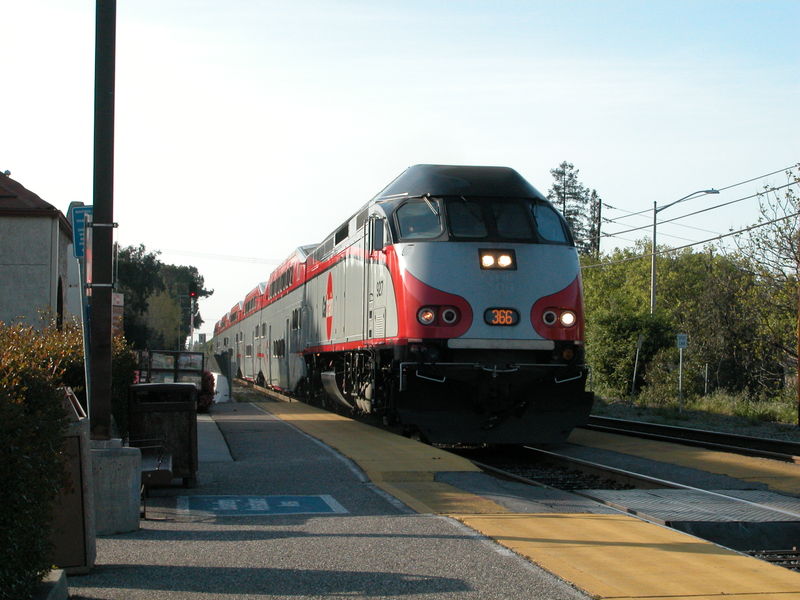
Caltrain is in Serious Trouble

2

(Image credit: Wikimedia Commons)

– – –

A few days ago, I began to see news that Caltrain will face a huge operating deficit starting this summer. However, the magnitude of that deficit didn’t sink in until an article pointed out that the $30 million operating deficit will be nearly one-third of its operating budget.

According to the article, cuts on the table include:

  • Weekday trains would be reduced from 86 to 48, with service limited to commute hours.

  • No weekend service, eliminating up to 68 trains.

  • Service eliminated from Gilroy to the Diridon Station in San Jose.

  • Up to seven of 23 stations along the Peninsula closed.

    The article also made the following point:

  • Caltrain is unique in the Bay Area, as it is the only transit line that lacks a dedicated source of funding. Instead, agencies from the three counties in which it runs contribute funds to help cover operating costs.

    But the Valley Transportation Authority, SamTrans and the San Francisco Municipal Transportation Agency all face their own budget battles and will reduce their aid by $25 million next fiscal year.

    You can read the entire article here.

    – – –

    Upcoming Webinar – CALGreen

    GreenPoint Rated, CALGreen and You

    Organized by Build It Green

    January 27, 2011 (Thursday)

    11:00 AM-12:30 PM

    Earlier this year, the Building Standards Commission approved a landmark California Green Code, or CALGreen, for all new buildings in the state.  The code has a list of mandatory green building measures that must be applied to every new building by January 1, 2011, while water measures go into effect July 2011.  The California Green Code also provides two voluntary tiers that may be adopted by local governments as a reach code.

    In this presentation, you will learn about:
    • The Green Code’s mandatory measures
    • Similarities and differences to GreenPoint Rated
    • Reasons to go beyond code
    • Ways local government can keep their GreenPoint Rated policy
    • How the Green Code will affect builders and local government officials

    More information and links to register here.

    – – –

    2010 Livable Building Award Winners

    2

    The Center for the Built Environment’s fourth annual Livable Building Award winners were announced in mid-December. The entries were judged on excellence of design, operation, and occupant satisfaction. According to a CBE press release:

    Award entries are open only to the top scorers in CBE’s Occupant Indoor Environmental Quality Survey, which is used to study occupant satisfaction in terms of air quality, lighting, thermal comfort and overall building satisfaction and has been implemented in more than 860 buildings in North America and Europe.

    The top award went to UC San Francisco’s 654 Minnesota Street project. Read about the UCSF project here.

    The Kavli Institute for Particle Astrophysics and Cosmology was recognized with an honorable mention. Read about the Kavlie Institute and the other finalists here.

    – – –

    More information on the CBE Occupant Indoor Environmental Quality (IEQ) Survey is available here.

    – – –

    Upcoming Webinar – Commercial Lighting

    DOE Commercial Lighting Solutions: Overview

    Carol Jones, Pacific Northwest National Laboratory

    Tuesday, January 25, 2011
    11:00–12:00 pm Pacific (2:00–3:00 pm Eastern)

    Commercial Lighting Solutions arms lighting practitioners, contractors and owners with time-saving and credible strategies to reduce energy use and qualify for incentives. Learn about the tool’s development and capabilities, and discover how the tool applies to a wide range of audiences and lighting projects.

    More information and a link to register here.

    – – –