Are People Clueless About Energy Savings?

2

A new paper called “Public perception of energy consumption and savings” was released in the Proceedings of the National Academy of Sciences and has garnered a lot of attention.

From the New York Times Dot Earth blog:

The take-home conclusion is that if the United States is to harvest what some analysts have called a “ behavioral wedge” of hundreds of millions of avoidable tons of greenhouse gas emissions (and wasted energy), a vital prerequisite is  boosting energy literacy.

From the New York Times Green blog:

… people seem conditioned to think of energy savings as they would of saving money: that they can save by simply reducing use, the study found. But the biggest energy savings are tied to replacing things that use a lot of energy with things that use far less.

Habits like turning out the lights when leaving a room may be virtuous but don’t move the needle much on energy savings. Yet that action was cited by more of those surveyed (19.6 percent) than any other method of saving energy. By contrast, just 3.2 percent cited buying more energy-efficient appliances.

From TechCrunch:

Many consumers don’t have a good concept of how much energy per hour a given appliance uses. People understand how much energy goes into a light bulb per hour, Attari said, but not the equivalent of how many light bulbs per hour are used by a dishwasher.

Attari also attributed a psychological phenomenon called single action bias, in which a person does one or two things to address a problem and considers themselves off the hook, as an explanation of why some believe they do more to conserve energy than they really are. When those one or two things fall into curtailment, like turning off the lights, instead of efficiency, like replacing the washer, they help less than some perceive.

From Treehugger:

Attari notes that there has been a failure of communication by scientists, government, industry and environmentalists alike. Instead of more forcefully promoting the importance of these bigger changes, the focus has been on recycling drives and the small steps many people cite as being important.

The study points out that this is a curtailment (or conservation) vs. efficiency issue. It makes intuitive sense that not doing an activity (not driving, not using lights) would save more energy than doing an action with more efficient equipment or appliances. But it’s not true. The savings from replacing old equipment or home retrofits can be much larger than the energy saved by turning out lights or not driving.

It makes sense that in the recent study participants would optimistically err on the side of thinking that daily actions under their control have a lot of impact – it takes mental effort to remember all the small habits, and it seems that psychologically folks want to think that the small habits make a big difference.

In reality, behavioral changes are a lot less “sticky” in terms of long-term energy savings than energy-efficiency retrofits or appliance upgrades. It’s pretty easy to let habits slide, but permanent improvements to infrastructure require less behavioral change after the initial installation.

There was an interesting study to this effect released last year (also in the Proceedings of the National Academy of Sciences) called “Household actions can provide a behavioral wedge to rapidly reduce US carbon emissions.” It examined the plasticity of 17 household action types in 5 behaviorally distinct categories (W, E, M, A, and D):

(W) Home weatherization and upgrades of heating and cooling equipment

(E) More efficient vehicles and nonheating and cooling home equipment

(M) Equipment maintenance

(A) Equipment adjustments

(D) Daily use behaviors

Retrofits and equipment changes had much higher behavioral plasticity than “daily use behaviors,” which required consistent, conscious choices to maintain. A table highlighting results of the study can be seen here and below.

Image credit: Proceedings of the National Academy of the Sciences

– – –
Assorted Links

NRDC rates the USA’s cities on smart energy use and clean energy sources.

Contractors in Montana develop portable housing for $20 per square foot.

CalISO opens market to demand response.

The city of San Francisco launched a website listing products it considers eco-friendlySFapproved. org

– – –

Assorted Links

The Navy and Marine Corps plan to have bases be zero net energy in a decade.

The Sierra Club lists the greenest campuses.

St. Paul, Minnesota, experiments with bicycle-based compost collection.

Auburn University students design housing with non-recyclable cardboard.

The zero waste effort is starting to reach the fashion industry.

– – –

San Francisco Finds a New Landfill?

1

Image credit: Wikimedia Commons

By 2015, San Francisco officials are hoping to send waste to a landfill in Yuba County, near the town of Wheatland, CA.

According to the San Francisco Chronicle, the garbage will be taken by truck to Oakland, loaded onto trains, and shipped 130 miles to a 236-acre landfill.

The city is currently under contract to ship garbage to the Altamont Landfill in Livermore.

The proposed landfill in Yuba County is owned by Recology (formerly Norcal Waste Systems) and currently receives about 750 tons of trash each day. It is expected that San Francisco would send more than 1000 additional tons of trash to the landfill each day.

Details of the plan are still being negotiated, and the San Francisco Board of Supervisors will have to approve any final proposal.

– – –

On a side note, Recology has a blog with lots of info about waste and recycling in the Bay Area. I’ve just started reading through some of the archives.

– – –

Major Appliance Efficiency Agreement

1

Image credit: Wikimedia Commons

A few days ago, appliance manufacturers and energy efficiency advocates announced an agreement to call for new national minimum efficiency standards to improve energy and water efficiency standards for refrigerators, freezers, clothes washers, clothes dryers, dishwashers, and room air conditioners. The coalition of major appliance manufacturers, their trade union, and the energy efficiency advocates propose that the new national minimum efficiency standards and tax credits be instituted through action by the Department of Energy and by Congress.

According to the press release, the recommended standards and tax credits would save more than 9 quads of energy over 30 years. The recommended water efficiency standards and tax credits for clothes washers and dishwashers would save about 5 trillion gallons of water over 30 years.

Below, I’ve put together a rough timeline of how the proposed standards would take effect:

  • January 2013 – dishwashers would see 14% energy savings and 23% water savings
  • January 2014 – new refrigerator and freezer energy reduced up to 30%
  • June 2014 – room air conditioners would increase in efficiency 10-15%
  • 2015 – top loading clothes washers would have 26% energy savings and 16% water saving compared to current standards
  • 2015 – front loading clothes washers would have 43% energy savings and 52% water savings compared to current standards
  • 2015 – clothes dryers will increase in efficiency 5%
  • 2018 – top loading clothes washers would have 37% energy and water saving compared to current standards

An overview of the agreement is here.

The agreement was signed by major appliance manufacturing members of the Association of Home Appliance Manufacturers (AHAM) and by major energy and water efficiency organizations, consumer groups and environmental organizations including the American Council for an Energy-Efficient Economy, Alliance for Water Efficiency, Alliance to Save Energy, Appliance Standards Awareness Project, Consumer Federation of America, National Consumer Law Center, Natural Resources Defense Council, Northwest Power and Conservation Council, and Northeast Energy Efficiency Partnerships.

Calls For A Third Party Smart Meter Study

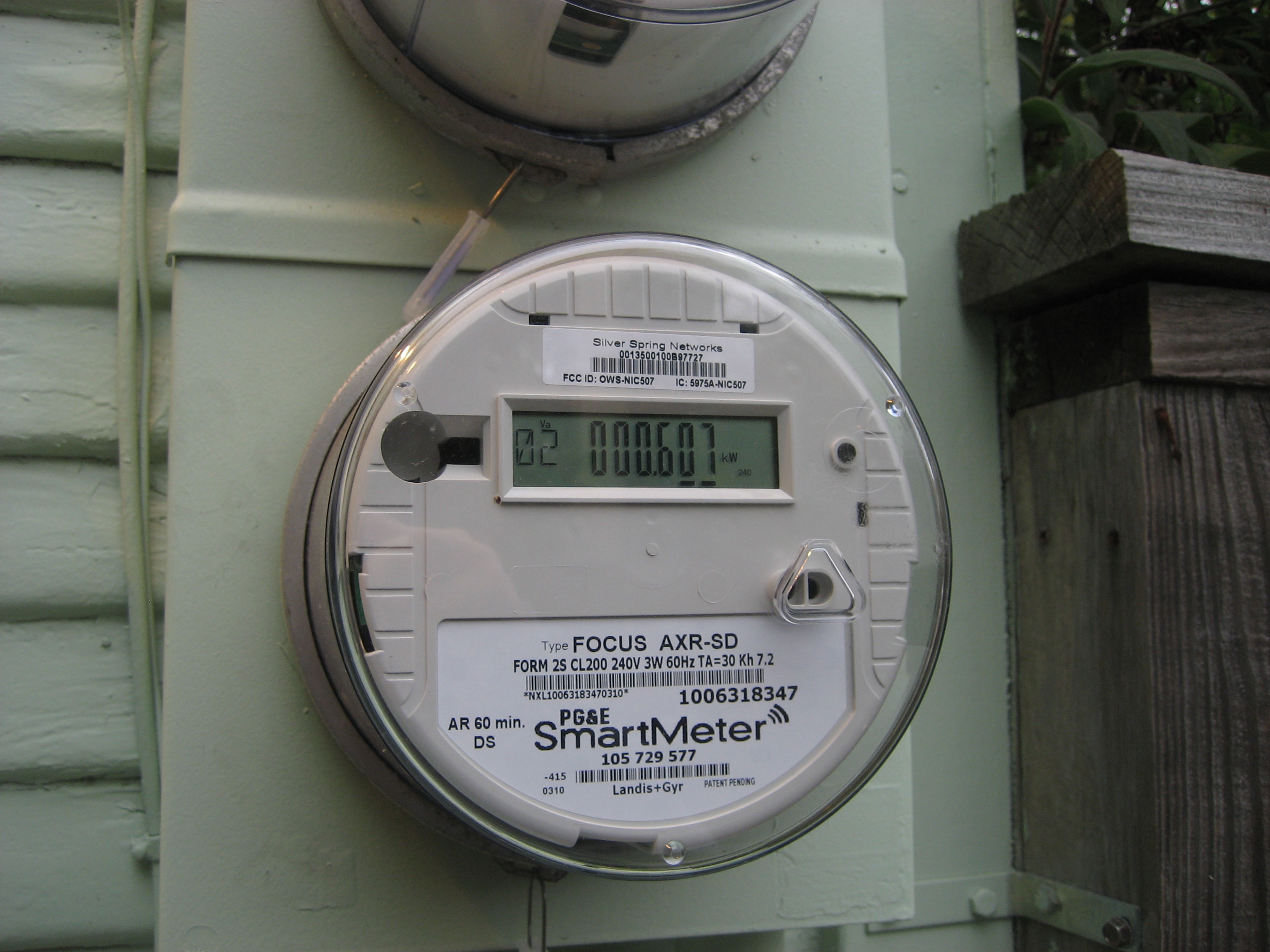
Pacific Gas and Electric Company has been facing a number of challenges in its attempts to roll out Smart Meter technology throughout California.  Advocates of the technology promote the meters as an essential component in realizing energy efficiency goals. Opponents have raised concerns about the accuracy and privacy of the meters and are increasingly raising concerns about public health and safety issues. The meters use wireless electromagnetic signals that provide real-time readings. Some customers complain that the new meters are causing them to be over-charged, yet it seems inevitable that there should be some discrepancy when moving from an older less precise system to a newer more responsive one.

However, the privacy and health and safety arguments represent much more complex and nuanced issues. The technology used by the meters is not much different than that used for cell phones or a myriad other everyday devices. However, under the current deployment of the meters, there is no ‘opt-out’ proviso, meaning that those who raise concerns over the meters are not left with a choice. Thus, it is not just a cut-and-dried matter of accuracy, but also a stickier problem of public perception, personal choice and the questioning of the adequacy of the Federal Communication Commissions’ safety standards by local communities. For example, it was widely reported this week the Town of Fairfax issued an emergency ordinance that will put a six month moratorium on the installation of the meters citing accuracy, privacy and safety concerns.

According to an article in the San Rafael Patch, San Rafael Assemblyman Jared Huffman who represents Marin and Southern Sonoma County (including the Town of Fairfax) has called for an independent review by the California Council on Science and Technology to determine the adequacy of FCC standards and provide more substantial science to the debate.  Huffman commented “If the FCC standards are deemed adequate, then the SmartMeter program can move forward with greater public confidence in the safety of the devices,” Huffman said.  “If the standards are inadequate, we need to know that so that we can get to work on better standards.”

Read more about Fairfax’s decision here, and listen to KQED’s coverage here.

California Proposition 23

Proposition 23 is the result of an initiative launched by Texas oil giants Valero Energy Inc. and Tesoro Corporation to postpone enforcement  of AB 32. The ballot initiative would delay enforcement until unemployment in California stays under 5.5% for an entire year. California unemployment is currently at about 12%.

Image source: Google Public Data

– – –

How do Californians feel about Prop 23?

The public: A poll by the Public Policy Institute of America this month indicates that 67% of California residents support AB 32 (via LA Times).

Governor Arnold Schwarzenegger:  “This initiative sponsored by greedy Texas oil companies would cripple California’s fastest-growing economic sector, reverse our renewable energy policy and decimate our environmental progress for the benefit of these oil companies’ profit margins” (via LA Times).

Republican Gubernatorial Candidate Meg Whitman: Whitman has not taken a formal stand on Prop 23. However, AB 32 authorizes a governor to delay some of the provisions for up to a year in the event of “threat of significant economic harm.” While campaigning for the Republican primary, Whitman stated that we would suspend AB 32 on her first day in office (via SF Chronicle).

Democratic Gubernatorial Candidate Jerry Brown: “Addressing  climate change is one of the great challenges of our time, something that California has been a leader on,” said Sterling Clifford, Brown’s campaign spokesman (via SF Chronicle).

– – –

The full text of Prop 23 is available here.

– – –

The Yes on Prop 23 campaign has filed suit against Attorney General Jerry Brown over the language that will go on the ballot to describe the proposition. The ballots of be printed in mid-August will say that the measure “Suspends Air Pollution Control Laws Requiring Major Polluters to Report and Reduce Greenhouse Gas Emissions That Cause Global Warming Until Unemployment Drops Below Specified Level for Full Year.” More information in the LA Times.

– – –

Lots of Bay Area News

U.S. Representative and  House Appropriator Mike Honda secured funding to the tune of $2 million towards extension of the BART system to Silicon Valley as part of the FY 2011 Transportation, Housing and Urban Development spending bill. What is the “BART to Silicon Valley” project? It’s an extension of the existing BART system to Milpitas, San Jose, and Santa Clara starting from the future Warm Springs station in Fremont (along the eastern side of the South Bay).

– – –

Google Energy has signed its first contract, a 20-year wind power contract in Iowa. Google will sell the electricity on the spot market and retire the associated renewable energy credits (RECs) – via TechCrunch.

– – –

More people are freaking out about smart meters, but this time not in the Central Valley…

The Fairfax Town Council gave the nod to the creation of an ordinance that, if passed, would try to prevent PG&E from installing smart meters in Fairfax –  via the Marin Independent Journal.

The Marin Association of Realtors has issued a statement calling for a moratorium on its SmartMeter program due to concerns in three areas: concerns about overcharging, concerns about health effects from the radio waves, and concerns about PG&E imposing meters on folks that don’t want them – via the Marin Independent Journal.

The Marin Independent Journal also reports that the Marin supervisors have sent a letter to Michael Peevey, president of the California Public Utilities Commission (CPUC), asking the CPUC to suspend PG&E’s SmartMeter rollout until a commission has reviewed the funtion of the meters and until the health implications of the electronic emissions from the wireless devices has been addressed…

– – –

The Department of Energy announced yesterday that $122 million has been awarded to a team of scientists from California (including Lawrence Berkley National Lab) to establish an Energy Innovation Hub that will be focused on converting sunlight into liquid fuel.

– – –

Bay Area Public Meeting to Set SB375 Targets

Photographer: Manfred Werner Tsui at de.wikipedia.org

Passed in 2008, SB 375 is the nation’s first law to link greenhouse gas emissions with urban sprawl.  The thrust of AB 375 is to require not only emissions reduction targets, but also to require land use planning strategies and interagency collaboration in the process. In practice, this requires each region in the state to adopt a Sustainable Communities Strategy, or SCS, that is in line with regional emissions targets set by regional Air Resource Boards.

As SB 375 moves foward in its implementation, the time has come this August for the ARBs to annouce their emissions targets.

The California Air Resources Board has been holding workshops throughout California this month to accept public comment on the draft regional targets for reducing greenhouse gas emissions (GHG) from cars and light trucks.  The public comments will be taken into consideration before the Metro Planning Organizations (MPOs) announce their proposed targets in August. On Wednesday, July 21, the Bay Area gets to put in its two cents. The meeting information is as follows:

July 21, 2010     10:30 a.m. to 1:30 p.m

Caltrans Oakland Building, Auditorium, 111 Grand Ave, Oakland, CA 94612

For those unable to attend, the meeting will be webcast.

For more information on Senate Bill 375, see Urban Land Institute’s Summary and Key Findings report here, and the Governor’s Office factsheet here.

A list of all of the California ARB meetings in July can be found here.

– – –

Finding Local Stimulus Projects

1

Recently while driving around Northern California, I’ve seen a number of signs saying “This project is supported by ARRA funds.” And I started wondering where all the local projects were. It turns out that if you go to Recovery.Gov, there is a map (here) where you can search by state or zip code to find nearby ARRA projects, as that information has been reported by the recipient of the funds.

photo credit: recovery.gov

You can click on each dot to get information about the organization and amount awarded.

You can see summaries by state (see California here) for different categories – by zip code, by top recipients, by top infrastructure projects, top congressional districts, by the funding federal agency, and by the jobs reported created.