Keep Coming Back to Zero Resource

We are working hard to build both a resource and a community here at Zero Resource.

There are a number of ways you can keep up with what we’re doing:

  • Add Zero Resource to your Google Reader to get automatic updates when we add a new post – just add zeroresource.com
  • Follow Zero Resource on Twitter – zeroresource.
  • Subscribe to Zero Resource by email through WordPress  – click the Sign Me Up! button at the top of the right-hand column.

City Rankings – Energy, Walkability, and Transit

1

This Friday’s links highlight a few examples of city rankings…

– – –

The Natural Resources Defense Council (NRDC) has released a list of 22 American cities named “2010 Smarter Cities” for their investment in green power, energy efficiency measures and conservation – Oakland, San Francisco, Berkeley, and Santa Cruz are the Northern California cities that made the list and have profiles on the NRDC website.

– – –

Walk Score has ranked 2,508 neighborhoods in the largest 40 U.S. cities to help you find walkable neighborhoods – San Francisco is ranked #1!

– – –

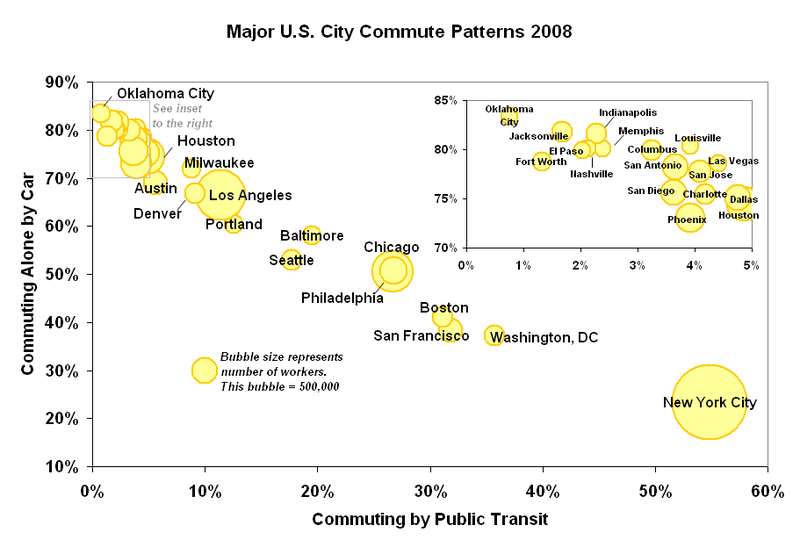
The 2006 American Community Survey measured the percentage of commuters who take public transit, as opposed to walking, driving, riding a bicycle, or other ways of getting to work. In the top 50 are the Bay Area cities of San Francisco, Berkeley, Oakland, Richmond, and Concord.

Image Credit: Wikimedia Commons

– – –

New Recycling Center for El Cerrito Residents

1

photo source: Wikimedia Commons

The City of El Cerrito is calling upon residents to attend several public meetings in anticipation of the opening of a new recycling center, including discussion of the planning, use and design of the facility. The second of these public meetings will be taking place Thursday, August 26 at the El Cerrito City Hall from 7 to 9 p.m. The third and final public meeting will take place on  Tuesday, September 14 from 5 to 7 p.m.

Read background information on the new recycling facility project here. For more information about the meetings and environmental programs in El Cerrito, visit the City of El Cerrito’s Environmental Services Division here.

The meetings will take place in the El Cerrito City Hall Council Chambers, 10890 San Pablo Ave, El Cerrito.

– – –


Are People Clueless About Energy Savings?

2

A new paper called “Public perception of energy consumption and savings” was released in the Proceedings of the National Academy of Sciences and has garnered a lot of attention.

From the New York Times Dot Earth blog:

The take-home conclusion is that if the United States is to harvest what some analysts have called a “ behavioral wedge” of hundreds of millions of avoidable tons of greenhouse gas emissions (and wasted energy), a vital prerequisite is  boosting energy literacy.

From the New York Times Green blog:

… people seem conditioned to think of energy savings as they would of saving money: that they can save by simply reducing use, the study found. But the biggest energy savings are tied to replacing things that use a lot of energy with things that use far less.

Habits like turning out the lights when leaving a room may be virtuous but don’t move the needle much on energy savings. Yet that action was cited by more of those surveyed (19.6 percent) than any other method of saving energy. By contrast, just 3.2 percent cited buying more energy-efficient appliances.

From TechCrunch:

Many consumers don’t have a good concept of how much energy per hour a given appliance uses. People understand how much energy goes into a light bulb per hour, Attari said, but not the equivalent of how many light bulbs per hour are used by a dishwasher.

Attari also attributed a psychological phenomenon called single action bias, in which a person does one or two things to address a problem and considers themselves off the hook, as an explanation of why some believe they do more to conserve energy than they really are. When those one or two things fall into curtailment, like turning off the lights, instead of efficiency, like replacing the washer, they help less than some perceive.

From Treehugger:

Attari notes that there has been a failure of communication by scientists, government, industry and environmentalists alike. Instead of more forcefully promoting the importance of these bigger changes, the focus has been on recycling drives and the small steps many people cite as being important.

The study points out that this is a curtailment (or conservation) vs. efficiency issue. It makes intuitive sense that not doing an activity (not driving, not using lights) would save more energy than doing an action with more efficient equipment or appliances. But it’s not true. The savings from replacing old equipment or home retrofits can be much larger than the energy saved by turning out lights or not driving.

It makes sense that in the recent study participants would optimistically err on the side of thinking that daily actions under their control have a lot of impact – it takes mental effort to remember all the small habits, and it seems that psychologically folks want to think that the small habits make a big difference.

In reality, behavioral changes are a lot less “sticky” in terms of long-term energy savings than energy-efficiency retrofits or appliance upgrades. It’s pretty easy to let habits slide, but permanent improvements to infrastructure require less behavioral change after the initial installation.

There was an interesting study to this effect released last year (also in the Proceedings of the National Academy of Sciences) called “Household actions can provide a behavioral wedge to rapidly reduce US carbon emissions.” It examined the plasticity of 17 household action types in 5 behaviorally distinct categories (W, E, M, A, and D):

(W) Home weatherization and upgrades of heating and cooling equipment

(E) More efficient vehicles and nonheating and cooling home equipment

(M) Equipment maintenance

(A) Equipment adjustments

(D) Daily use behaviors

Retrofits and equipment changes had much higher behavioral plasticity than “daily use behaviors,” which required consistent, conscious choices to maintain. A table highlighting results of the study can be seen here and below.

Image credit: Proceedings of the National Academy of the Sciences

– – –

Assorted Links

NRDC rates the USA’s cities on smart energy use and clean energy sources.

Contractors in Montana develop portable housing for $20 per square foot.

CalISO opens market to demand response.

The city of San Francisco launched a website listing products it considers eco-friendlySFapproved. org

– – –

The Difference Between the CEC and CPUC

3

I know what you’re thinking – a really exciting topic. But this question has actually come up in conversation a remarkable number of times in the last couple of weeks. This is not intended to be a definitive guide, but just to start the delineation between the organizations.

– – –

Photo Credit: Wikimedia Commons

The Basics

The CEC is California’s primary energy policy and planning agency.

The CPUC regulates privately owned electric, natural gas, telecommunications, water, railroad, rail transit, and passenger transportation companies.

This post will focus only on the energy aspects of the CPUC’s role.

– – –

The California Energy Commission (CEC)

The five CEC commissioners are appointed by the California governor and must be approved by the Senate. Terms are five years. Commissioners must represent the following specific areas of expertise: law, environment, economics, science/engineering, and the public at large.

The CEC’s responsibilities include:

  • Forecasting future energy needs and keeping historical energy data.
  • Licensing thermal power plants 50 megawatts or larger.
  • Promoting energy efficiency by setting the state’s appliance and building efficiency standards and working with local government to enforce those standards.
  • Supporting public interest energy research that advances energy science and technology through research, development, and demonstration programs.
  • Supporting renewable energy by providing market support to existing, new, and emerging renewable technologies; providing incentives for small wind and fuel cell electricity systems; and providing incentives for solar electricity systems in new home construction.
  • Developing and implementing the state Alternative and Renewable Fuel and Vehicle Technology Program to reduce the state’s petroleum dependency and help attain the state climate change policies.
  • Administering more than $300 million in American Reinvestment and Recovery Act funding through the state energy program, the energy efficiency conservation and block grant program; the energy efficiency appliance rebate program and the energy assurance and emergency program.
  • Planning for and directing state response to energy emergencies.

The CEC is located in Sacramento, CA.

– – –

The California Public Utilities Commission (CPUC)

The five CPUC commissioners are also appointed by the California governor and must be approved by the Senate. Terms are six years.

The CPUC regulates investor owned utilities (IOUs) that distribute electricity and natural gas, including Pacific Gas & Electric Company (PG&E), Southern California Edison (SCE), San Diego Gas & Electric Company (SDG&E) and Southern California Gas Company.

The CPUC does not regulate municipal utilities, such as the Sacramento Municipal Utility District (SMUD).

The CPUC’s mission is the following:

  • The California Public Utilities Commission serves the public interest by protecting consumers and ensuring the provision of safe, reliable utility service and infrastructure at reasonable rates, with a commitment to environmental enhancement and a healthy California economy.  We regulate utility services, stimulate innovation, and promote competitive markets, where possible, in the communications, energy, transportation, and water industries.

The CPUC has a number of different divisions; the Energy Division assists Commission activities in the electricity, natural gas, steam, and petroleum pipeline industries. Energy Division handles the regulation and Commission approval of official rates and terms of service for energy IOUs.

Because the regulated California utilities are so large, and their programs reach so many customers, CPUC energy policy decisions and goals have wide influence in California. The CPUC touches programs in energy efficiency, demand response, low-income assistance, distributed generation, and self-generation, among others. It has a role in California climate policy. It is overseeing the CA utilities’ switch to Smart Grid technologies. The CPUC regulated electric generation and procurement, electric rates and markets, gas policy and rates, and electric transmission and distribution.

CPUC headquarters are in San Francisco, CA.

– – –
Assorted Links

The Navy and Marine Corps plan to have bases be zero net energy in a decade.

The Sierra Club lists the greenest campuses.

St. Paul, Minnesota, experiments with bicycle-based compost collection.

Auburn University students design housing with non-recyclable cardboard.

The zero waste effort is starting to reach the fashion industry.

– – –

California’s “Air Basins”

1

The state of California is divided geographically into 15 different “air basins” in order to regulate air emissions on a regional, rather than a local basis. The divisions were decided upon based on both geographically like features (in some cases “air basins” are literally geographic basins surrounded by mountains) and by political boundaries, such as counties. While air quality can vary from basin to basin, emissions and pollution are obviously not confined to air basin boundaries.

The nine county Bay Area makes up its own designated air basin, the “San Francisco Bay” air basin. This basin is home to the second largest metro population in the state and is characterized by high vehicle miles traveled, several regional airports and industrial activity. Being a coastal region, wind and weather patterns can have a dramatic effect in transporting the pollution from the region into inland areas.

To find out more about the San Franciso Bay air basin and the 14 other air basins in California, visit the Air Resource Board’s interactive map here, get the latest air quality reports for your region from the annual California Almanac of Air Quality and Emissionsand check out a list of 50 things you can do to improve California’s air quality, here.

– – –

End Use

1

This post is part of our definitions series on “eco-lingo” and technical terms.

– – –

Studies frequently segment energy or water use by “end use”,  or the reason the energy was consumed, in order to better understand how the resource is used. For both energy and water, consumption is often first broken down by sector (commercial, residential, industrial) and then by end use (lighting, heating, etc.)

The first graph below is of California electricity use by sector. The second graph below is of California electricity use by sector AND by end use.

The end use categorizations in the graphs above are still pretty broad categories – some analyses break them down even further. The original data in the graphs comes from a CEC staff report. I used the same aggregate categories as Flex Your Power:

  • The Commercial Misc. category includes refrigeration, hot water, cooking, and office equipment.
  • The Residential Other category includes water heating, cooking, pool/spa, clothes washers, dishwashers, and freezers.
  • Industrial Process includes process fans, heating, pumping, and refrigeration.
  • Industrial Other includes material handling and processing.
  • The “Other” category includes street lighting and other government end uses.

– – –

What exactly does “sustainability” mean? How about “green”, “eco” or “environmentally friendly”? The truth is that these terms are just vague enough to mean many different things to many different people. With the staggering array of “green” products, ‘lifestyles’ and concepts being promoted by marketers and environmentalists alike (as well as the necessary coining of new terms to match new ideas) our definition series aims to make sense of the rising tide of “eco-lingo” and technical terms.

– – –

Patch-working the Grid

1

This Friday’s links highlight a few examples of global progress toward integrating cleaner energy into conventional energy grids.

Image credit: Wikimedia Commons

The New York Times reports on the impressive bump from 17% to nearly 45% renewable-source energy in Portugal’s grid over the past five years. However, the gain in cleaner energy has come at a hefty premium for consumers- take a look at how the Portuguese are balancing it all.

Visit Australia’s Clean Energy Council website and have a look at the interactive map of all clean energy plants over 100kW in operation.

Denmark’s official website cites 12 large scale solar operations in the country that add up to 20% of annual energy demand and offer flexibility within the national grid.

Lastly, read a discussion of progress toward integration of wind energy into European energy grids on the European Wind Energy Association’s website.

– – –