The Difference Between the CEC and CPUC

3

I know what you’re thinking – a really exciting topic. But this question has actually come up in conversation a remarkable number of times in the last couple of weeks. This is not intended to be a definitive guide, but just to start the delineation between the organizations.

– – –

Photo Credit: Wikimedia Commons

The Basics

The CEC is California’s primary energy policy and planning agency.

The CPUC regulates privately owned electric, natural gas, telecommunications, water, railroad, rail transit, and passenger transportation companies.

This post will focus only on the energy aspects of the CPUC’s role.

– – –

The California Energy Commission (CEC)

The five CEC commissioners are appointed by the California governor and must be approved by the Senate. Terms are five years. Commissioners must represent the following specific areas of expertise: law, environment, economics, science/engineering, and the public at large.

The CEC’s responsibilities include:

  • Forecasting future energy needs and keeping historical energy data.
  • Licensing thermal power plants 50 megawatts or larger.
  • Promoting energy efficiency by setting the state’s appliance and building efficiency standards and working with local government to enforce those standards.
  • Supporting public interest energy research that advances energy science and technology through research, development, and demonstration programs.
  • Supporting renewable energy by providing market support to existing, new, and emerging renewable technologies; providing incentives for small wind and fuel cell electricity systems; and providing incentives for solar electricity systems in new home construction.
  • Developing and implementing the state Alternative and Renewable Fuel and Vehicle Technology Program to reduce the state’s petroleum dependency and help attain the state climate change policies.
  • Administering more than $300 million in American Reinvestment and Recovery Act funding through the state energy program, the energy efficiency conservation and block grant program; the energy efficiency appliance rebate program and the energy assurance and emergency program.
  • Planning for and directing state response to energy emergencies.

The CEC is located in Sacramento, CA.

– – –

The California Public Utilities Commission (CPUC)

The five CPUC commissioners are also appointed by the California governor and must be approved by the Senate. Terms are six years.

The CPUC regulates investor owned utilities (IOUs) that distribute electricity and natural gas, including Pacific Gas & Electric Company (PG&E), Southern California Edison (SCE), San Diego Gas & Electric Company (SDG&E) and Southern California Gas Company.

The CPUC does not regulate municipal utilities, such as the Sacramento Municipal Utility District (SMUD).

The CPUC’s mission is the following:

  • The California Public Utilities Commission serves the public interest by protecting consumers and ensuring the provision of safe, reliable utility service and infrastructure at reasonable rates, with a commitment to environmental enhancement and a healthy California economy.  We regulate utility services, stimulate innovation, and promote competitive markets, where possible, in the communications, energy, transportation, and water industries.

The CPUC has a number of different divisions; the Energy Division assists Commission activities in the electricity, natural gas, steam, and petroleum pipeline industries. Energy Division handles the regulation and Commission approval of official rates and terms of service for energy IOUs.

Because the regulated California utilities are so large, and their programs reach so many customers, CPUC energy policy decisions and goals have wide influence in California. The CPUC touches programs in energy efficiency, demand response, low-income assistance, distributed generation, and self-generation, among others. It has a role in California climate policy. It is overseeing the CA utilities’ switch to Smart Grid technologies. The CPUC regulated electric generation and procurement, electric rates and markets, gas policy and rates, and electric transmission and distribution.

CPUC headquarters are in San Francisco, CA.

– – –

California’s “Air Basins”

1

The state of California is divided geographically into 15 different “air basins” in order to regulate air emissions on a regional, rather than a local basis. The divisions were decided upon based on both geographically like features (in some cases “air basins” are literally geographic basins surrounded by mountains) and by political boundaries, such as counties. While air quality can vary from basin to basin, emissions and pollution are obviously not confined to air basin boundaries.

The nine county Bay Area makes up its own designated air basin, the “San Francisco Bay” air basin. This basin is home to the second largest metro population in the state and is characterized by high vehicle miles traveled, several regional airports and industrial activity. Being a coastal region, wind and weather patterns can have a dramatic effect in transporting the pollution from the region into inland areas.

To find out more about the San Franciso Bay air basin and the 14 other air basins in California, visit the Air Resource Board’s interactive map here, get the latest air quality reports for your region from the annual California Almanac of Air Quality and Emissionsand check out a list of 50 things you can do to improve California’s air quality, here.

– – –

End Use

1

This post is part of our definitions series on “eco-lingo” and technical terms.

– – –

Studies frequently segment energy or water use by “end use”,  or the reason the energy was consumed, in order to better understand how the resource is used. For both energy and water, consumption is often first broken down by sector (commercial, residential, industrial) and then by end use (lighting, heating, etc.)

The first graph below is of California electricity use by sector. The second graph below is of California electricity use by sector AND by end use.

The end use categorizations in the graphs above are still pretty broad categories – some analyses break them down even further. The original data in the graphs comes from a CEC staff report. I used the same aggregate categories as Flex Your Power:

  • The Commercial Misc. category includes refrigeration, hot water, cooking, and office equipment.
  • The Residential Other category includes water heating, cooking, pool/spa, clothes washers, dishwashers, and freezers.
  • Industrial Process includes process fans, heating, pumping, and refrigeration.
  • Industrial Other includes material handling and processing.
  • The “Other” category includes street lighting and other government end uses.

– – –

What exactly does “sustainability” mean? How about “green”, “eco” or “environmentally friendly”? The truth is that these terms are just vague enough to mean many different things to many different people. With the staggering array of “green” products, ‘lifestyles’ and concepts being promoted by marketers and environmentalists alike (as well as the necessary coining of new terms to match new ideas) our definition series aims to make sense of the rising tide of “eco-lingo” and technical terms.

– – –

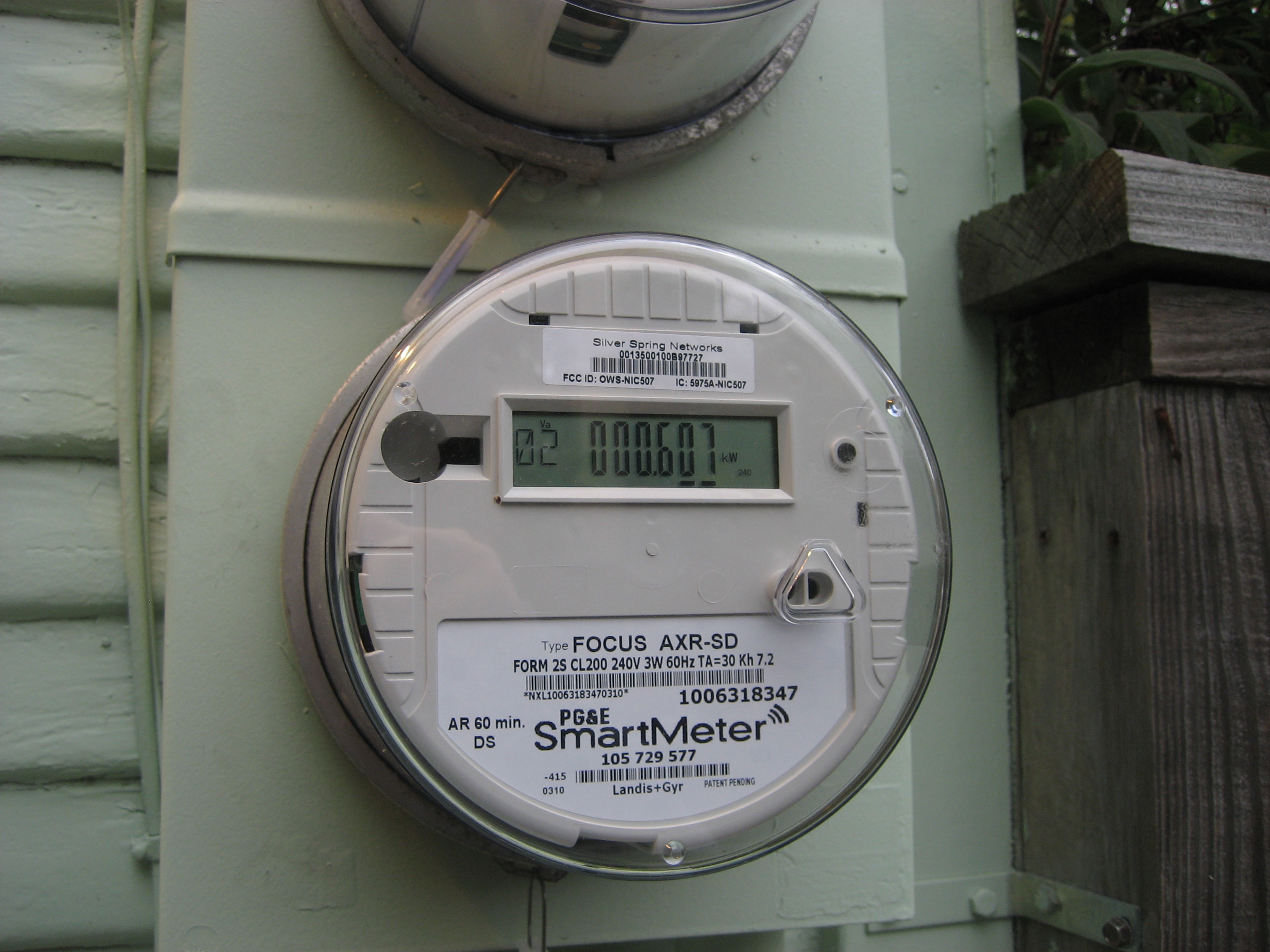
Calls For A Third Party Smart Meter Study

Pacific Gas and Electric Company has been facing a number of challenges in its attempts to roll out Smart Meter technology throughout California.  Advocates of the technology promote the meters as an essential component in realizing energy efficiency goals. Opponents have raised concerns about the accuracy and privacy of the meters and are increasingly raising concerns about public health and safety issues. The meters use wireless electromagnetic signals that provide real-time readings. Some customers complain that the new meters are causing them to be over-charged, yet it seems inevitable that there should be some discrepancy when moving from an older less precise system to a newer more responsive one.

However, the privacy and health and safety arguments represent much more complex and nuanced issues. The technology used by the meters is not much different than that used for cell phones or a myriad other everyday devices. However, under the current deployment of the meters, there is no ‘opt-out’ proviso, meaning that those who raise concerns over the meters are not left with a choice. Thus, it is not just a cut-and-dried matter of accuracy, but also a stickier problem of public perception, personal choice and the questioning of the adequacy of the Federal Communication Commissions’ safety standards by local communities. For example, it was widely reported this week the Town of Fairfax issued an emergency ordinance that will put a six month moratorium on the installation of the meters citing accuracy, privacy and safety concerns.

According to an article in the San Rafael Patch, San Rafael Assemblyman Jared Huffman who represents Marin and Southern Sonoma County (including the Town of Fairfax) has called for an independent review by the California Council on Science and Technology to determine the adequacy of FCC standards and provide more substantial science to the debate.  Huffman commented “If the FCC standards are deemed adequate, then the SmartMeter program can move forward with greater public confidence in the safety of the devices,” Huffman said.  “If the standards are inadequate, we need to know that so that we can get to work on better standards.”

Read more about Fairfax’s decision here, and listen to KQED’s coverage here.

California Proposition 23

Proposition 23 is the result of an initiative launched by Texas oil giants Valero Energy Inc. and Tesoro Corporation to postpone enforcement  of AB 32. The ballot initiative would delay enforcement until unemployment in California stays under 5.5% for an entire year. California unemployment is currently at about 12%.

Image source: Google Public Data

– – –

How do Californians feel about Prop 23?

The public: A poll by the Public Policy Institute of America this month indicates that 67% of California residents support AB 32 (via LA Times).

Governor Arnold Schwarzenegger:  “This initiative sponsored by greedy Texas oil companies would cripple California’s fastest-growing economic sector, reverse our renewable energy policy and decimate our environmental progress for the benefit of these oil companies’ profit margins” (via LA Times).

Republican Gubernatorial Candidate Meg Whitman: Whitman has not taken a formal stand on Prop 23. However, AB 32 authorizes a governor to delay some of the provisions for up to a year in the event of “threat of significant economic harm.” While campaigning for the Republican primary, Whitman stated that we would suspend AB 32 on her first day in office (via SF Chronicle).

Democratic Gubernatorial Candidate Jerry Brown: “Addressing  climate change is one of the great challenges of our time, something that California has been a leader on,” said Sterling Clifford, Brown’s campaign spokesman (via SF Chronicle).

– – –

The full text of Prop 23 is available here.

– – –

The Yes on Prop 23 campaign has filed suit against Attorney General Jerry Brown over the language that will go on the ballot to describe the proposition. The ballots of be printed in mid-August will say that the measure “Suspends Air Pollution Control Laws Requiring Major Polluters to Report and Reduce Greenhouse Gas Emissions That Cause Global Warming Until Unemployment Drops Below Specified Level for Full Year.” More information in the LA Times.

– – –

NRDC Report on Climate Change, Water and Risk

Image: NRDC

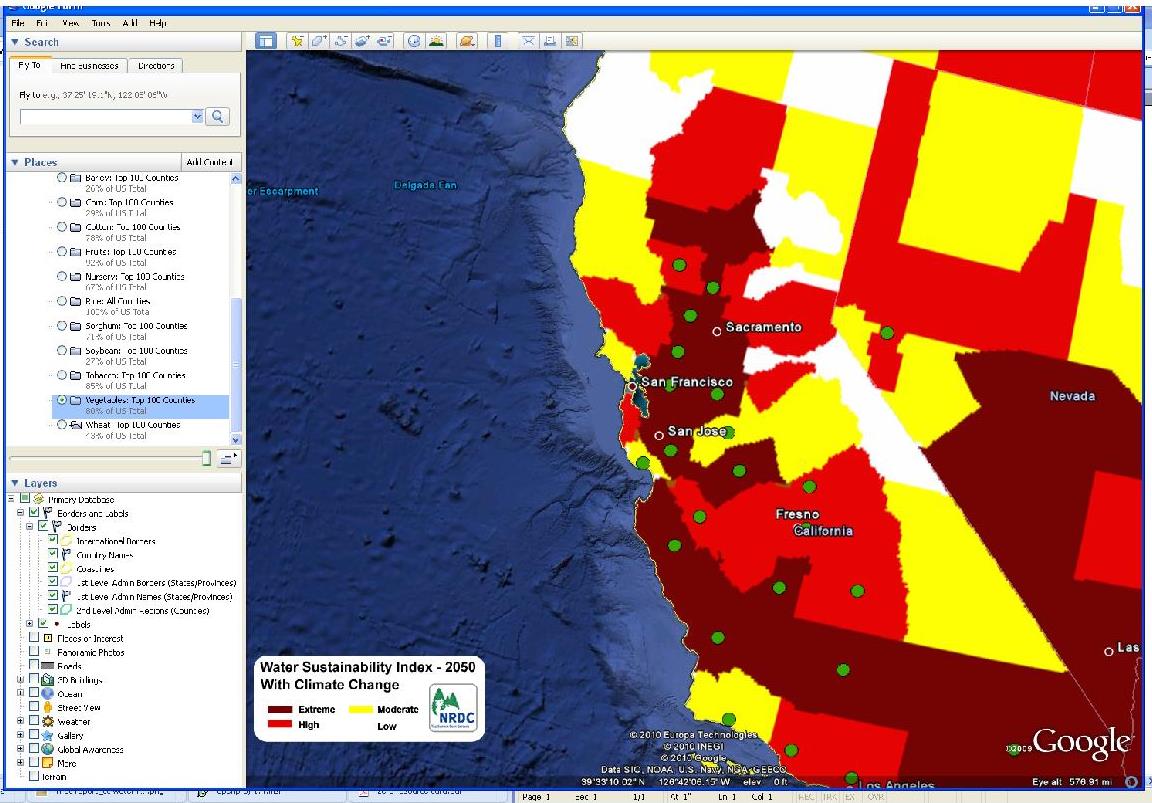
The Natural Resource Defense Council (NRDC) has released a study, conducted on their behalf by Tetra Tech, which examined the effects of climate change on probable future water supply and demand in the United States. One of the main findings of the study is that one-third of the U.S. counties (> 1,100 counties) will likely face water shortages by 2050.

The full report is available as a PDF here.

The Water Supply Sustainbility Index developed by Tetra Tech for the report can be viewed interactively in Google Earth – a link to the data can be found on the NRDC’s website here. You can also turn on and off markers for which counties are top producers of different crops to get a sense of the potential impact of the water shortages. It looks like this (the green dots indicate that the county is one of the top 100 counties for producing vegetables):

The NRDC also released a one-page overview of water shortage risk and crop value in at-risk counties by state (as a PDF here). According to the overview of California’s risk due to climate change:

Percent of CA counties at risk of water shortages: 83%

Total number of CA counties at risk: 48

Total number of CA counties at extreme risk: 19

Total number of CA counties at high risk: 17

Total number of CA counties at moderate risk: 12

The value of all the crops being producing in at-risk CA counties (in $1,000s): $21,585,354

– – –

Lots of Bay Area News

U.S. Representative and  House Appropriator Mike Honda secured funding to the tune of $2 million towards extension of the BART system to Silicon Valley as part of the FY 2011 Transportation, Housing and Urban Development spending bill. What is the “BART to Silicon Valley” project? It’s an extension of the existing BART system to Milpitas, San Jose, and Santa Clara starting from the future Warm Springs station in Fremont (along the eastern side of the South Bay).

– – –

Google Energy has signed its first contract, a 20-year wind power contract in Iowa. Google will sell the electricity on the spot market and retire the associated renewable energy credits (RECs) – via TechCrunch.

– – –

More people are freaking out about smart meters, but this time not in the Central Valley…

The Fairfax Town Council gave the nod to the creation of an ordinance that, if passed, would try to prevent PG&E from installing smart meters in Fairfax –  via the Marin Independent Journal.

The Marin Association of Realtors has issued a statement calling for a moratorium on its SmartMeter program due to concerns in three areas: concerns about overcharging, concerns about health effects from the radio waves, and concerns about PG&E imposing meters on folks that don’t want them – via the Marin Independent Journal.

The Marin Independent Journal also reports that the Marin supervisors have sent a letter to Michael Peevey, president of the California Public Utilities Commission (CPUC), asking the CPUC to suspend PG&E’s SmartMeter rollout until a commission has reviewed the funtion of the meters and until the health implications of the electronic emissions from the wireless devices has been addressed…

– – –

The Department of Energy announced yesterday that $122 million has been awarded to a team of scientists from California (including Lawrence Berkley National Lab) to establish an Energy Innovation Hub that will be focused on converting sunlight into liquid fuel.

– – –

They Don’t Have Water Meters?!

1

photo credit: freefoto.com

Many residents of California don’t have water meters. According to a recent column in the San Francisco Chronicle by Peter Gleick, the recent legislation mandating water meters is needed, as the many residents of California that don’t have meters are very reluctant to install them.

But everyone should have meters. According to Ellen Hanak, a water researcher with the Public Policy Institute on California, metered cities use about 15 percent less water than unmetered cities, and cities with a tiered rate system use an additional 10 percent less (via KQED).

A few statistics from Gleick’s column:

— Sacramento only has meters in 25 percent of residences, and has no plans to meter everyone else anytime soon.

— In the San Joaquin Valley, more than half of all residents don’t have water meters.

— The city of Fresno charges all single-family households a flat rate, no matter how much water is used.

Fresno’s water rates are some of the lowest in California, and it has some of the highest water use (3 times as high as Los Angeles residents, and 5 times as high as San Francisco residents, via The California Report). There is an interesting study comparing water rates – when the study was conducted (2006), the average monthly charge was $18.52 in Fresno County, $37.55 in Alameda County, and $57.25 in Santa Cruz County.

The meters are coming. There are several laws that will require the installation of meters for all Californians (via KQED).

— All homes built after 1992 must have meters.

— Cities that receive federal water have to install meters by 2013.

— All California cities have to install meters by 2025.

Seriously, though, 2025 is a long time for a state that has major water management issues.

– – –

Last year, there was a story from The California Report that covers the struggle to meter reluctant Fresno residents (listen to the story here).

PACE Programs Here, and Gone

1

This post is part of our ongoing focus on energy, water, waste and transportation issues relevant to California at large.

– – –

photo credit: free foto.com

Property Assessed Clean Energy (PACE) programs are being quickly halted due to a recent announcement by the Federal Housing Finance Agency (FHFA) that declared the investments potentially unsafe for lenders. The new and upcoming PACE programs being piloted and planned by cities and counties around the country would offer homeowners bond-backed loans for solar and other energy efficiency upgrades to homes.

Under most terms, the PACE loan (which is attached to the house itself, like an assessment) would have first priority for repayment ahead of the mortgage. This repayment structure provoked a warning pronouncement from Fannie Mae and Freddie Mac last month. Now the FHFA has dealt another blow by also warning lenders that the programs could prove risky- effectively halting operations for the time being.

Read more coverage on the FHFA’s PACE announcement in:

The Bond Buyer, The Huffington Post, and Greentech Media.

Finding California Incentives and Rebates

1

There are hundreds of energy, water, and waste incentives, rebates, and services available for homes  in California, but it can be daunting to find them. Here are a few places to start:

Flex Your Power allows you to search for energy-related incentives and technical help available from utility companies, water agencies, and other organizations by entering your zip code.  A search in my zip code (in Berkeley) found 71 incentives and 18 services.

The Database of State Incentives for Renewables & Efficiency (DSIRE) lists state and local incentives by category and also lists related programs and initiatives. It can be much harder to figure out which specific programs are applicable, though. The database also lists federal incentives.

The California Urban Water Conservation Council lists programs participating in its Smart Rebates by water utility district.

For folks living in the East Bay:

East Bay Municipal Utility District lists its residential conservation rebates and services.

StopWaste.Org lists waste prevention and recycling services available to residents of Alameda County.