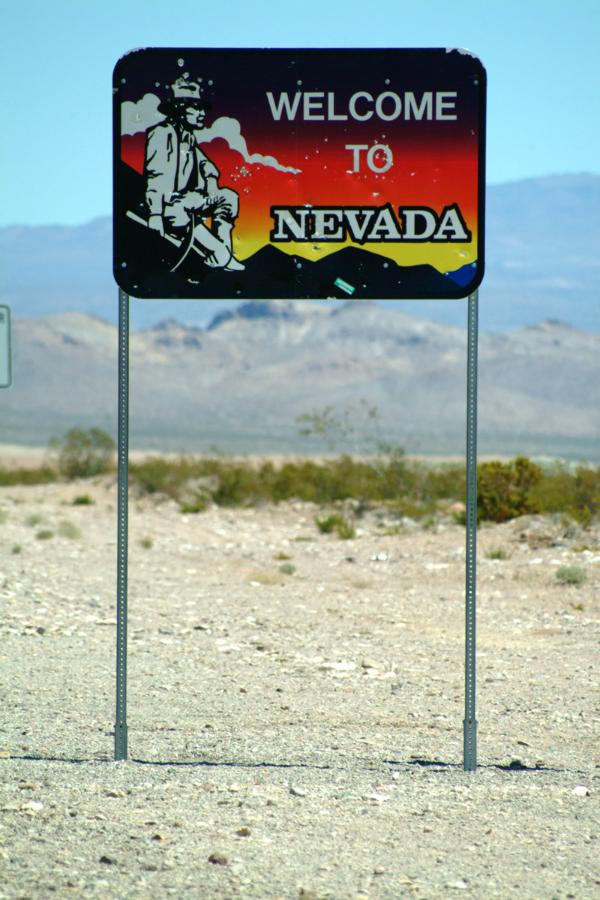
Fast-Track Geothermal Project in Nevada


photo credit: freefoto.com

The Las Vegas Sun reports that the federal Bureau of Land Management just approved a fast-track geothermal project in Pershing County, Nevada. The company that proposed the project, Ormat Technologies, plans to build a 30 megawatt plant that covers about 13 square miles.

From the BLM announcement – “The BLM Fast-Track projects are those where the companies involved have demonstrated to the BLM that they have made sufficient progress to formally start the environmental review and public participation process. These projects could potentially be cleared by December 2010, thus making them eligible for economic stimulus funding under the American Recovery and Reinvestment Act of 2009. There are 34 national fast-track projects – 14 solar, 7 wind, 6 geothermal, and 7 transmission lines.”

A list of fast-track renewable energy projects can be found here on the BLM website.

Nevada currently has 11 geothermal plants, 3 of which are on Bureau of Land Management-managed public land.

World Energy Consumption Up 49% By 2035?

1

The U.S. Energy Information Administration issued its “International Energy Outlook 2010” report last month. The report predicts that fossil fuels will continue to provide more than 75% of global energy demand for the next 25 years. It also predicts that world energy consumption will increase 49% over the next 25 years. Developing nations are predicted to account for the huge majority of the increase in global energy demand.

International Energy Outlook 2008 Report Cover.  Need help, contact the National Energy Information Center at 202-586-8800.

The full report can be accessed here. Report highlights can be found here.

Anna’s Links – Smart Meters for Energy and Water

photo credit: freefoto.com

Many of you may have heard about the goings-on around the widespread installation of smart energy meters in California (after all, there have been lawsuits, legislative hearings, and mandated independent meter testing, just for the Pacific Gas and Electric meter installations).

So why go through all that to install smart energy meters? Because they hold huge promise for helping consumers reduce their energy use and for adding flexibility and reliability to how the grid is managed.

What you may not have heard as much about is that smart water meters are also being installed – more than half of California water utilities have some smart meters in their districts (via the New York Times). Ideally, smart water meters would provide real-time (or near real-time) feedback on water use to both the water utility and the consumer.

Also, Oracle has apparently developed an interest in smart water meters as a potential future market, as they already sell software systems to water (and power) utilities (via GreenTechmedia).

The Energy-Water Nexus

1

This post is part of our definitions series on “eco-lingo” and technical terms.

– – –

We have been hearing with increasing frequency about “the energy-water nexus” in California as we face potential changes to our climate and our water supply. But what is it?

Basically, water and energy supplies are fundamentally linked together. Producing energy requires a huge volume of water (even for renewables). Treating and distributing water requires a consistent supply of energy. Therefore, serious challenges to the supply of one threatens the reliability of the other.

According to Sandia National Laboratory, producing electricity from just fossil fuels and nuclear energy requires 190 billion gallons of water each day, which accounts for 39% of all U.S. freshwater use. Each kWh generated from coal necessitates 25 gallons of water (source here). Also, since the energy needed to treat and distribute water can account for up to 80% of the water’s final cost, a reduction in the amount of available, inexpensive energy will have a direct impact on the cost and supply of water.

– – –

What exactly does “sustainability” mean? How about “green”, “eco” or “environmentally friendly”? The truth is that these terms are just vague enough to mean many different things to many different people. With the staggering array of “green” products, ‘lifestyles’ and concepts being promoted by marketers and environmentalists alike (as well as the necessary coining of new terms to match new ideas) our definition series aims to make sense of the rising tide of “eco-lingo” and technical terms.

Finding Data – GDP and Electricity Consumption

2


I thought it would be interesting to graph GDP against a metric of per capita energy use (in this case kWh/capita).

(Click on the chart to see a larger version.)

There are a number of interesting things to note about this chart. First, compared to the other countries shown, the United States has a really high GDP. Counting countries individually (sometimes the European Union is counted as one entity), the USA has the highest GDP, then Japan, then China. In general, the chart indicates that as a country’s GDP increases, so does kWh/capita. If we also take the size of the population into account, this is one reason many people are increasingly concerned about the potential effects of economic growth in India and China on climate change. Exceptions on the chart seem to generally be very cold countries (Canada, Sweden, and Russia) or very hot countries (Australia and Saudi Arabia).

In the chart above, the data comes from Key World Energy Statistics 2009, put out by the International Energy Agency (data is for 2007).

Electricity consumption is calculated for the entire country as gross production + imports – exports – transmission/distribution losses. It is then divided by the population of the country to get the per capita value.

Editorial – How Much Space is Enough?

1

Houses have been getting bigger. Over the past fifty plus years (until 2008), the size of the average new house more than doubled, from 1,000 square feet or less in 1950 to 2,265 in 2000 (values from NAHB). The percentage of new homes smaller than 1,200 square feet has been dropping since 1987, while the percentage of new homes larger than 2,400 grew from 21% to 38% between 1987 and 2001 (values from this study). Interestingly, the size of the average new home dropped in 2008 (data here and an article here).

The general trend of larger and larger houses has a direct impact on the environment. Larger houses require more land to build on, more materials for construction, more energy to heat, cool, and light, and result in more waste, both during construction and demolition. While it is expected that there may be some “economy of scale” as houses get larger, there is a widely held suspicion that larger homes consume proportionally more materials because they often have higher ceilings and more complex geometry. Larger houses also require more materials to furnish and decorate.

It should be noted that larger homes are not only increasing in area (square footage); they are also increasing in volume, which may ultimately have a larger impact on the energy consumption of the house. Larger houses are usually constructed with extra features that are not surface area efficient (such as complicated roofs and dormer windows) and which consume more energy for heating and cooling than a compact house of the same volume.

New houses should be both smaller and more compact.

However, it has been difficult to build smaller homes. Aside from the social cache afforded those with larger homes, zoning rules and mortgage practices have also pushed “bigger is better.” For example, mortgage lenders often required the home to be “three times the value of the land,” which then determined a minimum house size for a certain area.

The recent, slight tilt towards smaller home is likely due to the recession and the constrained finances of those building, financing and buying homes. But it is encouraging. When considering what they could afford financially, people chose smaller houses. If we consider what we can “afford” using metrics of energy, water, and materials, we should prioritize building smaller houses.
Ixtoc I and ESI Maps

2

News sources and commentators have been comparing the size of the current oil spill in the Gulf to that of the Exxon Valdez spill in 1989. There are of course numerous differences between the spills – the Exxon Valdez spill was in an isolated area in Alaska, for example, and the maximum volume of the spill was known at the beginning of the crisis. The boat could only spill as much oil as it could hold. And the Exxon Valdez spill occurred at the surface – oil was not rising from the bottom of the ocean, becoming emulsified and harder to clean up.

A better comparison for the current Gulf spill might be the Ixtoc I spill of 1979, the worst offshore spill in North American history.

After the well blowout on June 3, 1979, it took more than nine months to cap the well. Nine months. During that time, the well was spewing roughly 10,000 to 30,000 barrels of oil a day into the Bay of Campeche in the Gulf of Mexico. 3 million barrels of oil wound up in the Gulf.

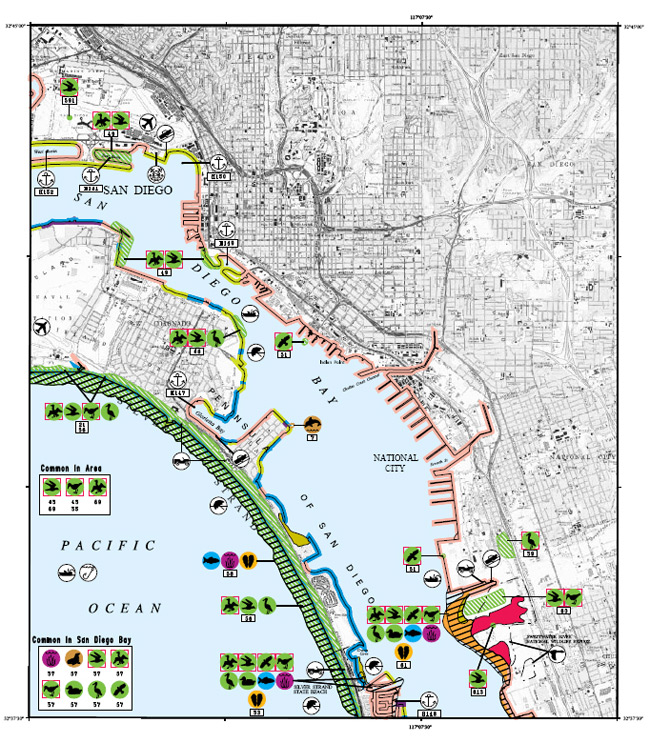
As a result of this major spill, new procedures were instituted, existing procedures were revised, and new information was gathered. The National Oceanographic and Atmospheric Administration (NOAA) Office of Response and Restoration (OR&R) developed Environmental Sensitivity Index (ESI) sensitivity maps, which plot information about the shoreline and biological and human-use resources. This helps responders identify risks and develop priorities quickly. An example  of an ESI map of San Diego Bay (from NOAA’s website) is below.

An overview of the “anatomy” of ESI maps can be found here. ESI maps can be downloaded here.

Anna’s Links – 5/26/10

A round-up of interesting (and depressing) analysis of the recent oil rig explosion and oil spill…

A “live” feed of the BP oil spill is now posted online (though traffic has been so high that it’s not always possible to view) – U.S. Energy and Commerce Committee.

Experts examining a previous video of the oil leak released by BP estimate that the size of the oil spill is much larger than official estimates – NPR.

Scientists fault the government for “failing to conduct an adequate scientific analysis of the damage and of allowing BP to obscure the spill’s true scope” – New York Times.

Some experts are starting to say that the oil leaks could last for years because “we don’t have any idea how to stop this” – National Geographic.

Aerial photos of the Gulf oil spill show its vast size – NASA Earth Observatory.

A scientist at Lawrence Berkeley National Lab notes that some of the detergents used to clean up spill sites can be more toxic that the oil itself – Lawrence Berkeley National Lab.

– – –

Other interesting tidbits from the web…

Two campuses of the University of California system, Berkeley and Davis, have been given  MacArthur grants to launch a new master’s degree program in sustainable development practice – UC Berkeley and MacArthur Foundation.

Developers in Las Vegas are cranking up their sales pitches for brand new homes again, even though the city has 9,500 empty houses and another 5,600 that were repossessed in the first quarter of 2010 – New York Times.

Las Vegas as a whole has been very dependent on growth and construction – the recent drop in new construction had a major impact on municipal funding – Aguanomics and Bloomberg.

Federal officials want public input on a proposal to revise policies for managing urban water shortages in the Central Valley – meetings will be held in Sacramento on May 26, June 23, July 20, and August 19 – The Sacramento Bee.

Current Events – The Cost of Energy Production

1

There have been many analyses of the financial cost of energy production – in this post I am focused on the human and environmental costs.

It can seem like a huge practical joke – the fossil fuels that we have become so dependent on are tucked away into all kinds of inaccessible corners of the planet. And the more we need them to keep up with increasing demand, the harder and harder they are to find and to safely extract.

This issue of “safe” extraction has been in the news and on my mind a lot lately.

First, there was explosion at Upper Big Branch Mine in West Virginia that killed 29 workers.

Then, the BP Deepwater Horizon explosion that is presumed to have killed 11 workers. The estimates of the size of the resulting oil spill are being revised upwards (again).

There have been numerous other disasters over the years, both in the United States and the rest of the world.

There is always initial shock and outrage at these disasters, of course. But the focus of the outrage is on whether proper permits were acquired and safety procedures followed. Doubt is and will be expressed at company management and government for their oversight and handling of the crisis.

But there is little shock and outrage over the potential long-term human and environmental cost of extracting these fossil fuels, and over how little we seem to value the resulting energy. There is real risk involved in getting energy from the source, into a usable format, and transporting it to the location where it will be used.

While we should absolutely improve oversight and regulation of these enterprises, a major lesson of these disasters is that we need to rethink why we really need this energy in the first place and to use this precious commodity with increased care.

Nina Maritz

2

This post is part of our series exploring the ways people and communities reuse, recycle and dispose of waste around the world.

– – –

I saw a presentation by Nina Maritz in San Francisco in 2006, and I have continued to think about her approach periodically over the years.

Nina Maritz is a Namibian architect whose work reflects local building strategies and is built with local labor.

One project that showcases her work is the Habitat Research and Development Center in Windhoek, Namibia. Among many goals and activities listed for the center are “promote sustainable and environmentally appropriate housing” and “develop local skills in sustainable housing construction methods.” The completed project is site appropriate, made from local materials, and uses a number of passive cooling methods to keep the occupants comfortable. Each design decision addresses a number of design challenges (for example, by using poles from invasive species, she could abstain from using rare local hardwood).

What I found particularly striking about Nina Maritz’s work, and what I keep returning to, is the careful reuse of materials throughout the project.

(Photos on Flickr and in ArchitectureWeek)

Wherever possible, it seems, the architect worked with local workers and artisans to reuse materials such as corrugated metal, storage drums, cans, and tires, in both functional and decorative ways. While this approach is difficult in many places because of stringent building code and the expense of labor, it evokes an entirely different way of looking at the world, where every object holds potential not just for its intended use but also for future uses.