Dan Kammen, Clean-Energy Czar

3

Dan Kammen, who leads the Renewable and Appropriate Energy Laboratory at UC Berkeley, was just appointed by the World Bank to be its first Clean-Energy Czar.

The New York Times Green Inc. blog posted an interview with him today:

Q – One of the chief criticisms of the World Bank is that, even as it has increased funding for renewable energy and energy efficiency projects in developing countries to $3.3 billion annually, it continues to provide significant funding for carbon-intensive projects like coal-fired power plants. Do you see a need for the bank to maintain financing for those projects?

A – This is really at the heart of the tension between traditional development — meaning more energy, more access, irrespective of environmental damage — and the emerging environmental mandate that we’ve got to cut our greenhouse gas emissions so dramatically. So you get cases like the very controversial $3.5 billion investment in coal in South Africa, and at the same time, how to build the emerging economies around solar, biofuels, wind, etc.

You can read the entire interview on the New York Times website.

– – –

UPDATE: There is also an interview with Dan Kammen posted on Grist:

Q – The climate bill process fell apart in Congress this year and it seems like the U.N. process isn’t headed for a big treaty either. How can things actually get done?

A – There’s no simple answer to that. When we look back at the Montreal Protocol and CFCs, people thought that process looked impossible until a few companies and countries realized that cleaning circuit boards without CFCs might actually save them money and be more effective. A couple successes turned a story that looked like it was going to be a failure into one that we all look back now and say, “Oh, that was easy by comparison.”

I’m not sure exactly how many successes we need to tip the balance so that a big treaty is possible, but no group is better positioned than the World Bank to facilitate them.

You can read the entire interview at Grist.org.

– – –

The House of the Future?

2

In Berkeley, we are fortunate to have such events as Science at the Theater, where Lawrence Berkeley National Lab researchers give talks on their work at the Berkeley Repertory Theatre. The lectures are free and get a pretty sizeable audience. The lectures are recorded and put on YouTube.

– – –

(The video can also be watched here – the technical stuff starts at about 10 minutes in.)

On May 10, 2010, I was in the audience as LBNL folks talked about their vision of the house of the future:

Learn what it will take to create tomorrow’s net-zero energy home as scientists reveal the secrets of cool roofs, smart windows, and computer-driven energy control systems.

The net-zero energy home
Scientists are working to make tomorrow’s homes more than just energy efficient — they want them to be zero energy. Iain Walker, a scientist in the Lab’s Energy Performance of Buildings Group, will discuss what it takes to develop net-zero energy houses that generate as much energy as they use through highly aggressive energy efficiency and on-site renewable energy generation.

Talking back to the grid
Imagine programming your house to use less energy if the electricity grid is full or price are high. Mary Ann Piette, deputy director of Berkeley Lab’s building technology department and director of the Lab’s Demand Response Research Center, will discuss how new technologies are enabling buildings to listen to the grid and automatically change their thermostat settings or lighting loads, among other demands, in response to fluctuating electricity prices.

The networked (and energy efficient) house
In the future, your home’s lights, climate control devices, computers, windows, and appliances could be controlled via a sophisticated digital network. If it’s plugged in, it’ll be connected. Bruce Nordman, an energy scientist in Berkeley Lab’s Energy End-Use Forecasting group, will discuss how he and other scientists are working to ensure these networks help homeowners save energy.

Assemblymember Nancy Skinner also spoke at the beginning, about energy in buildings and RECO programs.

– – –

Assorted Links

San Francisco parks waste thousands of gallons of drinkable water each day through cracked pipes and aged irrigation systems.

California’s Green Building Standards Code – known as CalGreen – will become mandatory on January 1, 2011.

A new study reports that most heat pumps in the UK are not performing as intended.

A competition focusing on the Water-Energy Nexus is looking for start-ups that save energy in moving, treating and using water and wastewater.

– – –

Plug Load

This post is part of our definitions series on “eco-lingo” and technical terms.

– – –

A plug load is basically any piece of equipment or electronics that plugs into an outlet in a building, including televisions, cell phone chargers, laptops, entertainment equipment, and blenders. Larger appliances are often considered to be a separate category, but are sometimes also categorized as plug loads.

When designing a building to meet code, or to estimate energy use, designers generally take major building systems, such as lighting and HVAC, and major appliances, such as refrigeration and wet cleaning equipment, into account. But it is much harder to estimate all the plug loads that buildings occupants will bring with them. And plug loads have been increasing over time as people accumulate gadgets and equipment. As the other loads in a building are driven down through increased equipment efficiency, optimized controls, and behavioral changes, plug loads are a sizeable percentage of the remaining load.

– – –

There have been a number of efforts to regulate the efficiency of certain plug loads – California approved television efficiency standards in 2009.

– – –

Martin Holladay, at GreenBuildingAdvisor.com, describes the importance of taking plug loads into account when calculating building energy use in a post here.

– – –

A California Plug-Load Energy Efficiency Center is being planned and will be hosted by the University of California, Irvine. My understanding is that it will be modeled after the California Lighting Technology Center and the Western Cooling Efficiency Center, both located at UC Davis.

A pdf of the PowerPoint slides from the planning workshop can be read here.

– – –

What exactly does “sustainability” mean? How about “green”, “eco” or “environmentally friendly”? The truth is that these terms are just vague enough to mean many different things to many different people. With the staggering array of “green” products, ‘lifestyles’ and concepts being promoted by marketers and environmentalists alike (as well as the necessary coining of new terms to match new ideas) our definition series aims to make sense of the rising tide of “eco-lingo” and technical terms.

– – –

A Quote

R.K. Stewart, 2007 AIA President, addressing an audience of mostly architecture students at UC Berkeley:

I like to remind myself and my clients that just meeting code means it’s the worst building I’m legally allowed to build.

– – –

City Rankings – Energy, Walkability, and Transit

1

This Friday’s links highlight a few examples of city rankings…

– – –

The Natural Resources Defense Council (NRDC) has released a list of 22 American cities named “2010 Smarter Cities” for their investment in green power, energy efficiency measures and conservation – Oakland, San Francisco, Berkeley, and Santa Cruz are the Northern California cities that made the list and have profiles on the NRDC website.

– – –

Walk Score has ranked 2,508 neighborhoods in the largest 40 U.S. cities to help you find walkable neighborhoods – San Francisco is ranked #1!

– – –

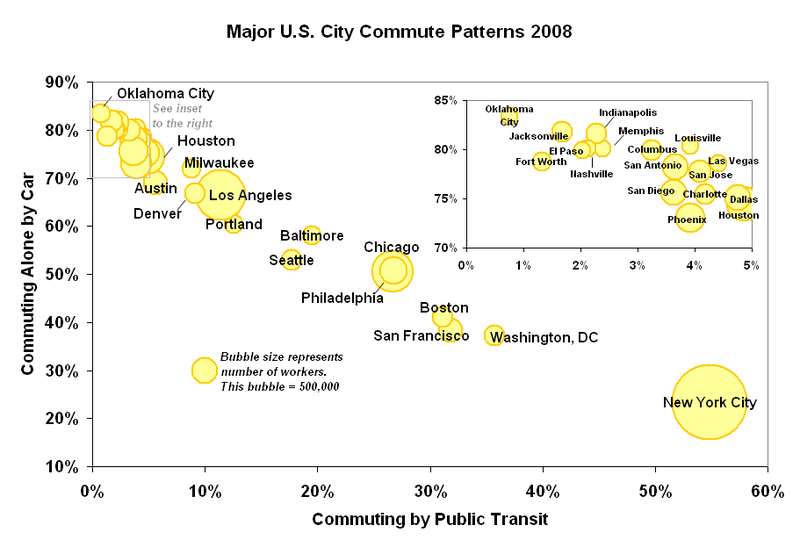
The 2006 American Community Survey measured the percentage of commuters who take public transit, as opposed to walking, driving, riding a bicycle, or other ways of getting to work. In the top 50 are the Bay Area cities of San Francisco, Berkeley, Oakland, Richmond, and Concord.

Image Credit: Wikimedia Commons

– – –

Are People Clueless About Energy Savings?

2

A new paper called “Public perception of energy consumption and savings” was released in the Proceedings of the National Academy of Sciences and has garnered a lot of attention.

From the New York Times Dot Earth blog:

The take-home conclusion is that if the United States is to harvest what some analysts have called a “ behavioral wedge” of hundreds of millions of avoidable tons of greenhouse gas emissions (and wasted energy), a vital prerequisite is  boosting energy literacy.

From the New York Times Green blog:

… people seem conditioned to think of energy savings as they would of saving money: that they can save by simply reducing use, the study found. But the biggest energy savings are tied to replacing things that use a lot of energy with things that use far less.

Habits like turning out the lights when leaving a room may be virtuous but don’t move the needle much on energy savings. Yet that action was cited by more of those surveyed (19.6 percent) than any other method of saving energy. By contrast, just 3.2 percent cited buying more energy-efficient appliances.

From TechCrunch:

Many consumers don’t have a good concept of how much energy per hour a given appliance uses. People understand how much energy goes into a light bulb per hour, Attari said, but not the equivalent of how many light bulbs per hour are used by a dishwasher.

Attari also attributed a psychological phenomenon called single action bias, in which a person does one or two things to address a problem and considers themselves off the hook, as an explanation of why some believe they do more to conserve energy than they really are. When those one or two things fall into curtailment, like turning off the lights, instead of efficiency, like replacing the washer, they help less than some perceive.

From Treehugger:

Attari notes that there has been a failure of communication by scientists, government, industry and environmentalists alike. Instead of more forcefully promoting the importance of these bigger changes, the focus has been on recycling drives and the small steps many people cite as being important.

The study points out that this is a curtailment (or conservation) vs. efficiency issue. It makes intuitive sense that not doing an activity (not driving, not using lights) would save more energy than doing an action with more efficient equipment or appliances. But it’s not true. The savings from replacing old equipment or home retrofits can be much larger than the energy saved by turning out lights or not driving.

It makes sense that in the recent study participants would optimistically err on the side of thinking that daily actions under their control have a lot of impact – it takes mental effort to remember all the small habits, and it seems that psychologically folks want to think that the small habits make a big difference.

In reality, behavioral changes are a lot less “sticky” in terms of long-term energy savings than energy-efficiency retrofits or appliance upgrades. It’s pretty easy to let habits slide, but permanent improvements to infrastructure require less behavioral change after the initial installation.

There was an interesting study to this effect released last year (also in the Proceedings of the National Academy of Sciences) called “Household actions can provide a behavioral wedge to rapidly reduce US carbon emissions.” It examined the plasticity of 17 household action types in 5 behaviorally distinct categories (W, E, M, A, and D):

(W) Home weatherization and upgrades of heating and cooling equipment

(E) More efficient vehicles and nonheating and cooling home equipment

(M) Equipment maintenance

(A) Equipment adjustments

(D) Daily use behaviors

Retrofits and equipment changes had much higher behavioral plasticity than “daily use behaviors,” which required consistent, conscious choices to maintain. A table highlighting results of the study can be seen here and below.

Image credit: Proceedings of the National Academy of the Sciences

– – –

The Difference Between the CEC and CPUC

3

I know what you’re thinking – a really exciting topic. But this question has actually come up in conversation a remarkable number of times in the last couple of weeks. This is not intended to be a definitive guide, but just to start the delineation between the organizations.

– – –

Photo Credit: Wikimedia Commons

The Basics

The CEC is California’s primary energy policy and planning agency.

The CPUC regulates privately owned electric, natural gas, telecommunications, water, railroad, rail transit, and passenger transportation companies.

This post will focus only on the energy aspects of the CPUC’s role.

– – –

The California Energy Commission (CEC)

The five CEC commissioners are appointed by the California governor and must be approved by the Senate. Terms are five years. Commissioners must represent the following specific areas of expertise: law, environment, economics, science/engineering, and the public at large.

The CEC’s responsibilities include:

  • Forecasting future energy needs and keeping historical energy data.
  • Licensing thermal power plants 50 megawatts or larger.
  • Promoting energy efficiency by setting the state’s appliance and building efficiency standards and working with local government to enforce those standards.
  • Supporting public interest energy research that advances energy science and technology through research, development, and demonstration programs.
  • Supporting renewable energy by providing market support to existing, new, and emerging renewable technologies; providing incentives for small wind and fuel cell electricity systems; and providing incentives for solar electricity systems in new home construction.
  • Developing and implementing the state Alternative and Renewable Fuel and Vehicle Technology Program to reduce the state’s petroleum dependency and help attain the state climate change policies.
  • Administering more than $300 million in American Reinvestment and Recovery Act funding through the state energy program, the energy efficiency conservation and block grant program; the energy efficiency appliance rebate program and the energy assurance and emergency program.
  • Planning for and directing state response to energy emergencies.

The CEC is located in Sacramento, CA.

– – –

The California Public Utilities Commission (CPUC)

The five CPUC commissioners are also appointed by the California governor and must be approved by the Senate. Terms are six years.

The CPUC regulates investor owned utilities (IOUs) that distribute electricity and natural gas, including Pacific Gas & Electric Company (PG&E), Southern California Edison (SCE), San Diego Gas & Electric Company (SDG&E) and Southern California Gas Company.

The CPUC does not regulate municipal utilities, such as the Sacramento Municipal Utility District (SMUD).

The CPUC’s mission is the following:

  • The California Public Utilities Commission serves the public interest by protecting consumers and ensuring the provision of safe, reliable utility service and infrastructure at reasonable rates, with a commitment to environmental enhancement and a healthy California economy.  We regulate utility services, stimulate innovation, and promote competitive markets, where possible, in the communications, energy, transportation, and water industries.

The CPUC has a number of different divisions; the Energy Division assists Commission activities in the electricity, natural gas, steam, and petroleum pipeline industries. Energy Division handles the regulation and Commission approval of official rates and terms of service for energy IOUs.

Because the regulated California utilities are so large, and their programs reach so many customers, CPUC energy policy decisions and goals have wide influence in California. The CPUC touches programs in energy efficiency, demand response, low-income assistance, distributed generation, and self-generation, among others. It has a role in California climate policy. It is overseeing the CA utilities’ switch to Smart Grid technologies. The CPUC regulated electric generation and procurement, electric rates and markets, gas policy and rates, and electric transmission and distribution.

CPUC headquarters are in San Francisco, CA.

– – –
Major Appliance Efficiency Agreement

1

Image credit: Wikimedia Commons

A few days ago, appliance manufacturers and energy efficiency advocates announced an agreement to call for new national minimum efficiency standards to improve energy and water efficiency standards for refrigerators, freezers, clothes washers, clothes dryers, dishwashers, and room air conditioners. The coalition of major appliance manufacturers, their trade union, and the energy efficiency advocates propose that the new national minimum efficiency standards and tax credits be instituted through action by the Department of Energy and by Congress.

According to the press release, the recommended standards and tax credits would save more than 9 quads of energy over 30 years. The recommended water efficiency standards and tax credits for clothes washers and dishwashers would save about 5 trillion gallons of water over 30 years.

Below, I’ve put together a rough timeline of how the proposed standards would take effect:

  • January 2013 – dishwashers would see 14% energy savings and 23% water savings
  • January 2014 – new refrigerator and freezer energy reduced up to 30%
  • June 2014 – room air conditioners would increase in efficiency 10-15%
  • 2015 – top loading clothes washers would have 26% energy savings and 16% water saving compared to current standards
  • 2015 – front loading clothes washers would have 43% energy savings and 52% water savings compared to current standards
  • 2015 – clothes dryers will increase in efficiency 5%
  • 2018 – top loading clothes washers would have 37% energy and water saving compared to current standards

An overview of the agreement is here.

The agreement was signed by major appliance manufacturing members of the Association of Home Appliance Manufacturers (AHAM) and by major energy and water efficiency organizations, consumer groups and environmental organizations including the American Council for an Energy-Efficient Economy, Alliance for Water Efficiency, Alliance to Save Energy, Appliance Standards Awareness Project, Consumer Federation of America, National Consumer Law Center, Natural Resources Defense Council, Northwest Power and Conservation Council, and Northeast Energy Efficiency Partnerships.

Calls For A Third Party Smart Meter Study

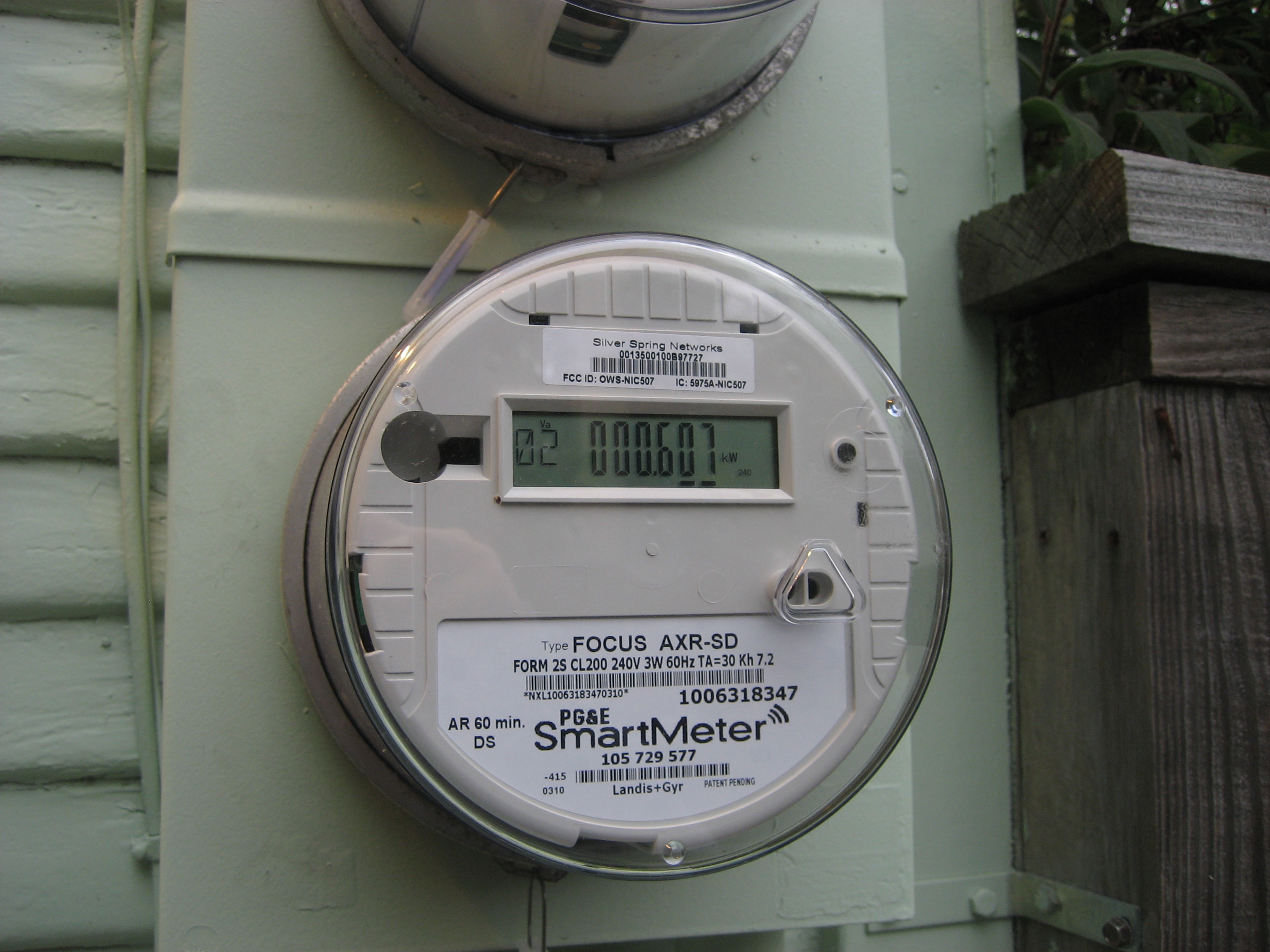
Pacific Gas and Electric Company has been facing a number of challenges in its attempts to roll out Smart Meter technology throughout California.  Advocates of the technology promote the meters as an essential component in realizing energy efficiency goals. Opponents have raised concerns about the accuracy and privacy of the meters and are increasingly raising concerns about public health and safety issues. The meters use wireless electromagnetic signals that provide real-time readings. Some customers complain that the new meters are causing them to be over-charged, yet it seems inevitable that there should be some discrepancy when moving from an older less precise system to a newer more responsive one.

However, the privacy and health and safety arguments represent much more complex and nuanced issues. The technology used by the meters is not much different than that used for cell phones or a myriad other everyday devices. However, under the current deployment of the meters, there is no ‘opt-out’ proviso, meaning that those who raise concerns over the meters are not left with a choice. Thus, it is not just a cut-and-dried matter of accuracy, but also a stickier problem of public perception, personal choice and the questioning of the adequacy of the Federal Communication Commissions’ safety standards by local communities. For example, it was widely reported this week the Town of Fairfax issued an emergency ordinance that will put a six month moratorium on the installation of the meters citing accuracy, privacy and safety concerns.

According to an article in the San Rafael Patch, San Rafael Assemblyman Jared Huffman who represents Marin and Southern Sonoma County (including the Town of Fairfax) has called for an independent review by the California Council on Science and Technology to determine the adequacy of FCC standards and provide more substantial science to the debate.  Huffman commented “If the FCC standards are deemed adequate, then the SmartMeter program can move forward with greater public confidence in the safety of the devices,” Huffman said.  “If the standards are inadequate, we need to know that so that we can get to work on better standards.”

Read more about Fairfax’s decision here, and listen to KQED’s coverage here.