Snippets

Are suburban corporate campuses falling out of fashion? NRDC staff blog predicts an increase in smart growth.  Lonely Planet surveyed travelers to find a list of the top 20 walking cities.  Grist readers nominated 10 additional cities that didn’t make the original Lonely Planet list. A study commissioned by the Food and Agriculture Organization of the United Nations finds that roughly one third of the food produced for human consumption every year gets lost or wasted.

Photos of BART Under Construction

1

The San Francisco Chronicle website has a gallery of photos from when the BART system was originally under construction in the 1960s and 1970s. You can see the photos here.

There is a photo of people on a walking tour through the Transbay Tube.

Also, there is a photo of then-President Nixon riding BART in 1972.

Go. Look.

– – –

(Image credit: Wikimedia Commons)

The Dublin Pleasanton BART Station under construction, much later, in 2009.

– – –

Another Fiscal Emergency for AC Transit?

1

– – –

AC Transit will hold a public hearing on May 25 at 5:00 pm at the offices at 1600 Franklin Street in Downtown Oakland to discuss declaring a fiscal emergency for the third consecutive year.

According to California Beat:

Calling a fiscal emergency would allow AC Transit to cut costs by eliminating service, implementing hiring freezes and reorganize administrative expenses without undergoing environmental reviews that would delay the process.

The agency is facing a $14.9 million shortfall in the coming fiscal year and warns it will face a steeper funding shortage by the end of 2012.

In October, the agency cut 13 percent of bus service to nearly all East Bay communities and hiked fares for riders. This month, the Board approved a ten-year fare increase plan that will increase the base fare incrementally to meet inflation rates.

You can read the entire story here.

– – –

The AC Transit Board voted last week to raise basic bus fares from $2.00 to $2.10, to take effect August 1.

According to Mercury News:

The increase, however, is a tiny fraction of what is needed, district officials said. It will raise just $2.4 million annually to reduce a projected deficit of $21 million in the next fiscal year, according to a district staff report.

As a result, another round of service cuts are likely to be needed within the next 12 to 18 months, King said. AC Transit cut service twice last year.

You can read the entire story here.

– – –

Tour A Tiny Apartment in Spain

3

Our previous posts on tiny houses (here and here) are consistently among our most-viewed posts here at Zero Resource. As I find more interesting tiny dwellings, I will post them. Today, I am posting a video tour of a tiny apartment in Spain, converted from a rooftop pigeon coop. Enjoy!

If the embedded video above does not appear, you can also find the video on YouTube here.

There are a number of other video tours of tiny houses and apartments on YouTube. I’ll post some of them over the next couple weeks.

Zero Resource is Adding Contributing Writers!

I’m delighted to announce that our blog is adding contributing writers. We’ll have our first post by a contributing writer later today!

Some Shameless Self-Promotion

2

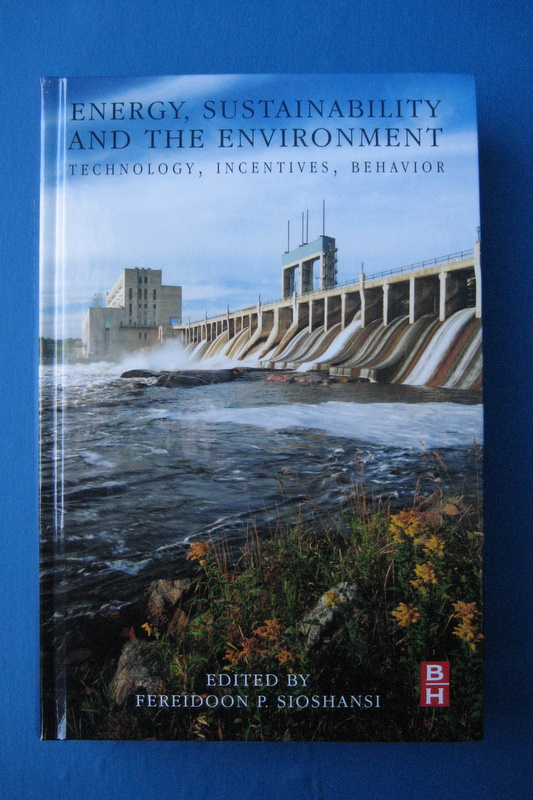
I am a contributing author to Energy, Sustainability and the Environment: Technology, Incentives, Behavior. The book was just released by Elsevier, and you can find it on Amazon here.

Many thanks to friends and mentors Nick Rajkovich and Bill Miller for all their work on the chapter we wrote together.

I got my copy from the publisher in the mail last night.

More Bad News – EIA Faces a Funding Cut

1

In addition to the bad news about CBECS 2007, the U.S. Energy Information Administation is facing an immediate 14% funding cut. This means there will be less information and analysis about energy.

The following is from an EIA press release:

“The lower FY 2011 funding level will require significant cuts in EIA’s data, analysis, and forecasting activities,” said EIA Administrator Richard Newell. “EIA had already taken a number of decisive steps in recent years to streamline operations and enhance overall efficiency, and we will continue to do so in order to minimize the impact of these cuts at a time when both policymaker and public interest in energy issues is high,” he said… …

Initial adjustments to EIA’s data, analysis, and forecasting programs include the following:

Oil and Natural Gas Information

  • Do not prepare or publish 2011 edition of the annual data release on U.S. proved oil and natural gas reserves.
  • Curtail efforts to understand linkages between physical energy markets and financial trading.
  • Suspend analysis and reporting on the market impacts of planned refinery outages.
  • Curtail collection and dissemination of monthly state-level data on wholesale petroleum product prices, including gasoline, diesel, heating oil, propane, residual fuel oil, and kerosene. Also, terminate the preparation and publication of the annual petroleum marketing data report and the fuel oil and kerosene sales report.
  • Suspend auditing of data submitted by major oil and natural gas companies and reporting on their 2010 financial performance through EIA’s Financial Reporting System.
  • Reduce collection of data from natural gas marketing companies.
  • Cancel the planned increase in resources to be applied to petroleum data quality issues.
  • Reduce data collection from smaller entities across a range of EIA oil and natural gas surveys.

Electricity, Renewables, and Coal Information

  • Reduce data on electricity exports and imports.
  • Terminate annual data collection and report on geothermal space heating (heat pump) systems.
  • Terminate annual data collection and report on solar thermal systems.
  • Reduce data collection from smaller entities across a range of EIA electricity and coal surveys.

Consumption, Efficiency, and International Energy Information

  • Suspend work on EIA’s 2011 Commercial Buildings Energy Consumption Survey (CBECS), the Nation’s only source of statistical data for energy consumption and related characteristics of commercial buildings.
  • Terminate updates to EIA’s International Energy Statistics.

Energy Analysis Capacity

  • Halt preparation of the 2012 edition of EIA’s International Energy Outlook.
  • Suspend further upgrades to the National Energy Modeling System (NEMS). NEMS is the country’s preeminent tool for developing projections of U.S. energy production, consumption, prices, and technologies and its results are widely used by policymakers, industry, and others in making energy-related decisions. A multiyear project to replace aging NEMS components will be halted.
  • Eliminate annual published inventory of Emissions of Greenhouse Gases in the United States.
  • Limit responses to requests from policymakers for special analyses.
– – –

Bad News About CBECS 2007

3

I just got an email pointing me towards the following press release from the U.S. Energy Information Administration:

CBECS Status

EIA regrets to report that the 2007 Commercial Buildings Energy Consumption Survey (CBECS) has not yielded valid statistical estimates of building counts, energy characteristics, consumption, and expenditures.  Because the data do not meet EIA standards for quality, credible energy information, neither data tables nor a public use file will be released.  In the interim, EIA will develop key energy indicators for commercial buildings in collaboration with EIA’s forecasting staff for the Annual Energy Outlook.

Factors contributing to the failure of the 2007 survey include the use of a cheaper but experimental survey frame and sampling method by EIA’s prime contractor, design errors in the construction of the method and selection of common building types, and an inability to monitor and manage its use in a production survey environment.  EIA has reviewed and introduced significant changes in its procurement and project management standards that will prevent this type of loss in the future.

As reported in the EIA Press Release, “Immediate Reductions in EIA’s Energy Data and Analysis Programs Necessitated by FY 2011 Funding Cut” (http://www.eia.gov/pressroom/releases/press362.cfm), work on the 2011 CBECS has been suspended at this time.

The Commercial Buildings Energy Consumption Survey (CBECS) is a national sample survey that collects information on the stock of U.S. commercial buildings, their energy-related building characteristics, and their energy consumption and expenditures. Commercial buildings include all buildings in which at least half of the floorspace is used for a purpose that is not residential, industrial, or agricultural, so they include building types that might not traditionally be considered “commercial,” such as schools, correctional institutions, and buildings used for religious worship.

The CBECS was first conducted in 1979; the eighth, and most recent survey, was conducted in 2003. CBECS is currently conducted on a quadrennial basis.

– – –

Putrescible Waste

2

This post is part of our definitions series on “eco-lingo” and technical terms.

– – –

(Image credit: Wikimedia Commons)

Putrescible waste is “solid waste that contains organic matter capable of being decomposed by microorganisms and of such a character and proportion as to cause obnoxious odors and to be capable of attracting or providing food for birds or animals (definition from the Argonne National Laboratory).

Basically, putrescibles are the bits of garbage that decompose and get stinky. This can include food waste, used diapers, and pet waste.

If the putrescible waste is removed from the standard waste stream, the remaining household solid waste (packaging, plastic films) and recycling (cardboard, glass, metals, plastics, and paper) is quite clean. As local government recycling programs face budget cuts, there is potential to use this separation of putrescible waste to creatively adjust waste and recycling programs.

If the putrescible waste is picked up pretty frequently (such as weekly), and possibly separated into compostable foodscraps and non-compostable waste (diapers and animal products), the remaining “clean” garbage and recycling could be picked up less frequently. There is potential to increase participation in food waste composting, since folks will want the stinky stuff out of their houses as fast as possible. Since a lot of the cost of recycling programs is the labor cost of pick-ups and sorting, there is also potential to reduce overall costs of program with careful planning of routes and pick-up schedule frequency.

– – –

What exactly does “sustainability” mean? How about “green”, “eco” or “environmentally friendly”? The truth is that these terms are just vague enough to mean many different things to many different people. With the staggering array of “green” products, ‘lifestyles’ and concepts being promoted by marketers and environmentalists alike (as well as the necessary coining of new terms to match new ideas) our definition series aims to make sense of the rising tide of “eco-lingo” and technical terms.

MRF (Rhymes With Smurf)

3

This post is part of our definitions series on “eco-lingo” and technical terms.

– – –

(Image credit: Wikimedia Commons)

– – –

A MRF is a Materials Recovery Facility, a Materials Recycling Facility, or a Materials Reclamation Facility. These facilities receive household and business waste, construction waste, recyclables, and other discarded materials and separate them.

A “dirty” MRF receives mixed solid waste (everything all jumbled together), or in lingo “a mixed solid waste stream” and separates out the recyclables and other desirable materials.

A “clean” MRF receives just mixed recyclables and separates them.

And I have just learned about “wet” MRFs, which use water to separate items in a dirty MRF by density, cleans them, then dissolves organic material for anaerobic digestion.

The sorting in a MRF is accomplished with some automated processes and also manual sorting of materials into bins.

– – –

What exactly does “sustainability” mean? How about “green”, “eco” or “environmentally friendly”? The truth is that these terms are just vague enough to mean many different things to many different people. With the staggering array of “green” products, ‘lifestyles’ and concepts being promoted by marketers and environmentalists alike (as well as the necessary coining of new terms to match new ideas) our definition series aims to make sense of the rising tide of “eco-lingo” and technical terms.